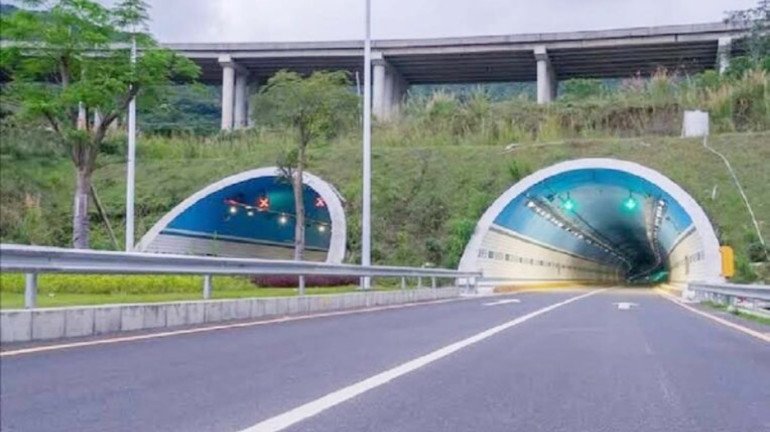
A major underground road corridor connecting Borivali and Thane has emerged as a central urban infrastructure commitment ahead of Mumbai’s civic elections, with authorities signalling faster execution of the long-pending twin tunnel beneath Sanjay Gandhi National Park. Designed to bypass chronically congested surface roads, the project is positioned as a strategic intervention to rebalance east–west mobility across the Mumbai Metropolitan Region.
The Borivali–Thane twin tunnel is being implemented by the regional planning authority to directly link the Western Express Highway with Ghodbunder Road. Once operational, officials estimate that travel time between the two suburbs could reduce from over an hour during peak periods to under 20 minutes. For daily commuters navigating one of the city’s most traffic-heavy corridors, the change could reshape travel behaviour and residential location choices. Planned as a pair of parallel underground road tunnels, the corridor will run largely beneath protected forest land, requiring construction methods that limit surface disruption. The use of tunnel boring machines is intended to avoid large-scale excavation and safeguard sensitive ecosystems above ground. Urban planners tracking the project say this approach reflects a broader shift towards infrastructure solutions that work around natural constraints rather than displacing them.
From an economic perspective, the Borivali Thane tunnel project is expected to strengthen labour mobility between Mumbai’s western suburbs and the expanding commercial zones of Thane. Real estate analysts note that faster cross-region access can influence housing demand, particularly for middle-income households seeking shorter commutes without moving closer to expensive business districts. Improved connectivity may also support decentralised employment growth, reducing pressure on Mumbai’s traditional commercial cores. Safety and resilience have been built into the tunnel’s design, according to project documentation. Dedicated emergency lanes, frequent cross-passages, mechanical ventilation, fire detection systems, and real-time information displays are planned to meet international tunnel safety standards. Infrastructure experts say these features are critical in maintaining public confidence in long underground road assets, especially in dense urban settings.
The project’s prominence in the civic election discourse reflects broader governance challenges in Mumbai’s transport planning. While the city has expanded metro rail coverage, east–west road connectivity has lagged behind, leaving commuters dependent on a limited number of arterial routes. By creating a grade-separated alternative, authorities aim to relieve pressure on existing highways and reduce vehicle idling, with potential benefits for air quality and fuel efficiency. However, specialists caution that large road projects must be integrated with public transport and demand management strategies to avoid inducing additional traffic. The long-term impact of the Borivali Thane tunnel project will depend on how it complements metro networks, bus services, and last-mile solutions rather than functioning as a standalone fix.
As construction timelines come into sharper focus, attention is likely to shift towards environmental monitoring, cost control, and coordination between regional and municipal agencies. For Mumbai, the tunnel represents not just a promise of faster travel, but a test of whether complex infrastructure can be delivered responsibly in one of India’s most environmentally and spatially constrained cities.
MMRDA Fast Tracks Borivali Thane Tunnel