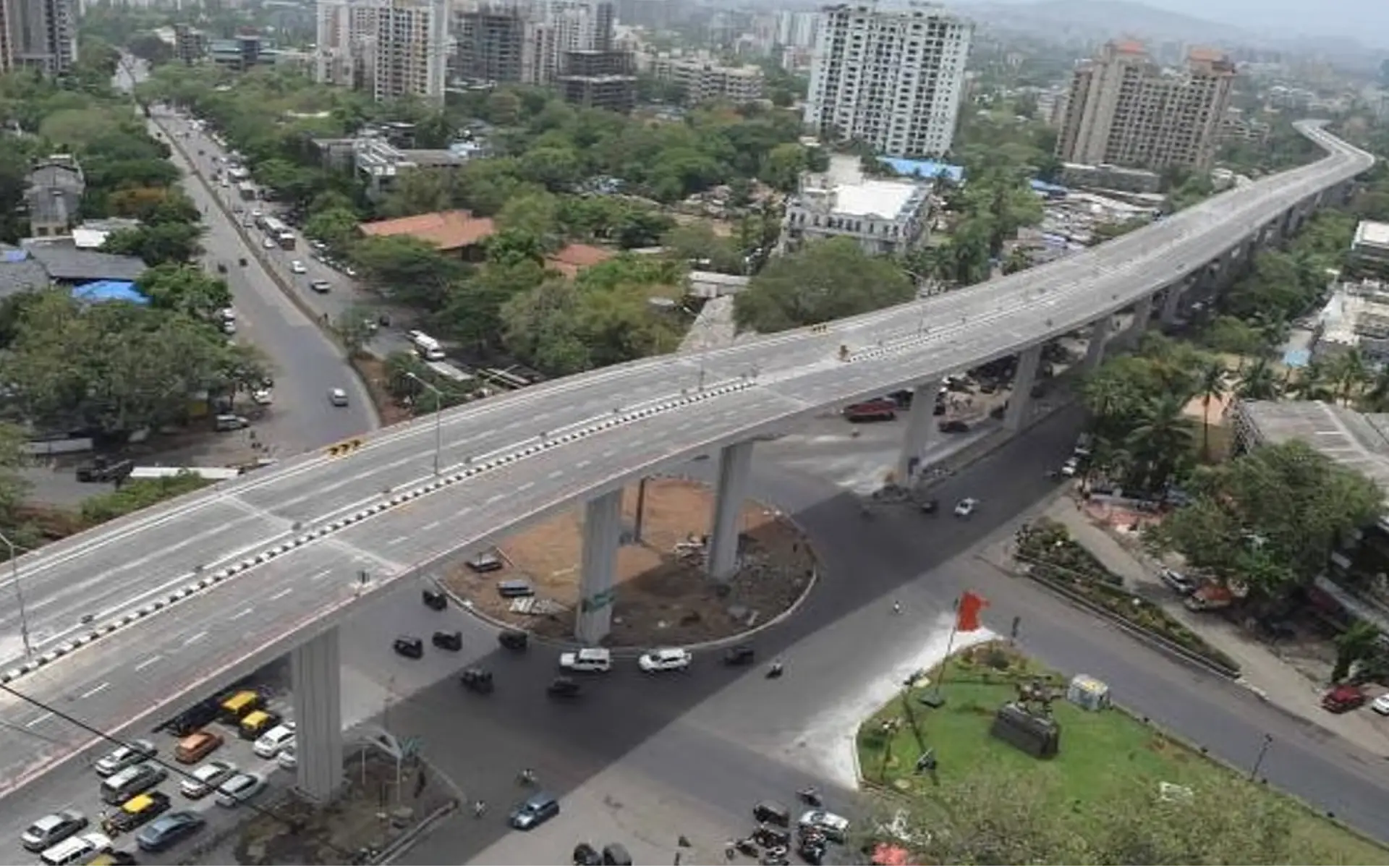
The Mumbai Metropolitan Region Development Authority has approved a large-scale elevated highway project aimed at easing one of the most persistent congestion points on the northern edge of the Mumbai Metropolitan Region. The ₹6,748-crore corridor will create a direct, high-capacity road link between Thane and Aamne, improving access from the Samruddhi Mahamarg into the Mumbai urban system. For daily commuters and freight operators, the decision signals a structural intervention rather than incremental traffic management.
The proposed corridor addresses the chronic slowdown that occurs once high-speed traffic from the Samruddhi route meets the dense logistics belt around Bhiwandi and Anjur. Urban planners have long flagged this stretch as a planning mismatch, where expressway-scale traffic feeds directly into overburdened city highways. According to officials involved in the project review, the new link is intended to separate long-haul and regional traffic from local movement, reducing conflict points and travel delays. Spanning just over 21 kilometres, the project combines elevated and greenfield construction. More than half the alignment will run above the existing Mumbai Nashik Highway, while the remaining section will pass through newly developed terrain to avoid dense settlements. Designed as a six-lane access-controlled road, the corridor will connect the Saket–Anand Nagar elevated stretch in Thane to junctions near Aamne, creating a continuous high-speed approach into the metropolitan area.
Infrastructure elements include multiple bridges, flyovers, a railway overbridge, and a series of underpasses to maintain local connectivity. Transport experts note that these features are critical in a region where arterial roads often double as neighbourhood streets, leading to safety risks and inefficiencies. By grade-separating through traffic, the project is expected to improve road safety while freeing surface roads for buses, non-motorised users, and short-distance travel. Land acquisition forms a significant component of the project cost, with over 120 hectares required across private, government, and forest parcels. Officials say environmental mitigation and regulatory clearances will be integrated into the execution plan, reflecting growing scrutiny of large road projects in sensitive peri-urban zones. The authority has also proposed a toll-based recovery model, with differentiated rates for private vehicles, buses, and freight carriers, alongside periodic revisions to account for maintenance and inflation.
From an economic standpoint, logistics firms operating in the Bhiwandi warehousing cluster are expected to benefit from more predictable travel times, while residents in Thane and surrounding areas could see reduced spillover congestion. However, urban mobility specialists caution that long-term gains will depend on parallel investments in public transport and last-mile connectivity to prevent induced traffic. As the Mumbai region continues to expand northward, the Saket–Aamne corridor is being positioned as a missing link in a larger mobility network. Its effectiveness will ultimately be judged by how well it balances speed, access, and environmental responsibility in one of India’s fastest-growing urban regions.
MMRDA Clears Thane Mumbai Elevated Road Link