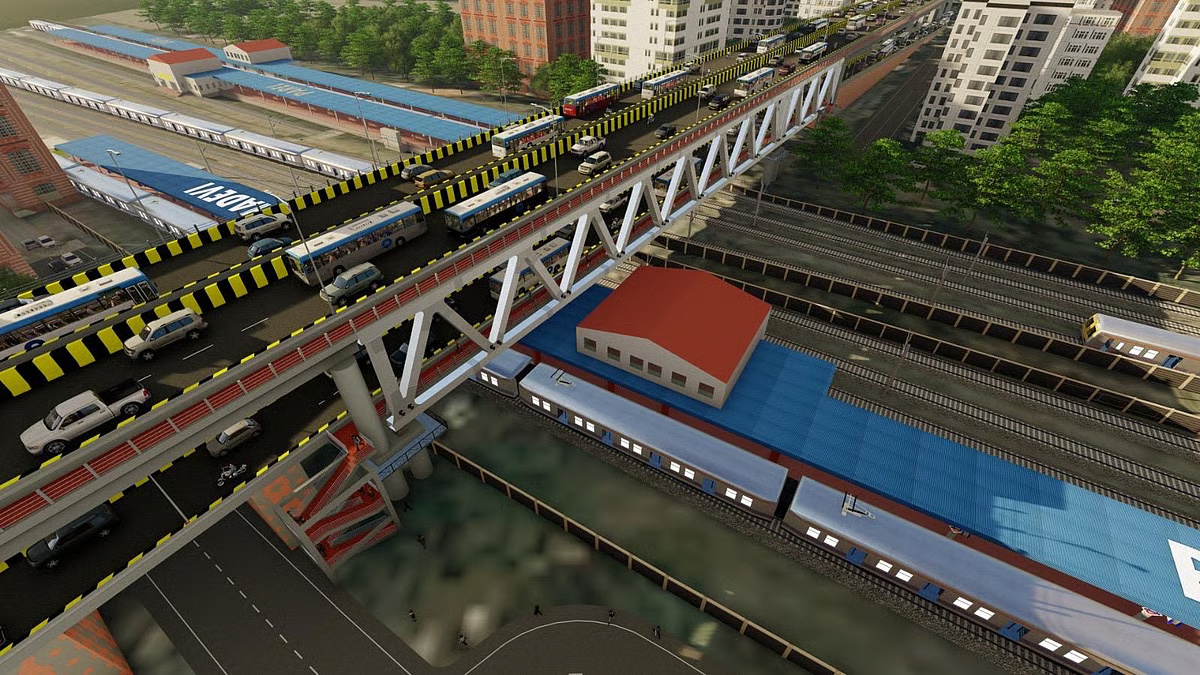
A critical bottleneck in one of Mumbai’s long-delayed east–west connectivity projects has been resolved, clearing the path for construction to move forward. The Mumbai Metropolitan Region Development Authority has completed the relocation and compensation process for families affected by the proposed Sewri–Wadala connector, enabling the demolition of structures standing in the alignment of the new bridge.
The project replaces a century-old rail overbridge in central Mumbai with a modern double-decker connector designed to separate local traffic from through movement. Over the past five months, progress had been stalled due to unresolved rehabilitation concerns involving residents of two ageing residential buildings located adjacent to the old bridge. With these issues now addressed, authorities expect on-ground construction activity to regain momentum. According to officials overseeing the project, all 83 affected households have either accepted alternative housing within the vicinity or opted for monetary compensation under existing rehabilitation norms. The relocation exercise has required an estimated public outlay of nearly ₹90 crore, reflecting the rising cost of land acquisition and resettlement in dense urban precincts.
Urban planners say the resolution highlights a recurring challenge in Mumbai’s infrastructure redevelopment—balancing urgent transport upgrades with equitable rehabilitation outcomes. The affected buildings, situated in a tightly packed neighbourhood with limited redevelopment options, had emerged as the only structures requiring full demolition for the connector’s alignment. Their clearance is expected to unlock subsequent phases of work, including foundation strengthening and deck construction. The closure of the old bridge had already altered daily commuting patterns for thousands of pedestrians and motorists, forcing longer detours across central Mumbai. Transport experts note that delays caused by unresolved rehabilitation not only escalate project costs but also prolong disruption for local communities and businesses dependent on reliable east–west access.
Beyond traffic relief, the Sewri–Wadala connector is positioned as a strategic link supporting Mumbai’s broader transport ecosystem. Once completed, it is expected to improve access between employment hubs, port-linked industrial areas and emerging residential zones, while also easing pressure on parallel arterial roads. The double-decker design allows for more efficient land use in a constrained corridor, a key consideration in older parts of the city. From a social infrastructure perspective, the relocation process is being closely watched as a benchmark for future projects. Housing rights advocates argue that timely rehabilitation decisions are essential to maintaining public trust, particularly as Mumbai accelerates large-scale bridge replacements, metro construction and coastal infrastructure works.
With the affected buildings expected to be vacated shortly, officials indicate that demolition and construction timelines will now be recalibrated. For commuters and residents alike, the next phase will test whether the project can deliver improved connectivity without further disruption—an increasingly important measure as Mumbai seeks infrastructure solutions that are not only efficient, but also socially and environmentally resilient.
MMRDA Clears Sewri Wadala Link With Rehab Homes