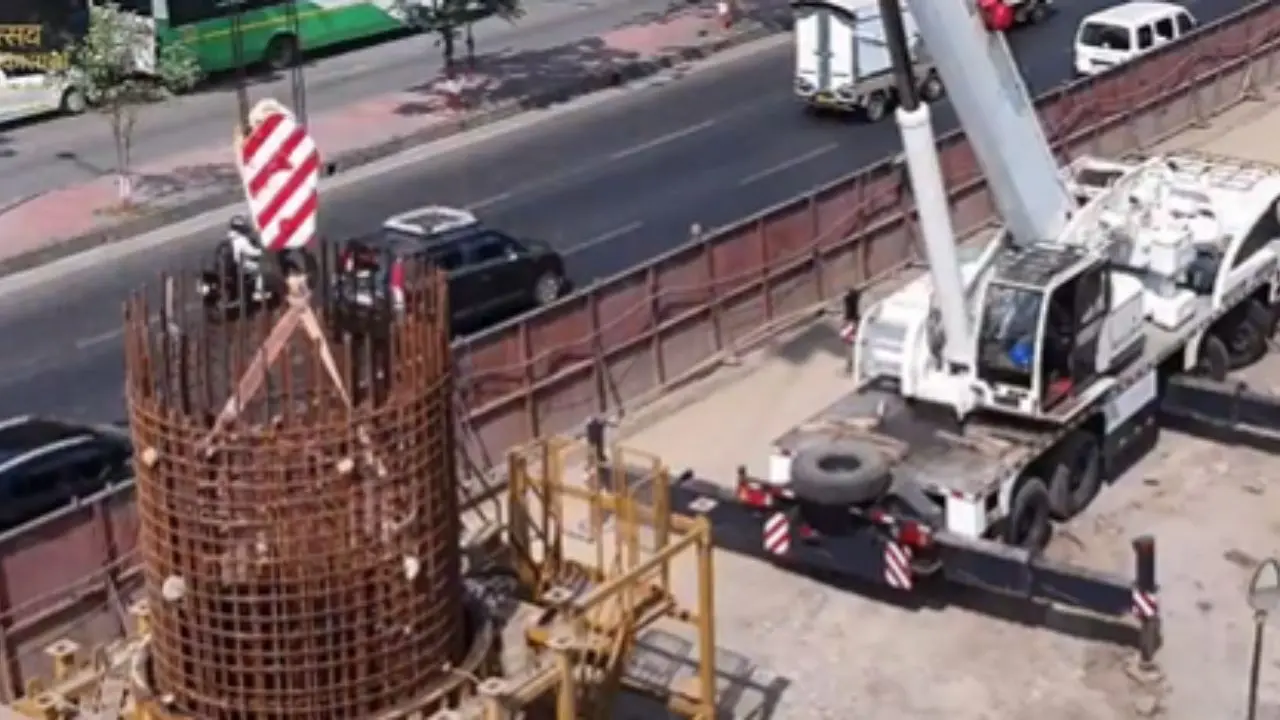
The Mumbai Metropolitan Region Development Authority (MMRDA) has commenced construction of a 13.9-kilometre elevated extension of the Eastern Freeway, a major infrastructure intervention designed to cut travel time between Thane and South Mumbai to under 30 minutes. The project marks a significant step in improving regional mobility and easing chronic congestion along one of the city’s busiest transport corridors.
The planned elevated link will run from Anand Nagar in Thane to Chheda Nagar in Ghatkopar, forming a continuous, high-speed connector when integrated with the upcoming Anand Nagar–Saket elevated road near Mulund. Officials involved in the project said the new corridor is expected to reduce pressure on the Eastern Express Highway, which currently carries a mix of daily commuters, heavy vehicles, and interstate traffic. Engineers associated with the work noted that the extension will use a single-pile, single-pier configuration—an approach not previously applied to elevated roadways in the region. The design includes large-diameter monopiles and wide spans to maintain structural stability while minimising the number of piers along the alignment. According to technical experts, this method aims to reduce construction disruption at ground level and support a smoother, signal-free experience for motorists.
A senior official said the alignment between Vikhroli and Ghatkopar was re-examined to avoid the felling of mature street trees, leading to a revised design that preserved 127 Pink Trumpet trees. As part of the environmental obligations, authorities plan compensatory plantation of more than 4,000 saplings across targeted pockets of the metropolitan region. Urban planners describe this approach as a necessary shift, as Mumbai increasingly seeks to integrate climate-sensitive practices into large transport projects. Transport analysts emphasise that the extension holds wider socio-economic significance. Faster connectivity between Thane and Mumbai’s southern districts can help rebalance commuter flows, support decentralised employment hubs, and improve accessibility for emergency services. For goods movement—particularly freight entering from the eastern fringes—the corridor is expected to reduce travel variability, lowering transport costs for small businesses and logistics operators.
However, planners caution that improved road capacity must be matched with long-term investment in clean public mobility to prevent induced traffic and rising vehicular emissions. They argue that elevated corridors, while beneficial for immediate decongestion, should be paired with enhanced bus lanes, metro integration, and policies that incentivise low-carbon travel. Without such measures, the environmental gains from design improvements may not fully materialise. For residents along the route, the freeway extension is expected to deliver quicker and more reliable east-west and north-south travel, particularly during peak hours. Local groups, however, have asked authorities to ensure pedestrian safety, dust control, and transparent noise-mitigation measures during construction.
As Mumbai continues to expand its transport infrastructure, the Eastern Freeway extension stands out as a project that combines engineering innovation with a more climate-aware approach. Its success will depend not only on timely execution but also on how well it complements the region’s broader shift towards sustainable, equitable urban mobility.
MMRDA Begins Construction Of 13.9-Km Elevated Eastern Freeway Extension Project