


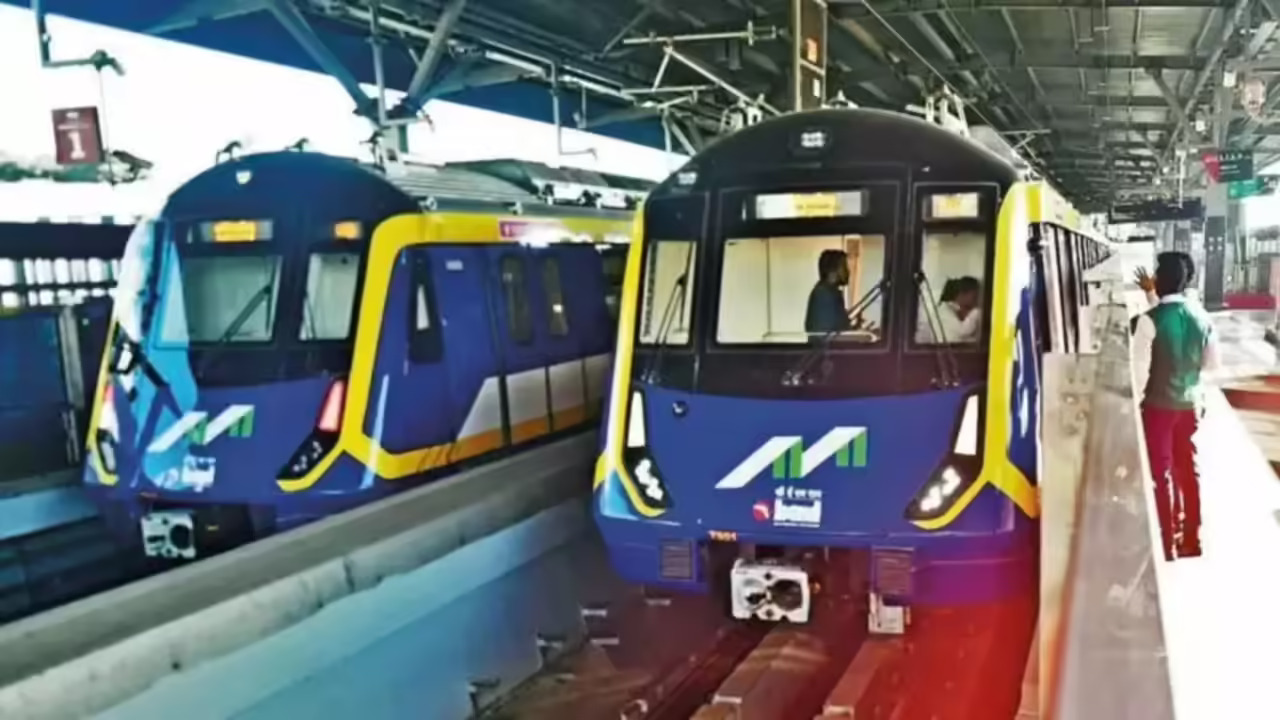
Mumbai’s metro network is set to take another major leap with the proposal of a new underground corridor—Metro Line 11—stretching 17.5 kilometres from Anik Depot in eastern Mumbai to the iconic Gateway of India in the south. The Mumbai Metro Rail Corporation Limited (MMRCL) has submitted the proposal to the Maharashtra government, which will forward it to the Union Ministry of Housing and Urban Affairs for central clearance once it receives state-level approval.
Designed as a critical decongestion tool for Mumbai’s saturated southern zones, Metro Line 11 is expected to transform intra-city mobility through a modern, fully underground transit route. The corridor will comprise 13 stations, with 12 of them underground and a single ground-level station at the Anik Depot. The route will pass through some of the most densely populated and traffic-congested regions of the city, aiming to offer a more sustainable, reliable, and faster commuting alternative. Officials involved with the planning process noted that the project aligns with long-term urban transport goals to reduce vehicular dependence, lower emissions, and promote sustainable transit in high-density cities. Metro Line 11 is expected to integrate seamlessly with existing transport systems, including Metro Line 4 (Wadala–Kasarvadavli), the fully underground Aqua Line 3, the Monorail, and key suburban railway stations like Byculla and Chhatrapati Shivaji Maharaj Terminus (CSMT), enhancing multimodal connectivity.
A key element of the proposal is the new depot planned at the 16-hectare BEST bus depot in Anik–Pratiksha Nagar. The space will be developed to enable smoother integration between metro and bus services, improving first- and last-mile connectivity—considered essential for building equitable and inclusive urban mobility networks. The construction methodology has been carefully selected to minimise urban disruption. Eight of the stations will be built using the cut-and-cover technique, widely used in dense urban environments. The remaining underground sections will be constructed using the New Austrian Tunnelling Method (NATM), known for its adaptability to varied geological conditions and reduced surface impact.
By 2031, Metro Line 11 is projected to serve 5.8 lakh daily commuters, a figure expected to rise to 8.6 lakh by 2041. These projections indicate a significant shift in commuting patterns, especially as the line is expected to divert a substantial number of private vehicle users and cab riders towards clean, electric metro transit. While the detailed project report (DPR) has been finalised and awaits governmental clearances, officials emphasised that construction timelines and contractor bidding processes will be made public only after the necessary state and central approvals are obtained.
If cleared, Metro Line 11 will not just improve capacity and speed for southbound travel but also demonstrate a forward-looking model of sustainable urban development. For a city increasingly driven by eco-conscious infrastructure and inclusive growth, the proposal may represent a turning point in Mumbai’s transportation journey.
Also Read : Gujarat Orders Inspection Of 200 Dams After Bridge Collapse
