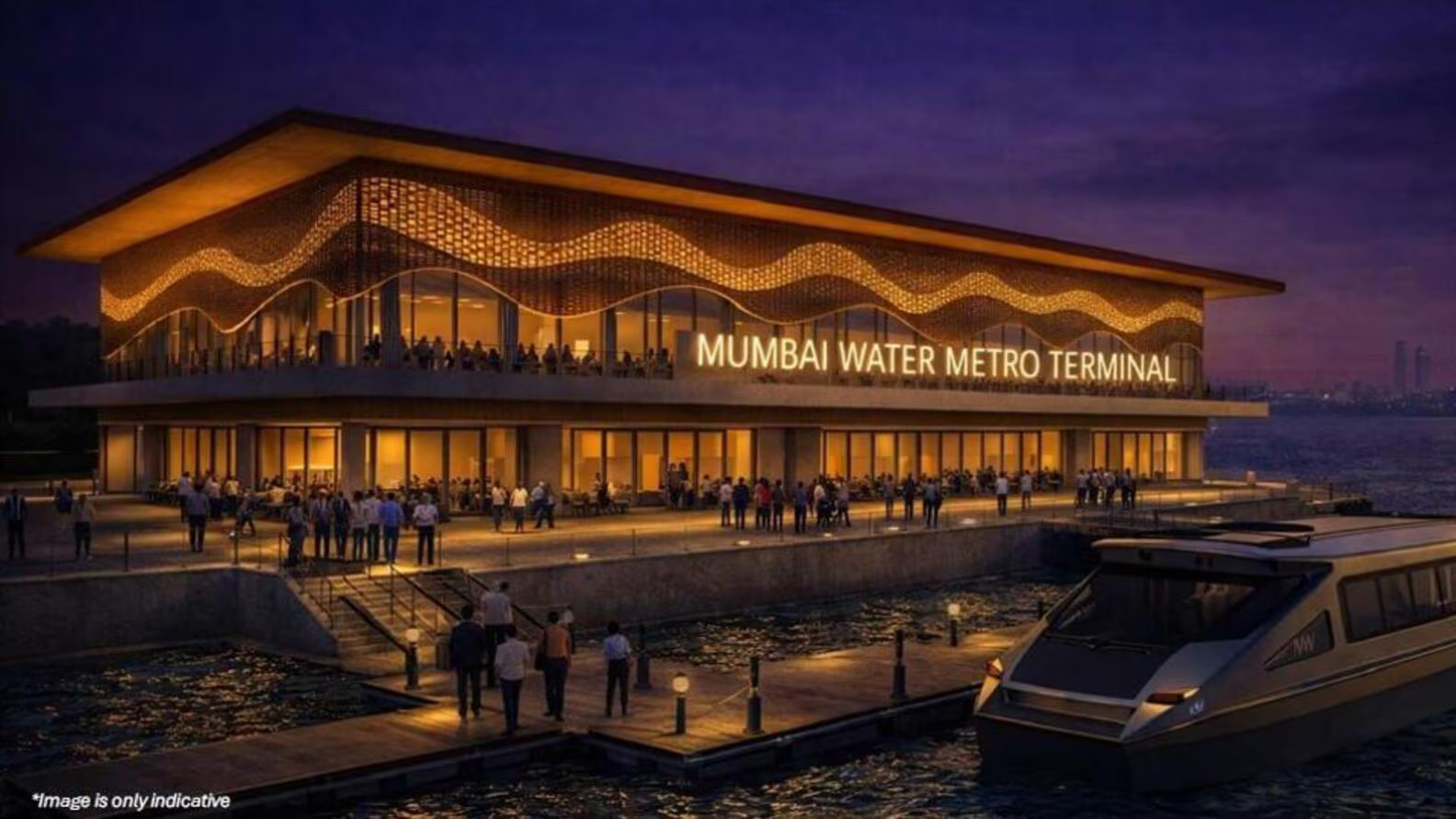
The Mumbai Metropolitan Region (MMR) is moving closer to establishing a large-scale water-based transit system, with state authorities granting initial clearance to a proposed water metro network designed to serve millions of passengers annually. The initiative signals a renewed push to integrate coastal and inland waterways into the region’s broader mobility framework, at a time when road and rail systems are under sustained pressure.
The proposed MMR water metro plan envisions a multi-route network spanning over 100 kilometres, connecting key urban nodes across Mumbai, Thane, and Navi Mumbai. In its first phase, the system is expected to operate across more than 20 routes supported by a network of terminals, creating an alternative commuting layer that leverages the region’s extensive coastline and creek systems. Transport planners view the MMR water metro plan as a strategic intervention to diversify transit options in one of India’s most densely populated urban regions. With suburban rail networks operating near capacity and road corridors facing chronic congestion, waterways present an underutilised asset that could ease travel demand while improving resilience in the transport ecosystem.
The plan draws from operational models seen in other coastal cities, where integrated ferry systems have successfully complemented land-based transit. However, Mumbai’s earlier attempts at water transport have faced challenges, including cost inefficiencies and inconsistent commuter uptake. Experts suggest that long-term viability will depend on reliable scheduling, seamless last-mile connectivity, and fare structures that remain competitive with existing modes. Financially, the project is structured around a public-private partnership approach, with significant investment earmarked for both infrastructure and vessel deployment. Public agencies are expected to develop terminals, navigation systems, and safety infrastructure, while private operators may be engaged to procure and manage fleets. The proposed mix of vessels includes electric ferries and other marine technologies, reflecting a gradual shift towards lower-emission transport solutions.
Urban development specialists highlight that the MMR water metro plan could also influence real estate dynamics, particularly in waterfront and peri-urban areas. Improved connectivity may enhance accessibility to emerging residential zones, potentially redistributing growth away from saturated city centres. At the same time, the environmental footprint of such projects will require careful management, especially in ecologically sensitive coastal stretches. Implementation is expected to unfold in phases over the next decade, with regulatory approvals, environmental clearances, and detailed engineering studies forming critical next steps. Authorities are also planning operational control infrastructure and maintenance facilities to support long-term service reliability.
If executed effectively, the MMR water metro plan could redefine how residents navigate the metropolitan region, offering a faster and potentially greener alternative to traditional commuting routes. Its success, however, will depend on how well it integrates with existing transport systems and addresses the practical realities of urban mobility in a complex and evolving city region.
MMR Water Metro Plan Targets 18 Million Riders