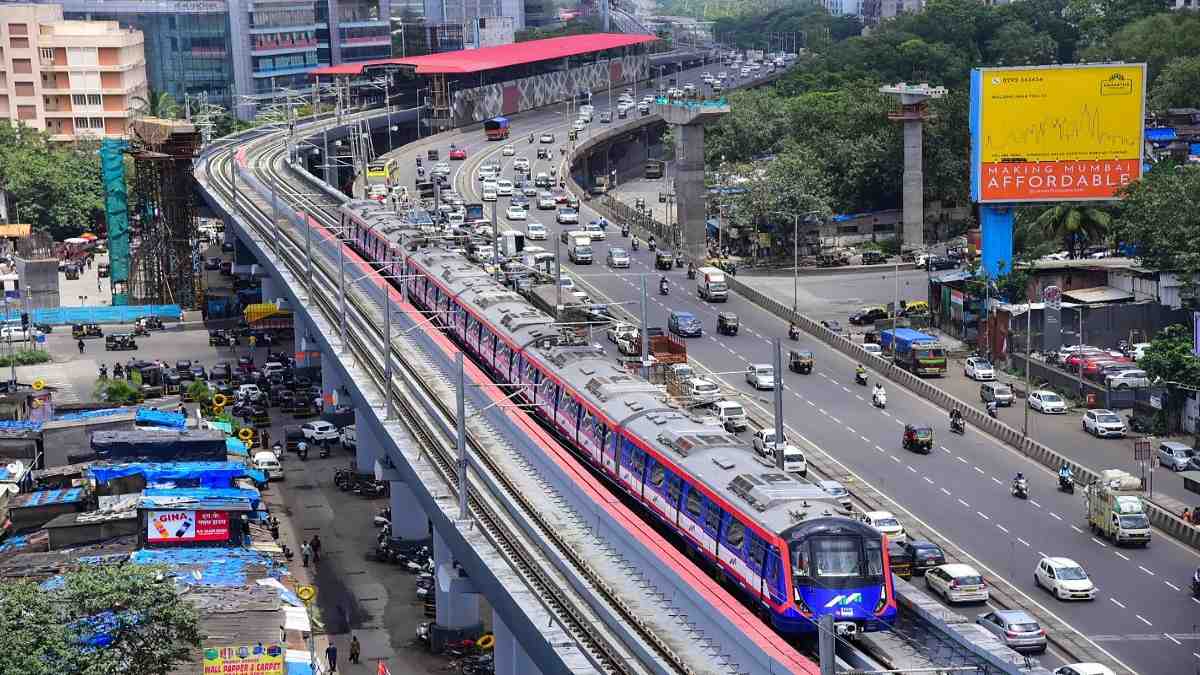
Mira Bhayandar’s long‑anticipated integration into the Mumbai Metropolitan Region’s rapid transit ecosystem is gaining ground as metro expansions and complementary infrastructure aim to reshape daily mobility and urban form in this fast‑growing northern suburb. The forthcoming metro corridors — notably the extension of Metro Line 9 and the planned Metro Line 10 — are projected to reduce travel times, widen access to jobs and services, and address chronic congestion that has burdened commuters for years.
Metro Line 9, an extension of the existing Line 7 from Dahisar East toward Mira Bhayandar, has entered advanced trials and partial readiness, with early sections connecting key suburban nodes such as Kashigaon already nearing operational status. This expansion will deliver the first heavy rail connection for Mira Bhayandar residents, linking them seamlessly to the broader metro network and enabling transfers to other major corridors such as Lines 2A and 2B. It is expected to significantly reduce reliance on road travel, easing congestion along the Western Express Highway. Alongside this rail project, pioneering road‑rail integration infrastructure — including a double‑decker flyover that combines metro operations with vehicular movement — has already been inaugurated. This engineering solution not only mitigates surface traffic bottlenecks but also reflects a broader shift toward multi‑modal design principles that optimise limited urban space and improve overall journey quality.
Complementing these developments, the proposed Metro Line 10 between Gaimukh in Thane and Shivaji Chowk in Mira Bhayandar promises to further enhance north‑south connectivity and support balanced regional development. With an estimated cost running into thousands of crores and plans under active procurement processes, this fully elevated corridor is anticipated to knit together dense suburban catchments while offering scalable capacity for future demographic growth. Urban planners and transport economists suggest that these investments could catalyse economic activity beyond commuting efficiencies by stimulating transit‑oriented development, boosting property markets, and broadening access to employment and services across the Mumbai Metropolitan Region. By linking Mira Bhayandar more closely to core commercial centres, the metro lines are expected to reduce travel time disparities and support a more equitable urban footprint.
However, the success of this transport overhaul hinges on synchronised planning across land use, first‑ and last‑mile connectivity, and supportive urban policies that prioritise pedestrian access, feeder networks and affordable transit options. Integrating these metro projects with buoyant growth in housing, jobs and local services will be crucial in ensuring that mobility gains translate into broader quality‑of‑life improvements.
As Mumbai’s rapid transit expansion enters a critical phase, Mira Bhayandar stands on the brink of a mobility transformation that could redefine its role within the metropolitan region — from a peripheral commuter belt to a fully connected urban node with enhanced access and opportunity.