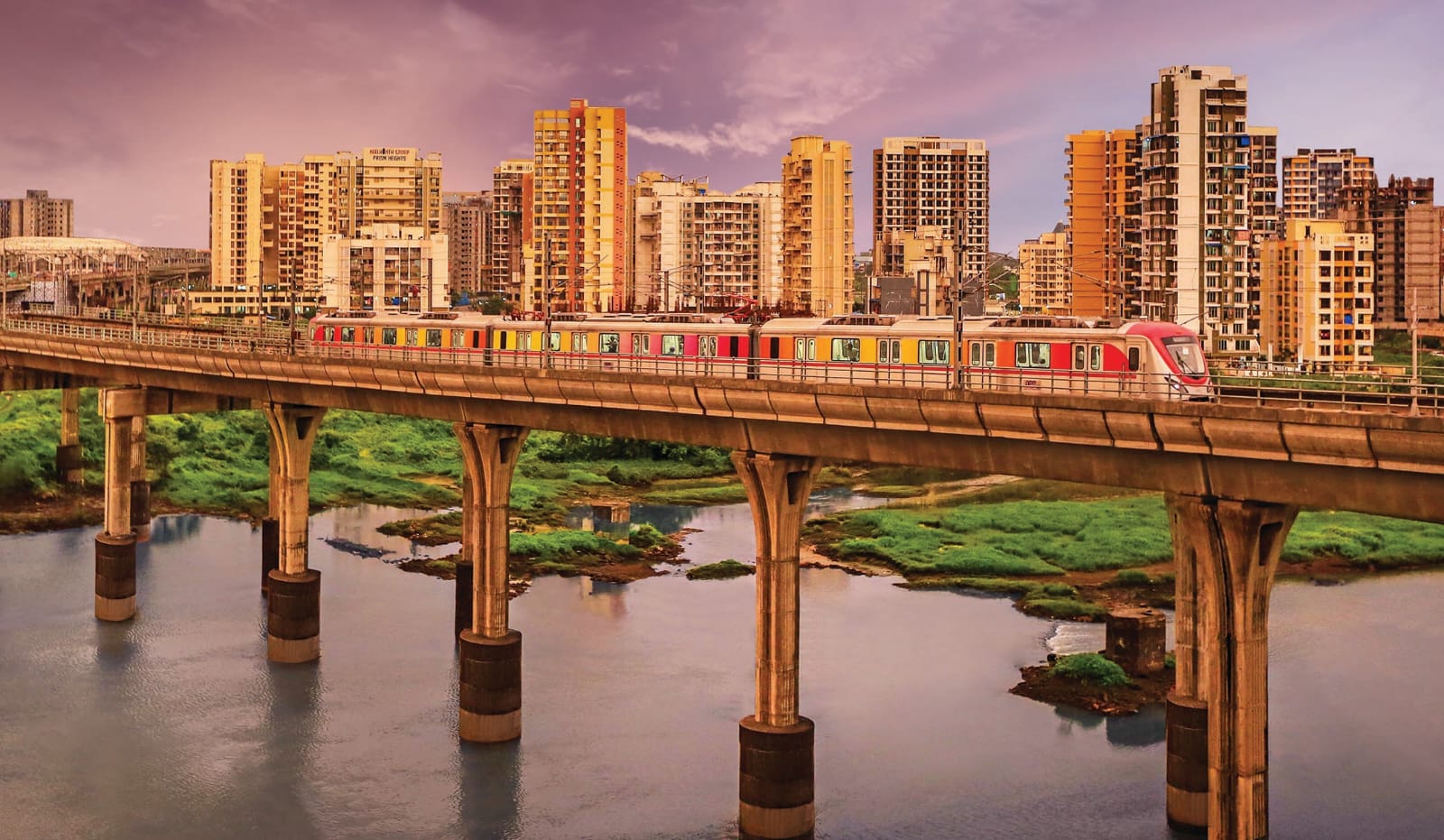
Navi Mumbai’s public transport network has marked a significant milestone, with the metro system on the Belapur–Pendhar corridor recording more than one crore passenger journeys within its first two years. The rapid adoption of Metro Line 1 reflects the wider shift towards dependable, low-emission mobility in one of the Mumbai Metropolitan Region’s fastest-growing urban clusters.
The line, operated by the city’s planning authority, commenced full services in November 2023 with the aim of improving east–west transit and reducing congestion on arterial roads. According to officials, cumulative ridership has now exceeded 1.15 crore, signalling strong commuter confidence and demonstrating that high-capacity, electric mass transit can effectively support dense housing and employment zones. The corridor connects key residential and industrial pockets including Belapur, Kharghar, Taloja and adjoining growth centres, making it a vital transport option for daily commuters. Transport specialists note that the ridership trajectory underscores a growing public willingness to shift from personal vehicles to reliable metro systems, particularly when supported by accessible fares and predictable services. The authority recently revised the timetable to improve service frequency, operating trains every ten minutes during peak periods and every fifteen minutes at other times. Officials report that these adjustments, coupled with a simplified fare structure of ₹10 to ₹30, have been instrumental in expanding the commuter base by making the service both affordable and time-efficient.
Urban mobility analysts highlight that such demand patterns strengthen the case for further metro integration across Navi Mumbai, especially as the region prepares for the operationalisation of the Navi Mumbai International Airport (NMIA). The planned extension of Line 1 from Belapur to NMIA is expected to deliver seamless airport connectivity, reducing road pressure and enabling a more sustainable mobility ecosystem. Line 2, proposed between Pendhar and Taloja MIDC with onward links to the airport via Kalamboli and Kamothe, is also expected to enhance regional accessibility and support transit-oriented development. The ridership milestone also aligns with broader goals of building low-carbon, inclusive cities, where public transport acts as the backbone of equitable urban mobility. Experts argue that consistent metro usage helps reduce emissions, improves air quality, and ensures safer and more predictable travel—benefits that disproportionately assist daily-wage earners, office workers, and students who depend on affordable transit options.
For Navi Mumbai, the achievement positions the city as a model for planned, sustainable mobility growth within the metropolitan region. As population clusters expand and industrial nodes intensify, continued investment in integrated, multimodal transport will be crucial. The metro’s early success suggests strong potential for future expansion, provided authorities maintain a commuter-centric approach that balances accessibility, environmental responsibility and long-term urban resilience.
Milestone Achieved: Navi Mumbai Metro Speeds Towards Future Expansion By Crossing One Crore Ridership