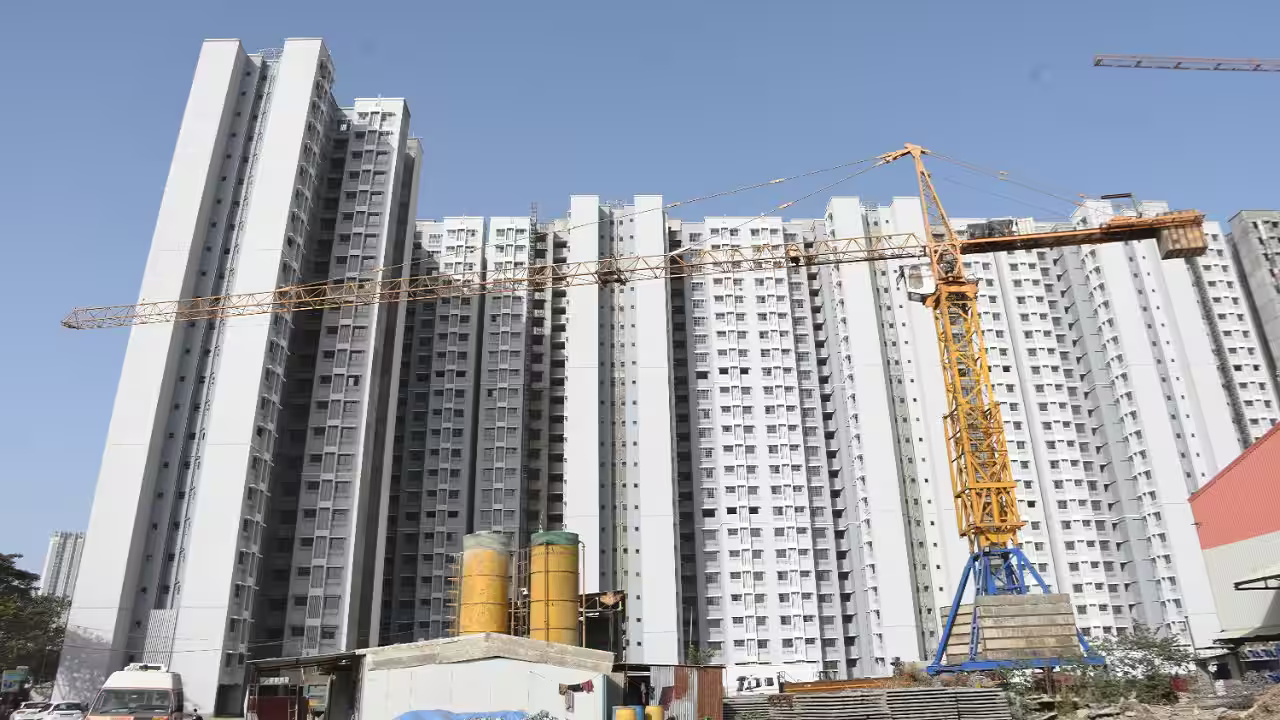
Mumbai’s public housing landscape is poised for a significant development, with the city’s housing authority preparing to open applications for a new round of affordable homes once administrative restrictions ease. Officials involved in the process indicate that the upcoming housing draw could make around 3,000 residential units available within the city limits, with the formal announcement expected in March 2026. A parallel draw covering thousands of additional homes in the wider Konkan region is also under preparation.
The proposed lottery comes at a time when Mumbai continues to grapple with severe housing affordability pressures. Residential prices across most private developments remain beyond the reach of large sections of salaried and self-employed households. Against this backdrop, MHADA housing schemes remain one of the few viable pathways to legally secure, city-based homeownership for middle- and lower-income residents. Urban planners note that such public housing interventions play a stabilising role in overheated property markets by offering price-controlled alternatives. According to officials familiar with the planning, the upcoming MHADA Mumbai lottery will primarily draw from homes generated through redevelopment schemes and ongoing construction projects. Several large-scale redevelopment initiatives across western and central Mumbai are currently at various stages of execution, creating a pipeline of housing stock that can be gradually released through transparent allotment mechanisms. While precise locations and unit numbers are yet to be formally notified, authorities have indicated that detailed area-wise data will be disclosed only after the official advertisement is issued.
The lottery is expected to include homes across multiple income categories, reflecting MHADA’s mandate of inclusive urban housing. Smaller units are likely to be reserved for economically weaker and lower-income groups, while larger configurations may be offered to middle- and higher-income segments. Housing experts point out that this mixed-category approach helps maintain social diversity within redeveloped neighbourhoods while ensuring that public land resources are allocated equitably. From a governance perspective, the timeline being considered follows the authority’s established digital-first process. Registrations are expected to be conducted entirely through an online portal, supported by a single-window verification system. Applicants will need to meet eligibility conditions, including the absence of residential property ownership within Mumbai among immediate family members. Documentation requirements are expected to include identity, domicile, income, and banking records to ensure transparency and compliance.
Beyond individual homeownership, the MHADA lottery has broader urban implications. Affordable housing availability within city limits reduces long-distance commuting, supports workforce proximity to employment hubs, and contributes to lower transport emissions. As Mumbai expands outward, experts argue that sustained investment in inner-city affordable housing is critical to building climate-resilient, people-centric urban growth. With demand expected to significantly outstrip supply, officials advise prospective applicants to closely track verified notifications and timelines. As the city prepares for this next phase of public housing allocation, the upcoming lottery is likely to serve as a key indicator of how effectively Mumbai can balance redevelopment, affordability, and inclusive growth in the years ahead.
MHADA Homes Set For New Lottery