


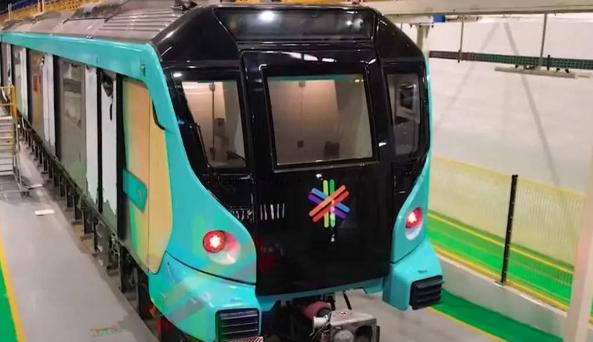
Mumbai: The Research Design and Standards Organisation (RDSO) of Indian Railways has successfully completed the trials for the rolling stock designated for the underground Metro 3 (Colaba-Bandra-Seepz) corridor. These trials mark a significant milestone, with Phase I focusing on the stretch between Bandra-Kurla Complex (BKC) and Aarey.
Commencing on June 8, these trials assessed the dynamic performance and stability of the train sets at a maximum speed limit of 95 kmph, utilising both empty and loaded rakes. The oscillation trials, crucial for ensuring the safety and comfort of future passengers, have now concluded. “This is a significant milestone as oscillation trials for the Metro rakes have been concluded,” a senior MMRCL official stated.
The RDSO will now compile its findings and submit a comprehensive report to the railway board and the commissioner of metro rail safety. This report is pivotal in the approval process for the Metro 3 project, ensuring that all safety and performance standards are met before the commencement of commercial services. Currently, the focus has shifted to the testing of other electrical systems and the integrated testing of the rolling stock with the signalling systems. This phase is essential to ensure seamless operation and coordination of all electrical and signalling components, which are critical for the safe and efficient functioning of the metro system. “Testing of other electrical systems and integrated testing of the rolling stock with signalling is in progress. After completion of testing, the commissioner of metro rail safety will be invited,” added the MMRCL official.
The oscillation trials conducted by RDSO were comprehensive, evaluating key aspects such as ride comfort by assessing vibrations and accelerations within the train. This ensures that passengers experience a smooth and comfortable ride. Additionally, the trials examined the dynamic stability of the train, crucial for preventing derailments, especially at high speeds and on curves. Another critical component of the trials was the interaction between the train and the track, analysing the forces exerted on the rails to mitigate the potential for wear or damage. These rigorous tests and subsequent evaluations are essential steps towards the operational readiness of Metro 3, promising enhanced connectivity and commuting efficiency for Mumbai’s residents. The completion of these trials brings the city one step closer to the operational launch of this crucial infrastructure project.
