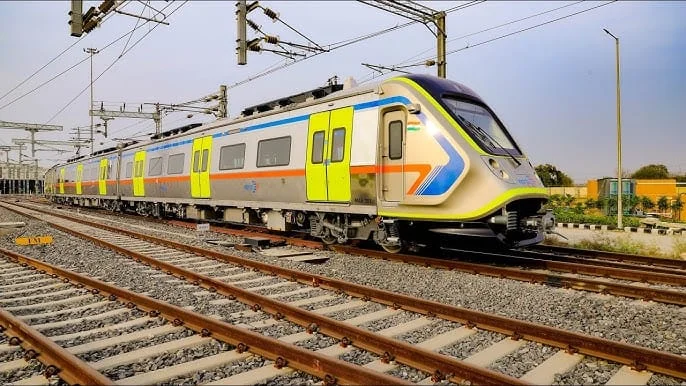
Meerut New Transit Links Transform Real Estate Dynamics
Meerut’s real estate landscape is entering a new era of spatial and market transformation as the recently inaugurated rapid transit infrastructure sharply improves connectivity across the city and the broader National Capital Region (NCR). With the full deployment of the Meerut Metro and the Delhi–Meerut Namo Bharat Regional Rapid Transit System (RRTS), at least five distinct zones are emerging as strategic growth hubs — reflecting a shift toward transit-aligned development that could redefine the city’s urban geography and investment appeal.
The expanded network, inaugurated on February 22, 2026, positions Meerut as a more accessible and viable housing choice for commuters and investors alike, significantly compressing travel times to Delhi and neighbouring urban nodes. This new infrastructure is expected to underpin residential and mixed-use market expansion in areas previously on the periphery of mainstream demand.At the forefront is Modipuram, the terminal point of the RRTS and a primary metro node, where real estate activity is intensifying. Market observers note that the area’s enhanced connectivity and government infrastructure support are unlocking latent development potential, particularly for medium- to high-density residential projects and commercial precincts.
Pallavpuram — linked directly via major highways to Ghaziabad and Delhi — is likewise attracting buyer interest for its blend of accessibility and planned neighbourhood character. This zone is increasingly viewed as a strategic location for urban families seeking walkable communities with rapid access to employment centres.Closer to Meerut’s established core, Ganga Nagar offers structured township living with civic amenities that appeal to demand across income segments, while Shastri Nagar’s mature residential fabric provides investors and long-term homeowners with relative stability amid rising values. These areas benefit from improved intra-city transit links that mitigate dependence on private vehicles and support more sustainable mobility patterns.The corridor along the Meerut Bypass and NH-58 is also set to become a dynamic mixed-use corridor, with land parcels ripe for logistics, commercial, and township-scale development. Its integration with the RRTS and highway networks enhances both commuter accessibility and goods movement, which can catalyse diversified economic activity.
Urban planners point out that these emerging real estate zones reflect a broader regional shift toward Transit-Oriented Development (TOD) — an approach that clusters higher-intensity, mixed-use functions around high-capacity transit stations, thereby reducing reliance on road transport and promoting walkable, compact communities. While Meerut has historically been a mid-tier urban centre, the new connectivity could accelerate its evolution into a more balanced, polycentric node within the NCR.However, the influx of real estate investment also underscores the need for coordinated urban planning to support inclusive growth. Experts suggest investing in complementary social infrastructure — such as schools, healthcare, and last-mile transit — to ensure that rising property values do not exclude lower- and moderate-income residents from benefiting equitably from improved mobility.
As Meerut’s property market responds to these infrastructure advances, the city is likely to witness sustained interest from both local homebuyers and investors, while also posing new planning imperatives for equitable and sustainable urban development.