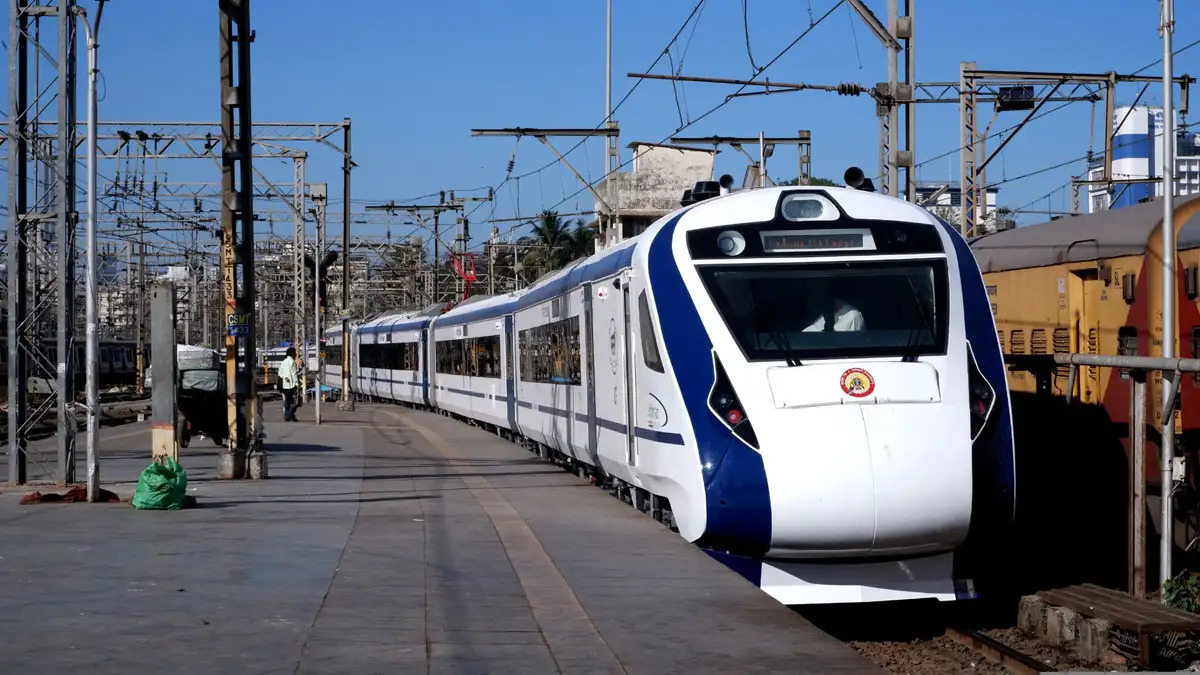
Meerut-Lucknow Vande Bharat Express Now Extends Service to Varanasi via Ayodhya
A high-speed rail service, initially struggling to attract commuters on its Meerut-Lucknow route, is undergoing a strategic recalibration with an extension to Varanasi via the city of Ayodhya. This bold move by Indian Railways aims to tap into the burgeoning spiritual tourism sector, transforming a financially underperforming business venture into a potential cornerstone of sustainable, eco-friendly transport for pilgrims and tourists. The extension is a calculated risk, seeking to fill the void of daytime occupancy by connecting two of Uttar Pradesh’s most significant cultural and religious hubs. This development is part of a broader, visionary approach to create more equitable and accessible urban networks, reducing the carbon footprint associated with long-distance travel.
The initial rollout of the Vande Bharat Express, which had been celebrated as a leap forward in modern rail travel, has faced an unexpected headwind of low passenger turnout. Despite its promise of a high-speed, fully air-conditioned experience, the train has been consistently running with a significant number of empty seats. Data from the first week of August revealed that while Executive Class seats showed some promise of demand on select days, the majority of Chair Car seats remained unbooked, leading to considerable financial losses. This has prompted railway authorities to reassess the service’s operational model. Officials and experts have pointed out that the train’s daytime schedule, which sees it covering a 782 km distance in nearly 12 hours, has been a major deterrent for potential passengers. The leisurely pace, which often involves being held up outside stations due to platform congestion, particularly in Lucknow, has made it less appealing for time-sensitive business travellers.
In response to this, the new extension aims to revitalise the service by tapping into a different demographic. By connecting Meerut, an industrial and educational hub, with Ayodhya and Varanasi, two cities of immense religious and cultural significance, the Railways are hoping to attract a steady stream of pilgrims and tourists. This shift in focus from pure business travel to spiritual and leisure journeys aligns with a broader national agenda to promote sustainable travel. The fully electric Vande Bharat trains are a key component of the zero-net-carbon rail initiative, offering a low-emission alternative to road and air travel. This strategy also serves the larger goal of creating a more equitable society by providing a comfortable and affordable travel option for a wider cross-section of the population, including those who may not be able to afford air travel.
The fare for the extended route from Meerut to Varanasi has been set at ₹1,915 for the Chair Car and ₹3,525 for the Executive Class, with both fares being all-inclusive of catering charges. The revised timetable shows that Train No. 22490 will now depart from Meerut at 6:35 am, reach Ayodhya Cantt at 3:53 pm, and finally arrive in Varanasi at 6:25 pm. The return journey, under Train No. 22489, will depart from Varanasi at 9:10 am, reach Ayodhya at 11:40 am, and conclude its journey in Meerut at 9:05 pm. The service will continue to run six days a week, with a scheduled halt on Wednesdays for maintenance.
Passengers have also been vocal about their preferences, with many demanding the conversion of the service into an overnight train with sleeper facilities. They argue that this would be more convenient and would dramatically increase ridership, as it would allow them to arrive at their destination well-rested and ready to start their day. This feedback is currently being considered by railway authorities as they work to optimise the new route and ensure its commercial viability. The extension of the Vande Bharat service to Varanasi is a significant step towards creating a robust, sustainable, and inclusive transportation network, serving both the economic and spiritual needs of the nation. It reflects a dynamic approach to public service, where infrastructure adapts to meet the changing demands of its users while remaining committed to long-term environmental and social goals.