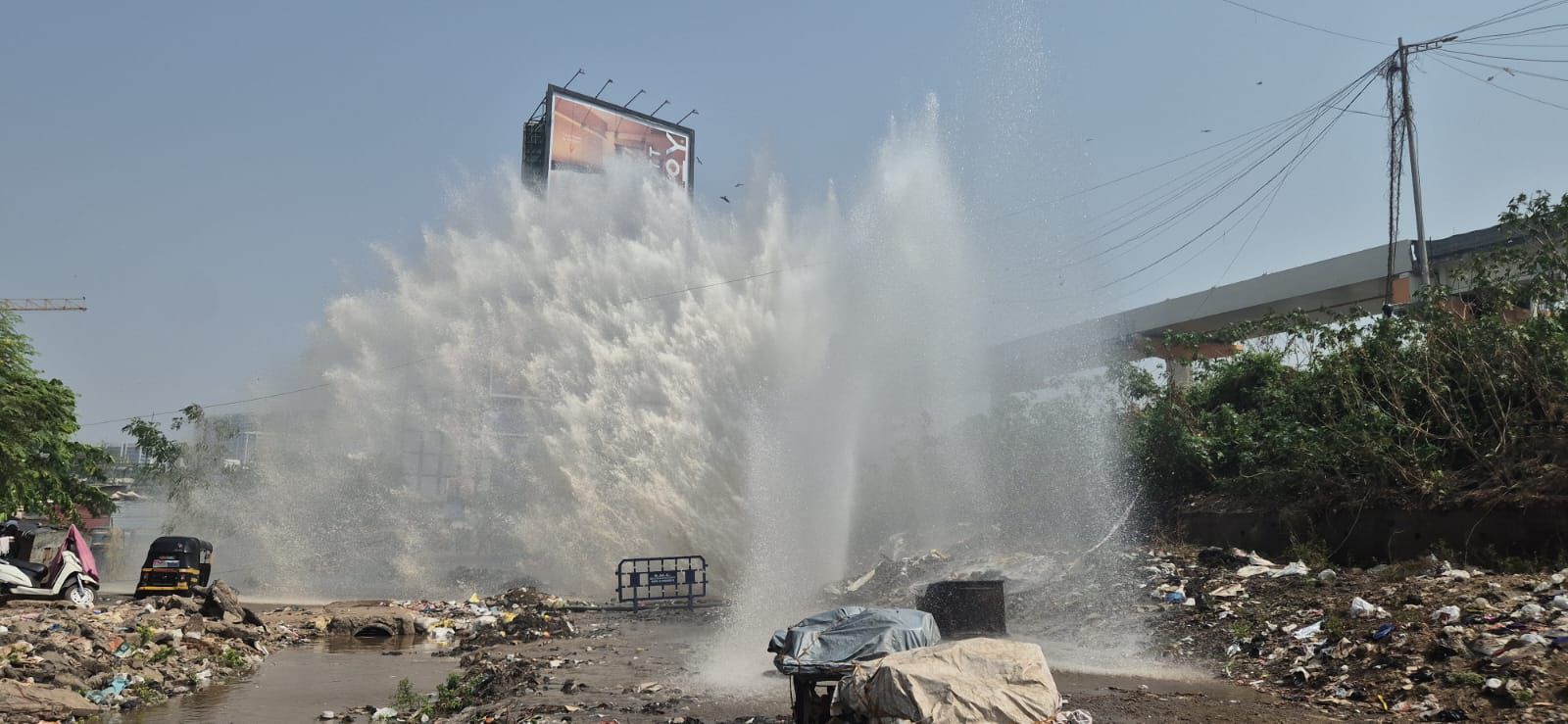
A sudden rupture in a high-capacity water pipeline in Mumbai’s Bandra Reclamation area on Monday exposed the vulnerability of the city’s ageing underground infrastructure, flooding a key arterial road and bringing traffic to a halt. The incident occurred just days before scheduled water supply disruptions across several western suburbs, amplifying concerns around water security, maintenance practices and urban resilience.
The pipeline, carrying treated drinking water under high pressure, was damaged during excavation activity near the Mahim Causeway. Within minutes, water surged forcefully above street level, inundating the northbound carriageway and disrupting vehicular movement during peak afternoon hours. Civic officials confirmed that a significant volume of potable water was lost before valves could be shut and emergency repairs initiated. For commuters, the impact was immediate. Traffic congestion spilled into adjoining roads, affecting access between Bandra, Mahim and key coastal connectors. Transport planners note that such failures on strategic corridors have ripple effects across the wider road network, increasing travel time, fuel consumption and emissions—an outcome at odds with the city’s mobility efficiency goals.
Municipal teams were deployed to isolate the damaged section and begin repair work. Officials also issued advisories warning of possible water contamination in nearby supply zones due to pressure fluctuations and repair operations. Residents were advised to use water judiciously and follow precautionary measures once normal supply resumes. The incident has added strain to an already tight supply schedule, with planned shutdowns and pressure reductions lined up for parts of Bandra, Khar and Santacruz as part of routine network maintenance. Urban infrastructure experts say the episode underscores a deeper challenge facing Mumbai: balancing continuous construction activity with the protection of legacy utility networks. Much of the city’s water distribution system runs beneath dense, high-traffic corridors, often with incomplete mapping or outdated records. Accidental damage during excavation remains a recurring risk, particularly in redevelopment zones and areas undergoing transport upgrades.
Beyond service disruption, the loss of treated water raises sustainability concerns. In a city that faces seasonal water stress and rising demand, unplanned wastage undermines efficiency gains made through conservation and supply augmentation projects. Climate resilience specialists argue that proactive asset management—such as pressure monitoring, real-time leak detection and stricter excavation protocols—must become integral to urban governance. As repairs continue, the civic administration is expected to review safety procedures around underground utilities and coordination between infrastructure agencies. For residents and businesses, the incident is a reminder that invisible systems beneath city streets are as critical as visible transport projects. Strengthening these systems will be central to ensuring Mumbai’s future growth remains reliable, equitable and resilient in the face of mounting urban pressures.
Massive Water Jet Erupts After Pipeline Damage In Mumbai