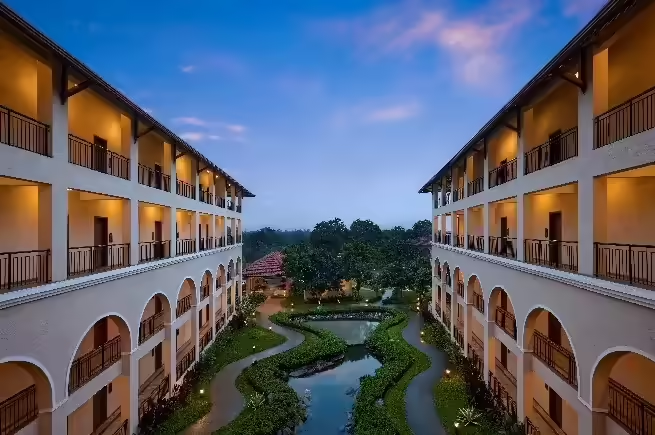
Marriott International Strengthens Kochi Hotel Operations Model
Marriott International, a global hospitality company, has strengthened its operational structure in Kochi by introducing a multi-property leadership role to oversee three of its key hotels in the city. The move reflects a growing emphasis on integrated management within urban hospitality clusters, where coordinated operations can improve efficiency, service consistency and guest experience across properties.
Under this arrangement, a single executive will now supervise Marriott Kochi Hotel, Courtyard by Marriott Kochi, and Port Muziris, A Tribute Portfolio Hotel, all part of the Marriott International portfolio in the city. The consolidation is designed to align strategy across different hotel formats, ranging from premium business accommodation to lifestyle and boutique offerings, while maintaining distinct brand identities under the broader corporate umbrella.Kochi has emerged as an important node in India’s tourism and business travel network, supported by its coastal geography, international connectivity and growing role as a regional commercial centre. For Marriott International, streamlining leadership across multiple properties allows for better resource allocation, unified staffing strategies and improved operational responsiveness to seasonal demand fluctuations.Industry observers note that multi-property management structures are increasingly being adopted by global hospitality groups in urban markets where clusters of branded hotels operate in proximity. This approach enables centralised decision-making on areas such as pricing strategy (excluding financial references), workforce deployment, sustainability practices and guest services, while still allowing each property to cater to specific market segments.
From an urban development perspective, the presence of multiple large hotel assets managed under a coordinated framework contributes to the broader tourism infrastructure of Kochi. Hotels serve as anchors for business events, conferences and international visitors, generating spill-over benefits for local transport services, retail ecosystems and service-based employment. A unified leadership model can enhance collaboration with city stakeholders, including tourism bodies and event organisers, helping align hospitality offerings with Kochi’s evolving urban profile.The executive elevated to the multi-property role brings prior experience managing hospitality operations within Kochi and other Indian cities, offering familiarity with local demand patterns, workforce dynamics and guest expectations. Such continuity is often seen as critical in maintaining service standards while scaling operations across multiple assets.
For Kochi’s hospitality ecosystem, the development signals continued confidence in the city’s long-term tourism potential. As urban centres expand and diversify, integrated hotel management models like this can support more sustainable growth by optimising resource use, strengthening service quality and enhancing the overall visitor experience.Looking ahead, the success of this model will likely depend on how effectively it balances centralised coordination with the unique positioning of each hotel. If executed well, it could serve as a reference point for other urban hospitality clusters seeking to improve operational efficiency while contributing to inclusive and sustainable urban tourism development.