


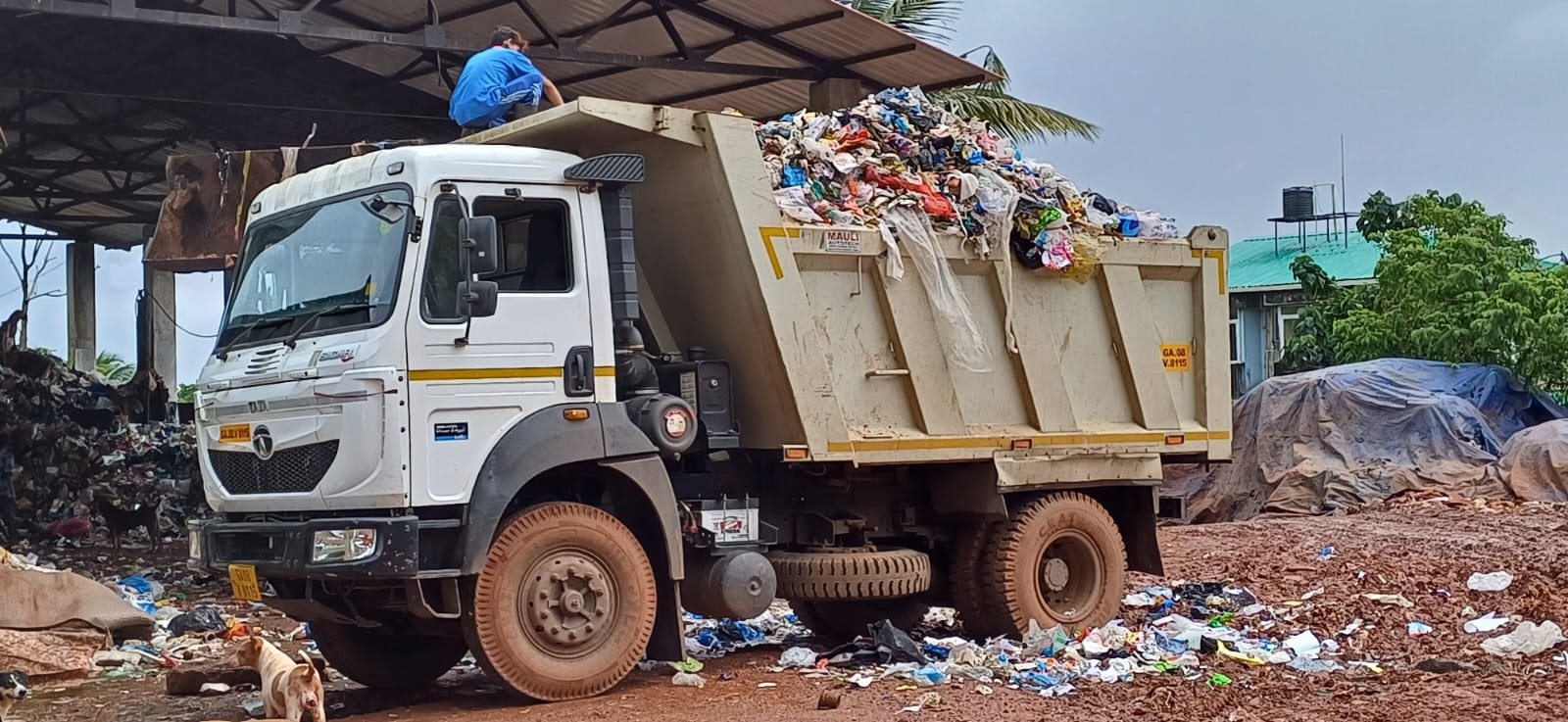
Margao’s struggle with waste mismanagement intensifies
Margao’s waste management crisis has deepened, with illegal dumping plaguing its waste segregation centres, creating a serious civic concern for residents and local authorities alike. The problem has intensified in Comba, where truckloads of waste, including coconut shells, are being discarded unlawfully, frustrating the Margao Municipal Council (MMC) and undermining its waste management efforts.
The city’s battle against mounting garbage woes has taken a turn for the worse as unauthorised dumping continues unabated despite repeated interventions. In Comba, where a waste segregation facility is in place, the situation has escalated to the point where residents are taking matters into their own hands. One local, determined to curb the menace, installed CCTV cameras at his own expense, capturing offenders who use the cover of darkness to dispose of waste illegally. However, these surveillance efforts have yet to deter habitual violators, raising questions about the effectiveness of enforcement measures in a city struggling with an ever-growing waste burden.
Local councillors have expressed strong concerns, pointing out that unchecked dumping not only pollutes the environment but also hampers the municipality’s broader sustainability goals. One councillor lamented that despite Margao’s continued focus on cleanliness, illegal dumping remains a persistent challenge, eroding the progress made in waste management. Residents have also voiced their frustrations, stating that the waste segregation centres meant to streamline disposal are instead turning into open dumping grounds, with waste being brought in from outside the ward. The problem is compounded by the municipality’s limited enforcement capacity, which has resulted in sporadic crackdowns that have failed to curb the practice.
To combat the issue, the MMC has explored new solutions, including a proposal to process coconut husks at the Sonsoddo waste treatment site. The idea involves using specialised machinery to convert coconut shells into powder, a move aimed at reducing organic waste accumulation. However, while this initiative shows promise, it remains unclear whether such measures will be sufficient to address the scale of the illegal dumping crisis. Civic officials acknowledge that stricter enforcement, greater public cooperation, and enhanced waste disposal infrastructure will be necessary to make a tangible impact.
Authorities are urging residents to report instances of illegal dumping, but without stringent penalties and consistent monitoring, Margao’s waste problem risks spiralling further. As the city grapples with its garbage woes, the call for more sustainable and effective waste management solutions grows louder. The success of such efforts will ultimately depend on a combination of robust municipal action, community participation, and a shift towards eco-friendly disposal practices that align with the broader goal of creating a cleaner, more sustainable urban environment.
