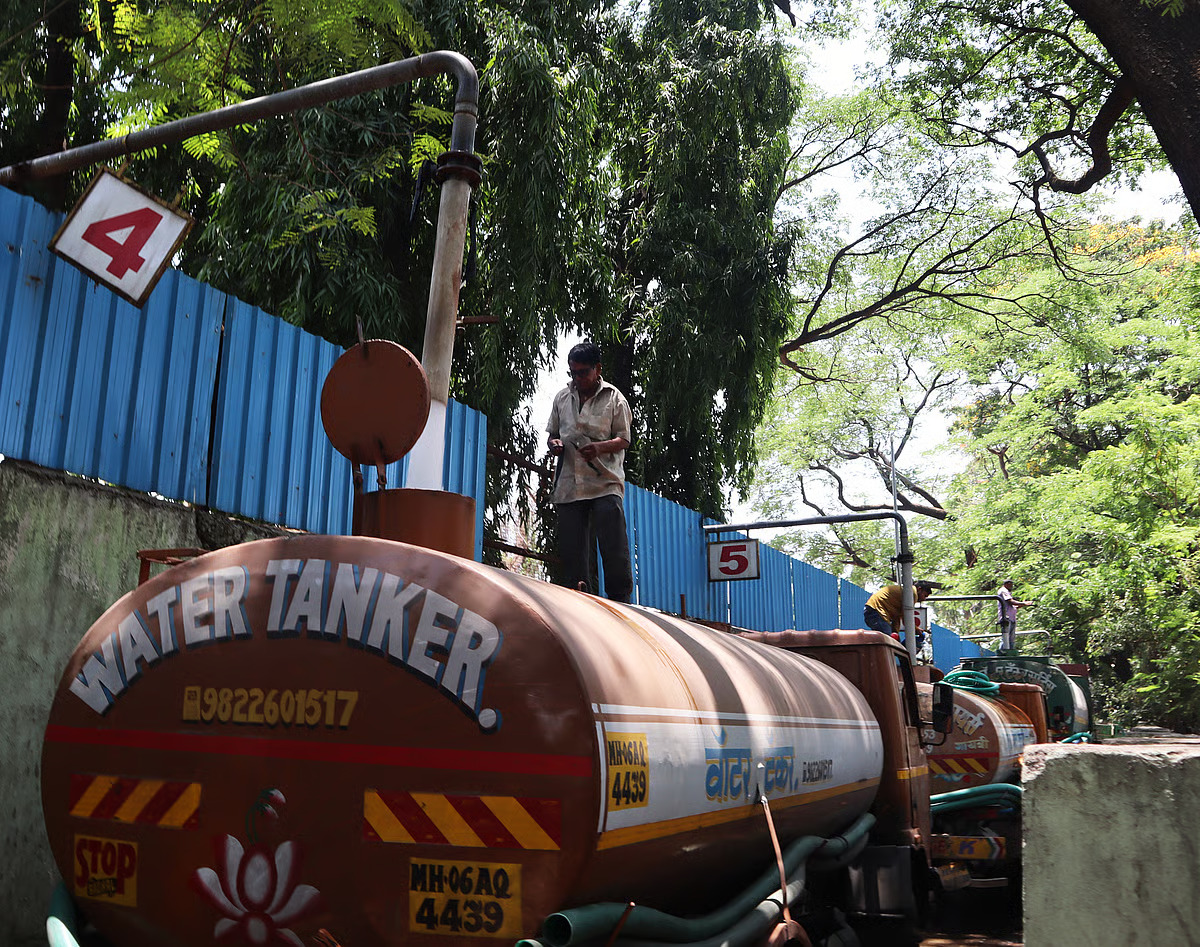
Marathwada Rain Hits Four Districts Yet Villages Still Dependent on Tankers
Marathwada recorded significant monsoon showers, with 57 revenue circles across Nanded, Hingoli, Sambhajinagar, and Jalna seeing heavy rain, yet 268 villages continue relying on 424 water tankers and reservoirs hold just 38 % capacity. Thursday morning data from the India Meteorological Department (IMD) confirmed heavy rainfall—over 65 mm—in 57 circles across Marathwada’s four districts, with Nanded reporting the highest levels. Nanded’s Mahur, Wanola and Daheli each recorded between 141 mm and 157 mm, while Hingoli averaged 48 mm across nine circles, and Sambhajinagar and Jalna each logged five and three circles respectively.
For two consecutive days, the region has been under mostly cloudy skies with limited sunshine, offering some relief to a long monsoon deficit that had left farming communities anxious. Despite this rainfall, water scarcity remains critical. Government figures show that 268 villages across Marathwada still receive tanker deliveries, mobilising 424 tankers. This includes 148 villages plus 23 hamlets in Sambhajinagar (228 tankers), 109 villages and 23 hamlets in Jalna (181 tankers), alongside Parbhani, Hingoli, and Nanded, which collectively use 15 tankers . Persistent tanker dependence highlights structural water stress that rainfall alone cannot immediately remedy.
Reservoir storage across 11 key dams in the region now stands at approximately 38 %. Jayakwadi Dam alone has attracted 39.75 TMC of inflow this monsoon season—a reassuring development after recent lows—but remains insufficient to meet the region’s broader water security needs. Though nearly four-in-ten full, the dams lag behind optimal capacity, with authorities cautioning that sudden releases may be needed if inflows surge, potentially affecting downstream communities. Weather experts warn that while Marathwada and Vidarbha saw beneficial rains, other parts of Maharashtra remain monsoon-deficient. The IMD has issued a yellow alert for Marathwada and Jalna, signalling continued moderate rainfall and the possibility of thunderstorms and gusty winds. Agricultural meteorologists view this as a positive shift for kharif crops, but farmers remain wary: sowing remains limited until consistent rainfall patterns emerge .
Analysts argue that the dual pressure of improving rains and ongoing tanker distribution underlines a persistent infrastructure gap. Thoughtful investment in eco-friendly water harvesting, ground recharge systems, and transparent tanker allocation could deliver equitable relief. Community voices underscore this need: “We welcome the rains but must build wells and reservoirs to avoid repeating shortages,” said a village representative in Sambhajinagar. Moving forward, attention must shift from emergency supply to resilience building. Strengthening rural water systems—through rainwater harvesting, watershed restoration, and modern dam management—can bridge the divide between rainfall and reliable water access. Social equity demands such systems be inclusive, ensuring that women, smallholders, and remote communities share in the benefits of sustainable infrastructure.
As the monsoon progresses, Marathwada stands at a crossroads: emerging rains offering hope, yet hydrant lines still buzzing. The challenge lies not only in catching the rain but in turning it into lasting water security for all.