


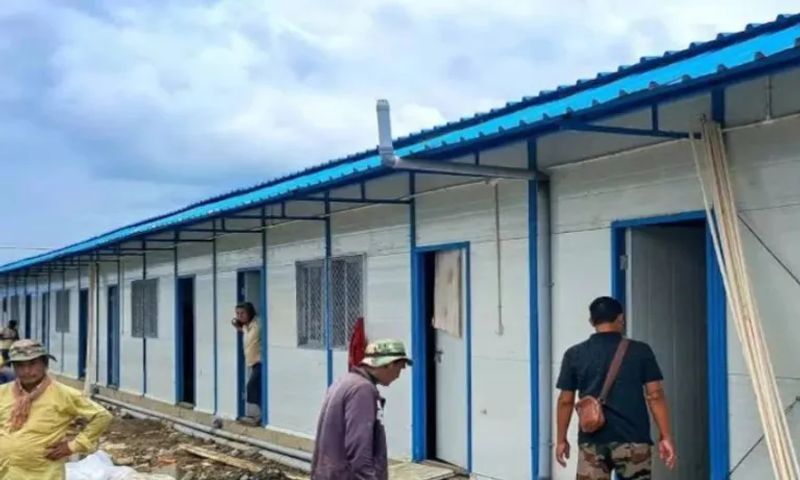
The Union government has cleared the construction of 5,000 homes in Manipur for families displaced by recent unrest, marking a significant intervention in the state’s ongoing rehabilitation efforts. The houses will be built under the rural housing programme Pradhan Mantri Awaas Yojana Gramin during the 2025-26 financial year, according to officials familiar with the decision.
The approval followed consultations in New Delhi between senior Union ministers and representatives of the Manipur government. The move is intended to support internally displaced persons (IDPs) affected by the ethnic violence that has disrupted large parts of the state since 2023. More than 260 people have lost their lives and thousands have been forced to leave their homes in clashes between valley-based Meitei groups and hill-based Kuki-Zo communities. Large numbers remain in temporary shelters or relief camps, highlighting the scale of the humanitarian and infrastructure challenge. Under the decision, eligible households will be identified through a special survey window under Awaas+ 2024, a data-capturing exercise linked to rural housing eligibility. The state has also been permitted to continue registering affected families and to sanction fresh homes under the scheme’s guidelines. In cases where beneficiaries had earlier received assistance but their houses were destroyed, the government may allow renewed support. The housing push aligns with Manipur’s stated goal of resettling 10,000 displaced families by the end of the current financial cycle. State authorities previously indicated that over 16,000 displaced persons had already been relocated, though long-term rehabilitation remains uneven across districts.
Urban planners and rural development specialists note that post-conflict housing is not merely about shelter. It requires careful site planning, access to livelihoods, public services and community infrastructure to prevent prolonged displacement or secondary migration. Integrating water supply, sanitation and road connectivity into reconstruction plans will be crucial to ensuring durable resettlement. The Pradhan Mantri Awaas Yojana Gramin framework provides financial assistance for pucca houses with basic amenities in rural areas. While originally designed to address housing shortages among low-income households, its flexibility allows it to support reconstruction in disaster- or conflict-affected regions. Officials in the Rural Development Ministry have indicated that coordination between central and state agencies will be essential to expedite approvals and fund releases. Given the fragile social environment, housing delivery may also play a stabilising role by signalling administrative support for affected communities.
As Manipur works toward restoring normalcy, the success of this housing initiative will depend not only on the number of units completed but on whether displaced families can return to secure, serviced neighbourhoods that enable economic recovery and social cohesion.
Also Read: Emaar India Appoints New Marketing Chief
Manipur PMAY Housing For Displaced Families
