


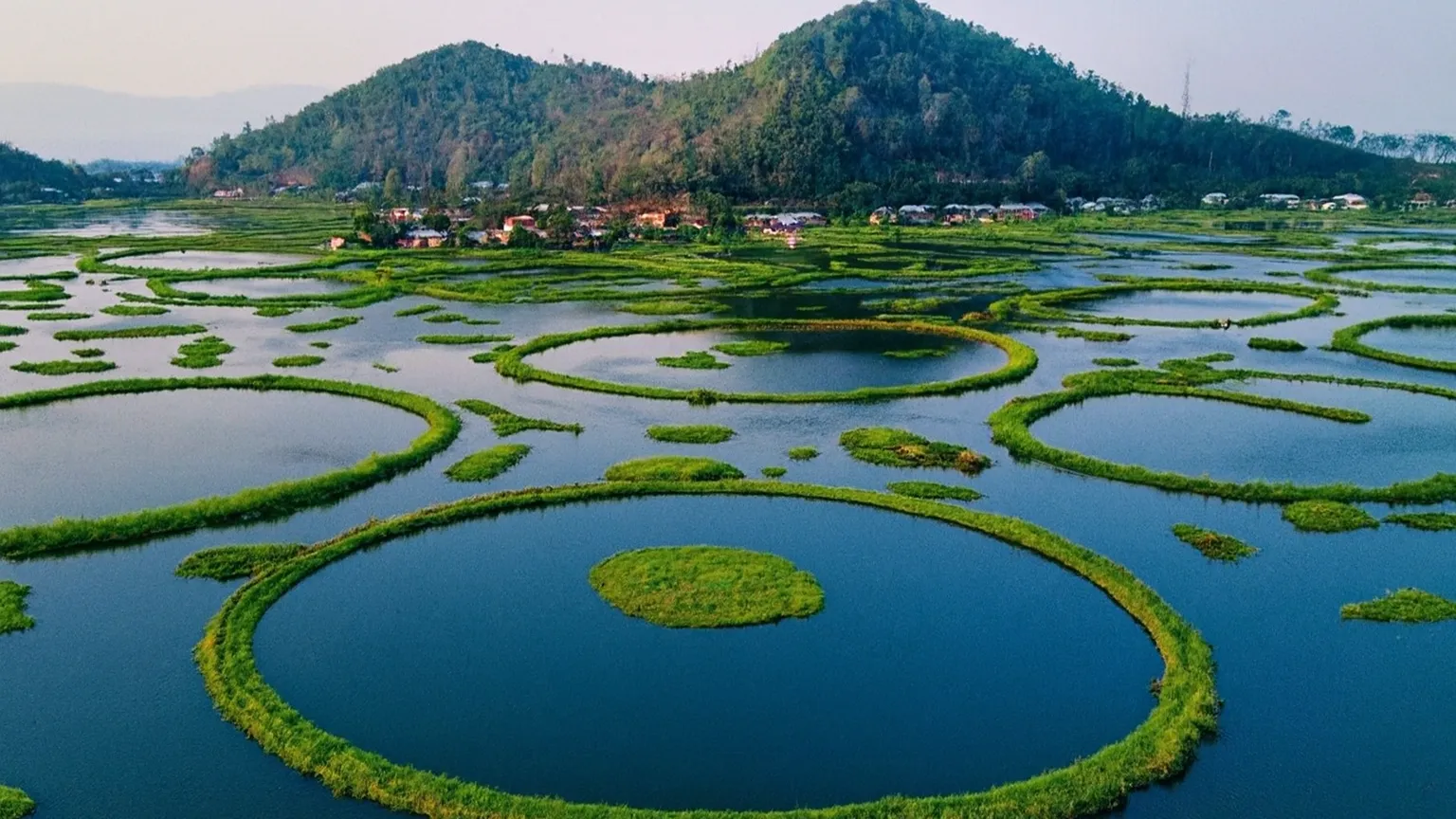
Fresh discussions are underway in Manipur on introducing a water-based public transport network at Loktak Lake, drawing inspiration from the electric ferry system operating in Kochi. Policymakers and community stakeholders see potential for improving connectivity to remote island settlements without intensifying ecological stress on one of Northeast India’s most fragile freshwater ecosystems.
The proposal gained attention following a study exposure visit to Kerala, where officials examined the operations of the Kochi Metro Rail Limited and its flagship Kochi Water Metro. Kerala became the first Indian state to operationalise an integrated water metro network in 2021, linking multiple islands through battery-powered boats connected to the city’s rail transit system.Loktak Lake, located near Moirang in Manipur, supports floating and land-based island communities dependent largely on fishing. Residents navigate using manual canoes across dispersed settlements such as Karang and Sendra. Commuting to the mainland can take up to two hours, affecting access to markets, healthcare and education.Urban transport planners say that an electric water transit model could shorten travel times and improve safety while reducing reliance on fossil-fuel engines. However, the lake’s ecological sensitivity demands careful evaluation. Loktak is known for its floating biomass formations, which sustain fish breeding and local livelihoods. Any large-scale mobility intervention would require hydrological studies, environmental impact assessments and community consultation.
Technical experts familiar with the Kochi system have indicated that water depth and surface area are key determinants for viability. While preliminary observations suggest Loktak may be physically capable of supporting such vessels, detailed feasibility studies would be essential before project design.The Kochi network currently spans 78 kilometres, operating electric boats across multiple routes with dedicated terminals and common ticketing integration. Its low-emission design has been positioned as a climate-friendly alternative to road transport, particularly in water-rich geographies. Several other states have reportedly explored similar models for riverine and coastal cities.For Manipur, the debate goes beyond mobility. Infrastructure investments around Loktak must balance connectivity with conservation, as the lake is central to regional biodiversity and economic sustenance. Environmental economists caution that even electric boats can disturb aquatic systems if traffic density is not regulated.
Yet improved transport could reduce isolation for island communities and diversify income sources through eco-tourism, provided development remains community-led and environmentally responsible. Integrating renewable energy charging systems, floating terminals designed with minimal shoreline impact, and strict navigation corridors may help mitigate ecological risks.As climate change intensifies pressure on freshwater ecosystems, resilient and low-carbon mobility solutions are becoming integral to regional planning. Whether Loktak Lake evolves into a model for eco-sensitive water transport will depend on rigorous scientific evaluation and inclusive policy design. The discussion signals a broader shift towards reimagining connectivity in water-dominated landscapes without compromising ecological integrity.
Manipur Loktak Lake eyes water metro
