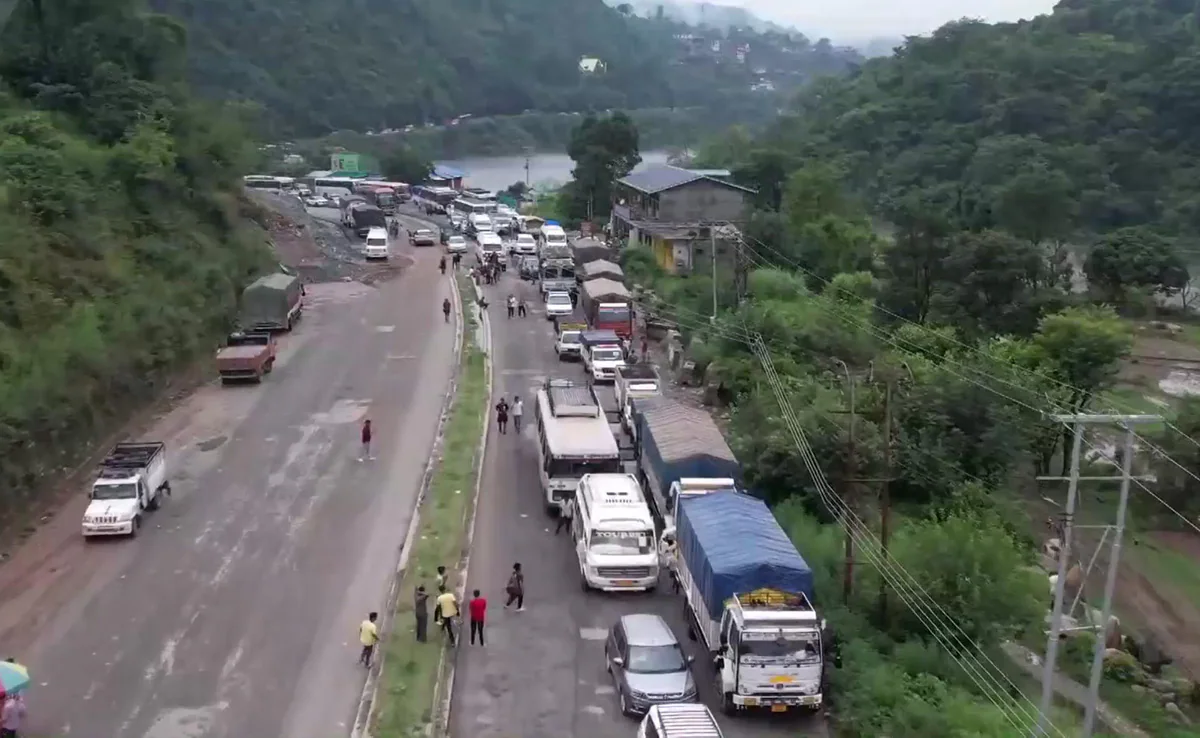
Mandi Landslides Cut Off Key Roads, Isolate Tourists and Locals
Heavy rainfall has triggered severe landslides across Himachal Pradesh’s Mandi district, cutting off 244 roads, including the crucial Chandigarh-Manali Highway, and leaving hundreds of commuters stranded. The landslides have caused widespread damage to transportation, electricity, and water supply services, isolating several villages and tourist zones. Emergency crews are working to clear debris and restore basic services amid continued rainfall, while local officials have advised the public to stay indoors and avoid riverbanks due to rising water levels. Connectivity remains disrupted, forcing the administration to divert traffic through alternate mountainous routes.
The district’s hilly terrain has made the response effort both urgent and dangerous, especially in areas like Seraj, which recorded the highest number of roadblocks. As landslides buried highways and rural roads alike, stranded residents have reported delays in receiving supplies and medical help. With travel routes inaccessible, officials have been rerouting traffic through less affected pathways via Kamand and Kataula. However, the unstable weather and rugged topography continue to complicate operations, as repeated downpours dislodge debris and trigger fresh slope failures. The impact extends far beyond road closures. Over 300 electricity transformers and 49 water schemes have been knocked out, causing power cuts and drinking water shortages across multiple subdivisions. Local workers have been deployed to restore infrastructure, but poor weather and road access issues have slowed progress.
The disruption has hit both urban and rural populations, with tourist footfall in the region plummeting due to safety concerns. Experts warn that unplanned development and weak slope management practices may be worsening the frequency of such disasters during monsoon months. Authorities have stressed the importance of exercising caution. Residents living near rivers or unstable slopes have been asked to relocate temporarily if possible. With the Beas river’s water level rising dangerously and the Pandoh dam releasing water regularly, there is heightened concern about flash floods. The district administration is monitoring vulnerable points, while civic teams attempt to restore essential services under difficult conditions. Experts are calling for urgent investment in climate-resilient infrastructure to minimise recurring risks to life and mobility in these ecologically fragile zones.
The crisis in Mandi underscores how climate-induced extreme weather events are straining the limits of hill-town infrastructure. Without systemic upgrades to road design, stormwater drainage, and slope stability, such regions may face repeated breakdowns each monsoon season. While rescue efforts are ongoing, this episode should trigger deeper questions about planning and resilience in mountainous districts that serve as both local lifelines and major tourist corridors.