Major Metro Boost For Delhi With New Pink And Magenta Line Routes
Delhi’s public transport system received a major upgrade as Prime Minister Narendra Modi inaugurated two new metro corridors and launched additional infrastructure projects, marking the completion of India’s first operational ring metro network in the national capital.
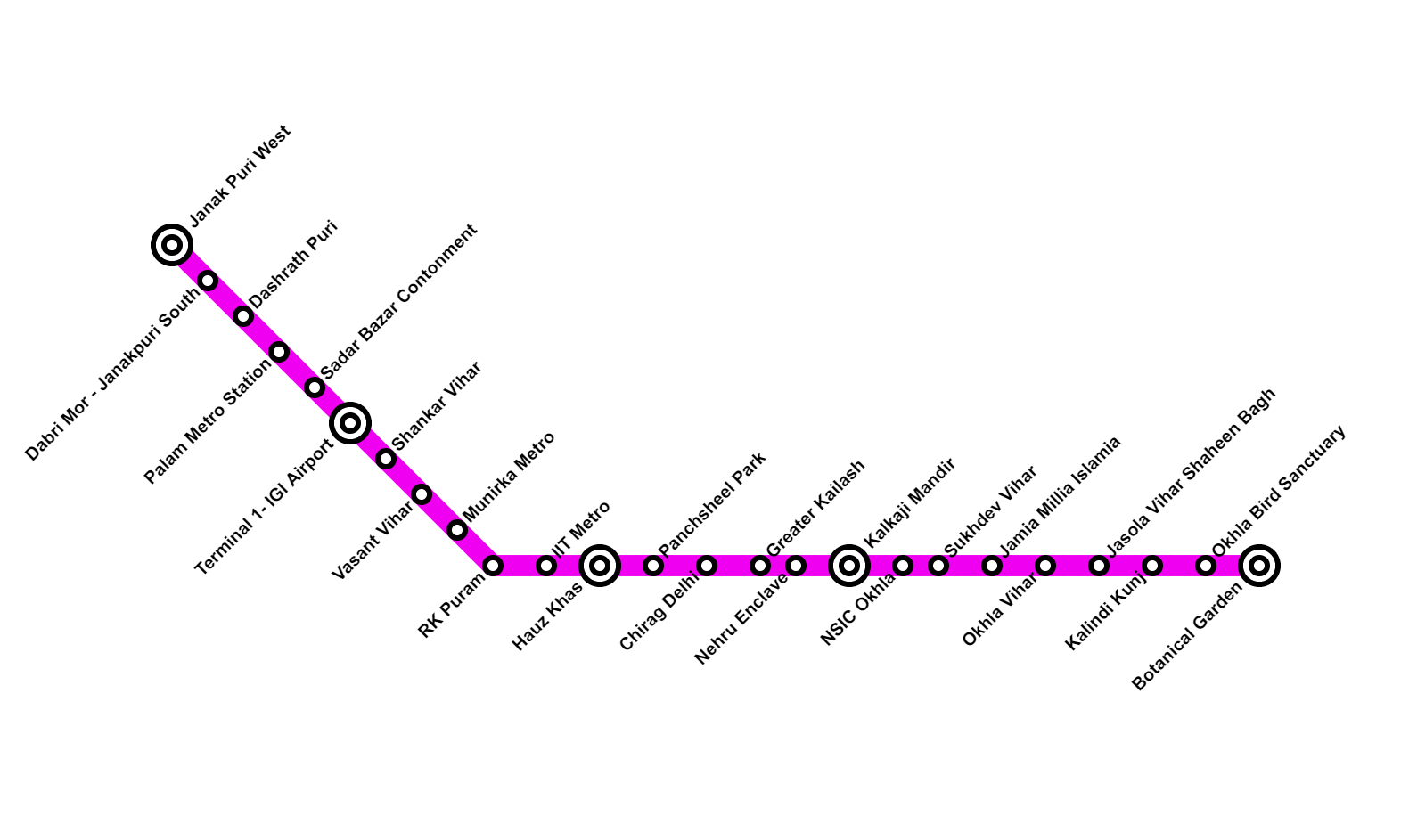
The newly opened stretches are part of the expanding Delhi Metro network and include the 12.3-kilometre Majlis Park–Maujpur Babarpur section on the Pink Line and the 9.9-kilometre Deepali Chowk–Majlis Park section on the Magenta Line. Together, these projects represent an investment of more than ₹18,000 crore aimed at strengthening the city’s mass transit infrastructure. The Pink Line extension is particularly significant because it completes a 71.5-kilometre circular corridor, effectively creating India’s first operational “Ring Metro.” The circular alignment connects large parts of the capital, allowing passengers to travel across multiple districts without needing to pass through the central interchange stations that traditionally handle the bulk of metro traffic. Urban transport planners say this ring-style network could substantially reduce congestion across the system. By enabling lateral connectivity between northern, eastern and western parts of the city, the corridor allows commuters to bypass central transit hubs, thereby improving travel efficiency across the metropolitan area.
The newly inaugurated Pink Line stretch includes eight elevated stations, serving densely populated areas in North and Northeast Delhi such as Burari, Jagatpur Village, Khajuri Khas, Bhajanpura and Yamuna Vihar. Infrastructure along the corridor includes a 560-metre bridge across the Yamuna River and a 1.4-kilometre double-decker viaduct carrying both metro tracks and road traffic—an engineering design intended to optimise limited urban space. The Magenta Line extension from Deepali Chowk to Majlis Park also introduces new stations and interchanges that will help distribute passenger flow across the network. Once future extensions are completed, the Magenta Line is expected to become the longest corridor in the system, further strengthening connectivity between residential areas and employment hubs.
Alongside the inauguration of the two corridors, the government also laid the foundation stone for three additional metro lines under the next phase of expansion. These include the R.K. Ashram Marg–Indraprastha, Aerocity–IGI Airport Terminal-1, and Tughlakabad–Kalindi Kunj corridors, covering approximately 16 kilometres. The new routes are designed to improve connectivity to central Delhi, the airport and major residential clusters. Urban mobility experts note that expanding metro connectivity remains critical for managing traffic congestion and pollution in the capital. With Delhi’s population and vehicle numbers continuing to grow, investments in mass transit infrastructure are seen as essential for encouraging commuters to shift from private vehicles to public transport.
The completion of the ring corridor marks a significant milestone in Delhi’s transit planning, potentially reshaping commuting patterns across the city while strengthening the role of the metro as the backbone of urban mobility.