


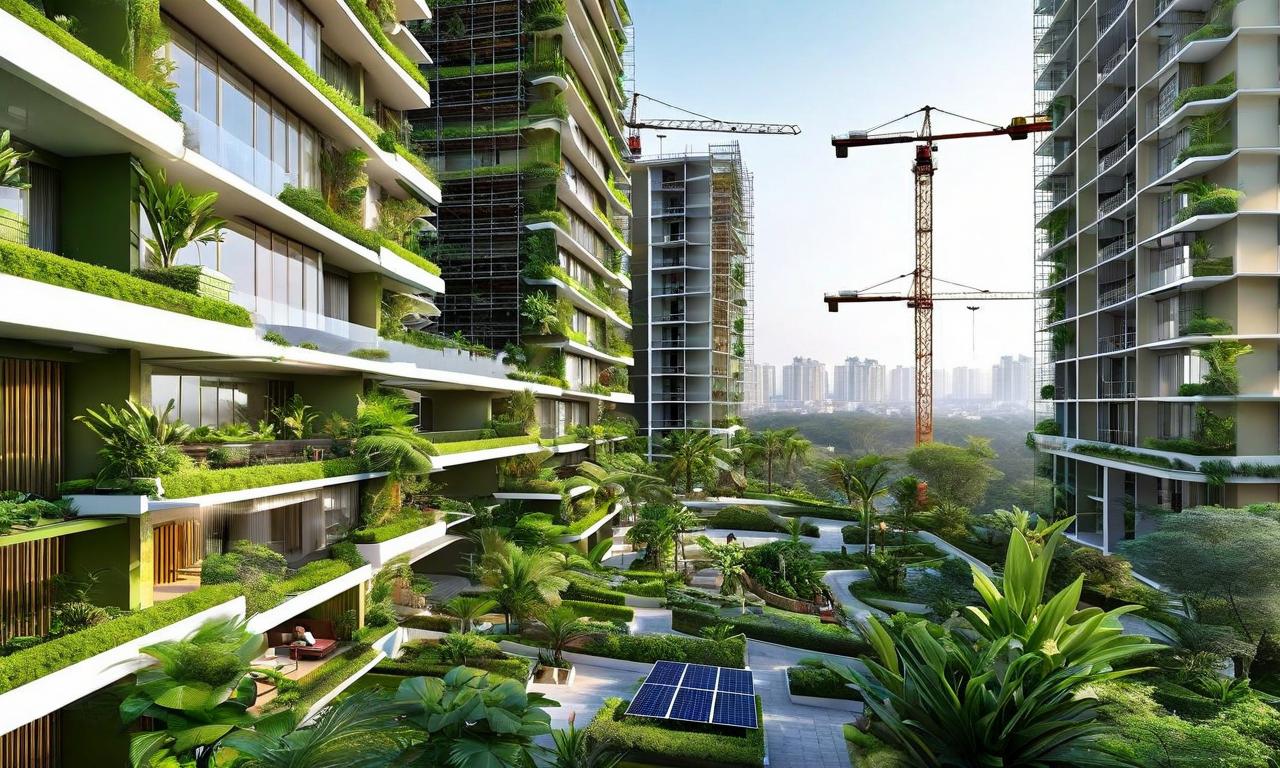
Mahindra Lifespaces is accelerating a structural shift in India’s real estate sector by embedding sustainability, climate resilience, and resource efficiency into mainstream urban housing and industrial development. At a time when cities face mounting pressure from climate risks, water stress, and infrastructure overload, the company’s approach signals a broader recalibration of how large developers respond to environmental and social accountability.
Across residential and industrial portfolios, green design principles are no longer positioned as premium add-ons but as baseline planning requirements. Industry observers note that this transition reflects changing buyer expectations, regulatory tightening, and investor scrutiny around environmental, social and governance (ESG) performance. Homes are increasingly evaluated not just for location or amenities, but for energy efficiency, water management, and long-term operating costs factors that directly influence household resilience. In residential projects, planning frameworks now prioritise passive cooling, higher green cover, natural ventilation, and reduced dependence on mechanical energy systems. Urban planners involved in such developments highlight that these measures can significantly lower carbon intensity while improving indoor air quality and thermal comfort, especially in heat-stressed cities. The focus on walkability, community spaces and inclusive layouts also aligns with people-first urban design, reducing reliance on private vehicles and encouraging social cohesion. Industrial and mixed-use developments are undergoing a parallel transformation. Warehousing and business parks are increasingly being designed with renewable energy integration, efficient logistics layouts, and circular water systems. Experts say this reflects growing demand from occupiers seeking future-ready infrastructure that meets global sustainability benchmarks while supporting workforce well-being. Such developments also contribute to regional economic opportunity by attracting manufacturing and services aligned with clean growth pathways.
From a policy perspective, Mahindra Lifespaces’ strategy mirrors the direction of India’s evolving urban agenda, where climate mitigation and adaptation are becoming central to city planning. With urban areas expected to house nearly half the country’s population in the coming decades, scalable models of low-impact development are critical. Developers that internalise environmental costs early are better positioned to manage regulatory risk and long-term asset performance. Equally important is the social dimension of sustainability. Affordable and mid-income housing projects increasingly integrate efficient infrastructure without escalating ownership costs, addressing concerns around equitable access to green living. Analysts note that this helps prevent sustainability from becoming an exclusionary privilege, instead positioning it as a standard urban right.
Looking ahead, the real test will be replication at scale. As climate volatility intensifies, urban real estate must move beyond isolated green buildings towards neighbourhood-level resilience. Industry watchers suggest that if such practices are consistently applied across geographies and price segments, they could redefine benchmarks for responsible development in India’s cities. The transition underway indicates that green real estate is no longer a niche category, but an emerging foundation for future urban growth.
Also Read:
Mahindra Lifespaces Advances Low Carbon Housing Strategy
