Maharashtra Weather Outlook Smooths For Sankranti Days
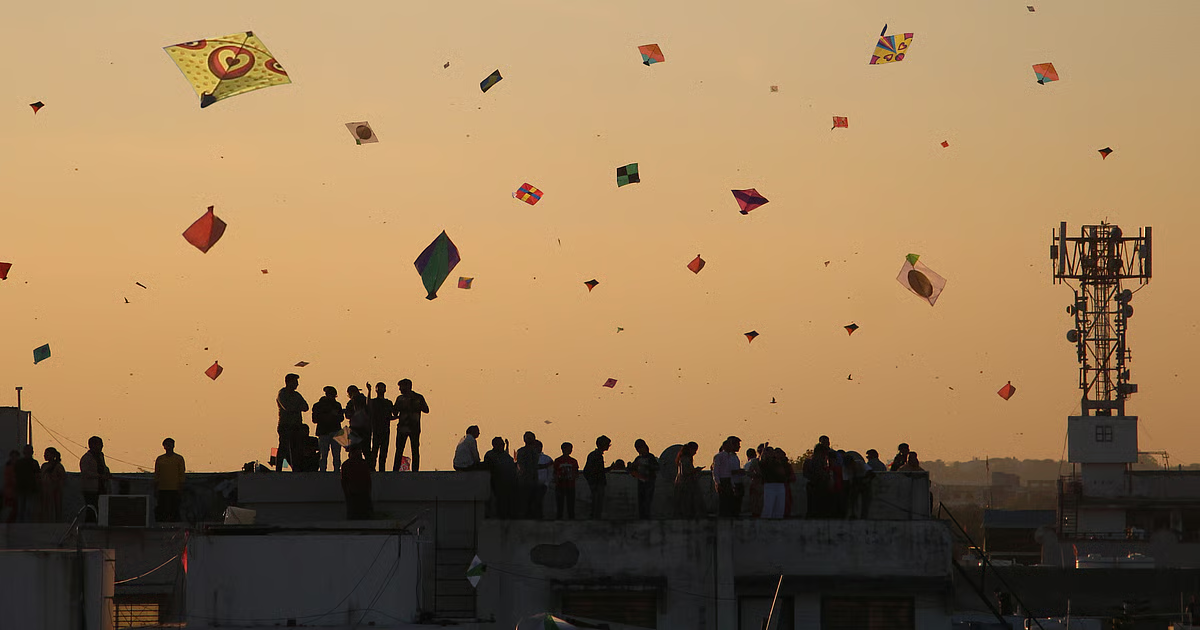
As Makar Sankranti approaches on January 14 in Maharashtra, the India Meteorological Department’s (IMD) latest forecast points to a noticeable easing of winter conditions across most of the state, offering residents respite from earlier cold spells. The shift to milder temperatures and mainly dry skies could influence mobility, celebrations, and urban air quality during the festival period.
Across western Maharashtra and the coastal Konkan belt, including Mumbai, Thane and Palghar, daytime temperatures are projected to hover in the upper‑20s to low‑30s °C, with nights remaining comparatively warm for mid‑January. Minimums are likely to stay in the high teens, easing the deep chills seen earlier in the season and reducing energy demands for heating in urban areas. This transition is part of a broader short‑term warming trend indicated in the IMD’s extended forecast, which shows minimum temperatures rising by 2‑3 °C across central and western India over the coming days. While northern regions of the country remain under cold wave and fog alerts, Maharashtra’s mild pattern illustrates contrasting regional weather dynamics during the festival window.
For city dwellers, the milder weather has mixed implications. Warmer nights and partly cloudy conditions may encourage more outdoor activity around local markets and public spaces during Sankranti festivities. However, urban planners and public health officials are monitoring air quality closely: in Mumbai, haze and smog have caused elevated particulate levels, underscoring the persistent challenge of managing pollution even when temperatures rise. Inland districts such as Marathwada and Vidarbha are also set for warmer daytime conditions, but frost and chilly dawns could still affect rural livelihoods, particularly for farmers tending to winter crops sensitive to temperature swings. Sector experts note that shifts in mesoscale weather — such as moisture advection from the Bay of Bengal — can influence local microclimates, sometimes triggering isolated showers or cloud cover that temper maximum temperatures.
For the real estate and infrastructure sectors, this period of seasonal transition carries subtle significance. Milder conditions can facilitate construction activity and reduce weather‑related delays, while also affecting energy loads for buildings and transportation networks. Urban utilities may see a shift in demand patterns, with cooling requirements replacing lower winter heating use.
Nevertheless, meteorologists emphasise that these conditions are transient. With a fresh western disturbance expected to influence northern India in the coming days, temperature fluctuations and localized weather events could return. As Maharashtra prepares for celebrations, authorities and residents alike are advised to stay updated on evolving forecasts and take health and safety precautions in response to both climatic shifts and air quality risks.