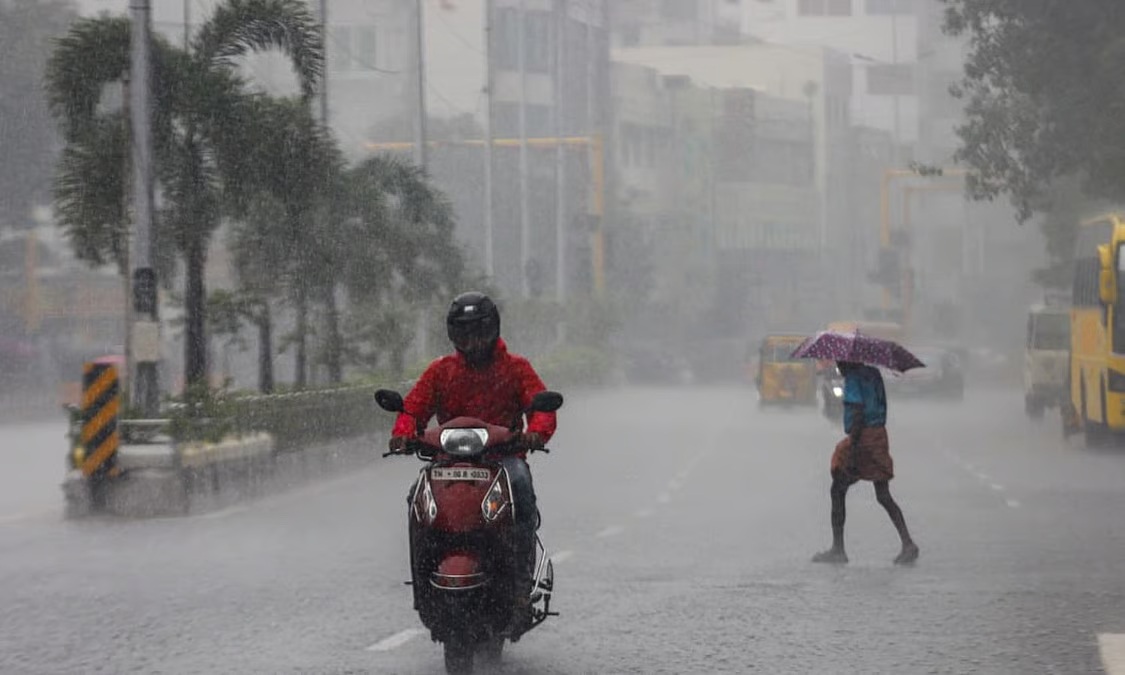
A fresh advisory from the India Meteorological Department indicates a divergent weather pattern across the country this week, with rain activity intensifying in parts of southern India even as Maharashtra remains largely dry and warmer than seasonal averages. For Mumbai and other urban centres in the state, the outlook underscores growing concerns around heat stress, air quality and early pre-summer climate volatility.
According to officials monitoring atmospheric systems, a developing circulation over the Bay of Bengal is expected to trigger rainfall across select southern states over the next few days. However, western and central regions — including Maharashtra — are unlikely to receive significant precipitation in the immediate term.For Mumbai, the forecast points to clear skies and rising daytime temperatures. While February typically marks a mild transition between winter and summer, recent variability has led to sharper temperature swings. Urban planners note that such patterns, even outside peak summer months, are becoming more frequent.The current Maharashtra Weather Alert is not centred on heavy rainfall locally but rather on regional imbalance — rain in some states, dryness in others. Experts say this uneven distribution has implications beyond daily forecasts. Warmer, moisture-deficient spells can elevate particulate matter levels, intensify heat island effects and increase electricity demand for cooling.
A senior meteorological official explained that these transitional weather systems are influenced by upper-air circulations and shifting wind directions rather than monsoon activity. As a result, rainfall can occur far from Maharashtra while cities like Mumbai experience extended dry intervals.Urban climate specialists argue that such episodes reinforce the urgency of heat-action planning. Even modest temperature increases, when combined with high humidity and dense construction, can heighten health risks for outdoor workers, informal sector labourers and elderly residents. Without adequate tree cover and ventilation corridors, built-up neighbourhoods retain heat long after sunset.The broader Maharashtra Weather Alert also carries economic implications. Agriculture in rain-receiving states may benefit from short bursts of precipitation, but logistics and transport networks could face temporary disruption. Meanwhile, in western India, persistent dryness increases pressure on water management systems, especially in peri-urban growth zones.
Municipal officials say preparedness measures — from public advisories to monitoring reservoir levels — are being aligned with evolving forecasts. While no extreme event is anticipated in Mumbai at present, authorities are closely tracking temperature trends and air quality indicators.As climate variability becomes less predictable, meteorologists emphasise the need for integrated forecasting that links weather data with health, infrastructure and energy planning. For rapidly urbanising regions like Mumbai, short-term advisories are increasingly part of a longer conversation about resilience in the face of shifting seasonal norms.
The coming days will test how effectively cities interpret and respond to such signals — not just as weather updates, but as indicators of structural climate change shaping India’s urban future.