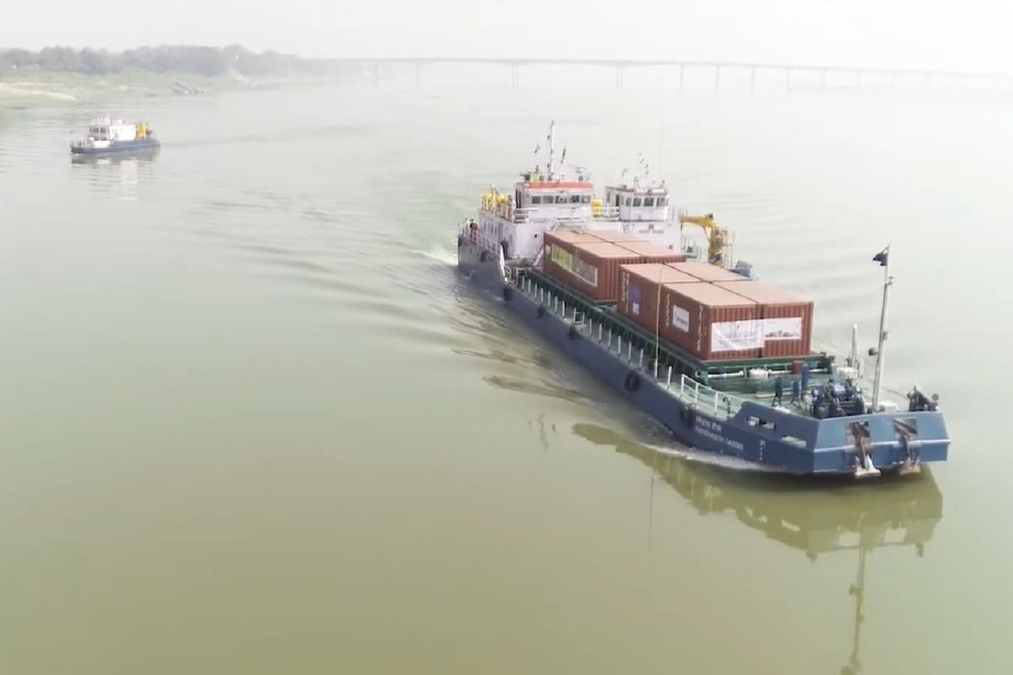
Maharashtra has identified seven inland waterway stretches as technically and economically viable, marking a potential shift in how the state moves goods, supports regional economies, and plans future infrastructure. The assessment, carried out under India’s national inland waterways framework, positions river-based transport as a complementary alternative to congested highways and rail corridors in one of the country’s most urbanised states.
According to officials familiar with the evaluation, the identified waterways span key river systems and coastal-linked stretches that can support cargo movement with limited ecological disruption. These routes are expected to be developed in phases, focusing first on freight segments where bulk transport such as agricultural produce, construction material, and low-value high-volume goods can benefit from lower logistics costs. For Maharashtra, where logistics expenses account for a significant share of industrial input costs, inland shipping offers a strategic advantage. Industry experts note that moving freight by water typically consumes less energy per tonne-kilometre than road transport, aligning with India’s broader decarbonisation goals while easing pressure on road networks already strained by urban expansion.
Urban planners see the waterways initiative as more than a transport project. River-linked infrastructure can influence land-use planning, warehousing clusters, and last-mile connectivity in smaller towns that have historically remained outside major logistics grids. Districts along feasible waterways could see new investments in river ports, storage facilities, and allied services, generating employment beyond metropolitan centres such as Mumbai and Pune. Environmental considerations remain central to the plan’s long-term viability. Officials involved in the assessment emphasise that development will depend on maintaining ecological flow, careful dredging practices, and climate-resilient design. With rainfall patterns becoming more erratic, planners are expected to integrate adaptive water management systems to ensure navigability without compromising river health.
The waterways project also intersects with Maharashtra’s urban resilience agenda. Reduced dependence on diesel-heavy trucking can contribute to better air quality in cities, while diversified freight routes improve supply-chain reliability during extreme weather events or fuel price volatility. Transport economists argue that such redundancy is increasingly critical for resilient urban economies. However, challenges remain. Seasonal water availability, land acquisition for terminals, and coordination between state agencies and local bodies will determine execution speed. Experts caution that inland waterways are not a universal solution but work best when integrated with rail and road networks through multimodal hubs.
The next phase is expected to involve detailed project reports, stakeholder consultations, and pilot cargo movements on select stretches. If executed with environmental safeguards and transparent governance, the seven feasible inland waterways could reshape Maharashtra’s freight landscape supporting cleaner transport, balanced regional growth, and more sustainable urbanisation.
Maharashtra Waterways Plan Signals Freight Shift