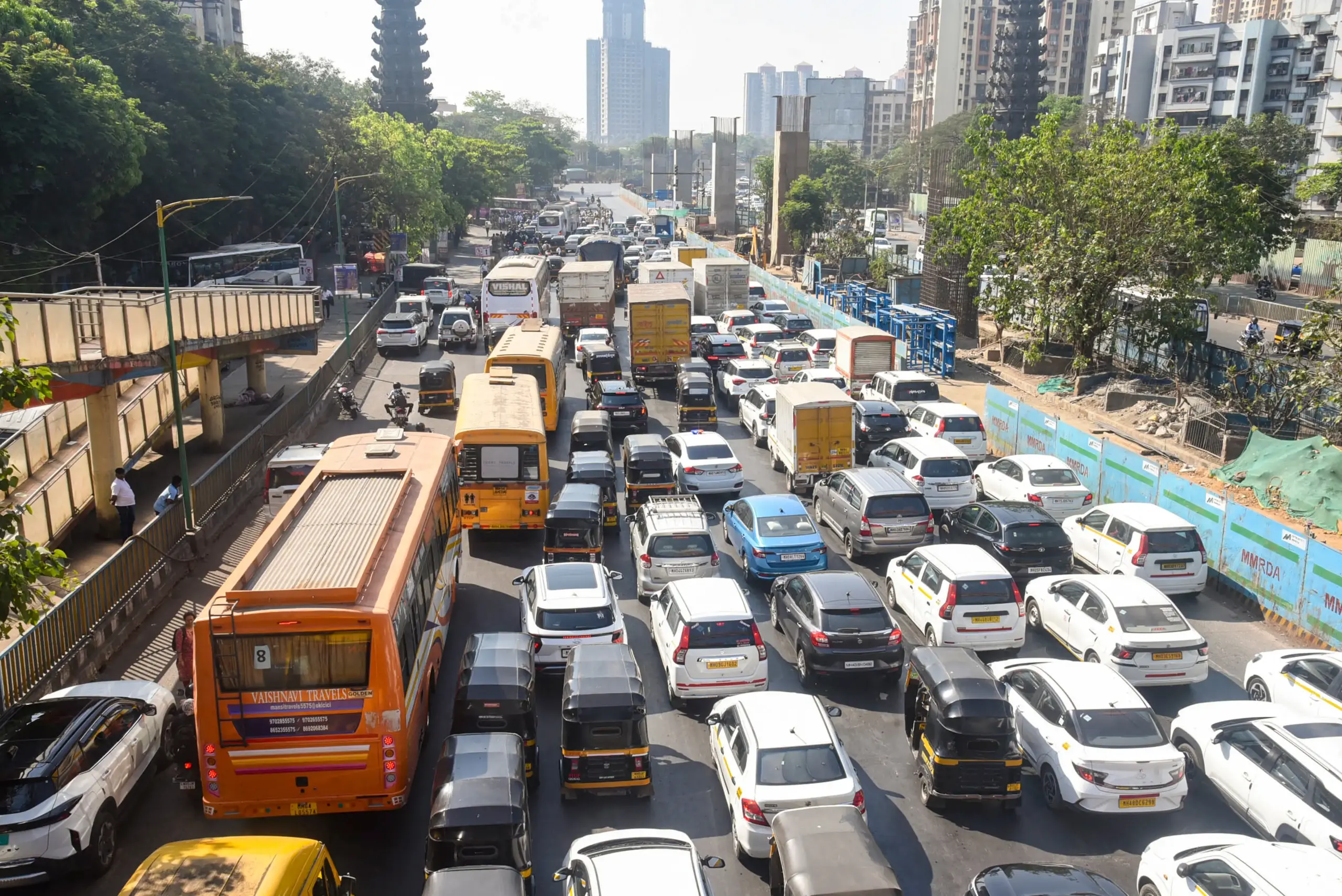
The number of registered vehicles across Maharashtra has crossed 5.28 crore at the start of 2026, highlighting the rapid pace at which personal mobility is expanding across one of India’s largest state economies. The latest government economic assessment indicates that the state added roughly 40 lakh vehicles over the past year, reflecting an annual growth rate of more than eight per cent and intensifying pressure on urban transport systems and road infrastructure.
The rise in the Maharashtra vehicle population underscores the widening gap between vehicle ownership and the capacity of existing road networks, particularly in large metropolitan regions such as Mumbai, Pune and Nagpur. Transport planners note that while vehicle ownership often reflects rising incomes and expanding economic activity, it also presents major challenges for congestion management, air quality and sustainable mobility planning. Two-wheelers continue to dominate the state’s mobility landscape, accounting for the overwhelming majority of vehicles in operation. Data from the state’s economic review indicates that motorcycles, scooters and mopeds together make up nearly three-quarters of the total vehicle base. Passenger cars and other light motor vehicles represent the second-largest category, reflecting growing middle-class demand for private mobility.
Public and commercial transport segments form a much smaller share of the overall fleet. Registered data suggests that autorickshaws, buses and ambulances together represent only a limited portion of the total vehicle base. Urban mobility experts argue that this imbalance highlights the continuing dependence on private vehicles rather than mass transit systems. Vehicle density figures illustrate the scale of the shift. The state now records roughly 41,000 vehicles for every one lakh residents. In addition, the average number of vehicles per kilometre of road has reached more than 150, indicating rising stress on road infrastructure. Transport specialists say this trend can significantly affect travel times, fuel consumption and urban emissions if not addressed through policy interventions.
The growth of the Maharashtra vehicle population is occurring alongside strong economic expansion. The state remains India’s largest contributor to national economic output, with its gross state domestic product projected to cross ₹51 lakh crore in the coming financial year. Rising incomes and expanding urbanisation have historically been linked to higher vehicle ownership, particularly in rapidly growing metropolitan regions. However, urban development analysts emphasise that continued growth in vehicle numbers without parallel investment in sustainable mobility could undermine climate resilience goals. Cities across Maharashtra have already begun expanding metro rail corridors, suburban rail upgrades, bus electrification and multimodal transport hubs to reduce dependence on private vehicles.
Urban planners argue that improving last-mile connectivity, expanding safe pedestrian infrastructure and strengthening public transport networks will be critical in shaping future mobility patterns. As the Maharashtra vehicle population continues to grow, policymakers face increasing pressure to balance economic growth with cleaner and more inclusive urban transport systems. The trajectory of vehicle ownership will therefore remain a key indicator of how effectively Maharashtra’s cities transition toward sustainable mobility in the coming decade.
Maharashtra Vehicle Population Surge Signals Rising Urban Mobility Pressure