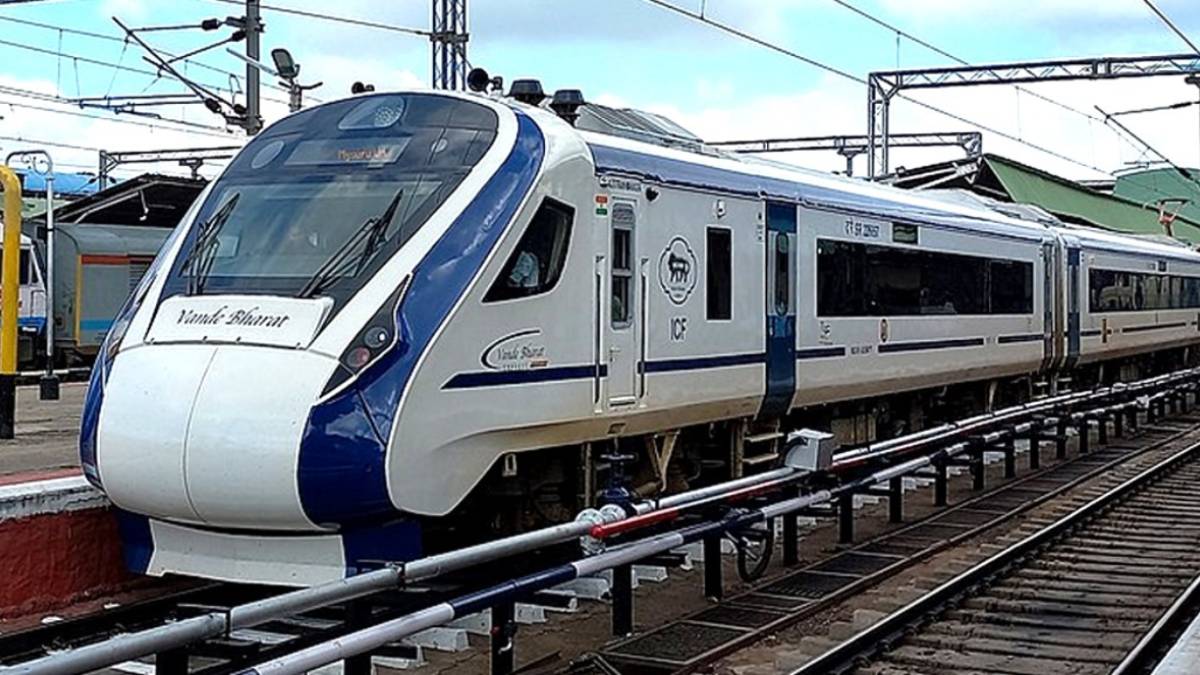
Maharashtra’s Vande Bharat Express services are redefining passenger travel and economic returns, with Indian Railways projecting record-breaking earnings for the upcoming fiscal year.
The state’s network of Vande Bharat semi-high-speed trains, launched with the intent to enhance travel efficiency and sustainability, has been rapidly expanding and delivering tangible economic gains. According to official railway estimates, nationwide annual revenue from Vande Bharat operations is expected to touch ₹75,000 crore in 2024–25, driven by consistently high occupancy rates and growing passenger preference over conventional train services.For Maharashtra alone, passenger earnings from these services are projected at ₹10,209 crore for 2024–25, a substantial rise from ₹4,786 crore in 2022–23. Industry experts attribute this surge to the trains’ speed, comfort, punctuality, and the strategic introduction of new routes. These enhancements have been supported by extensive electrification, advanced signalling systems, and upgraded track infrastructure, aligning with Indian Railways’ long-term sustainability goals of reducing carbon emissions and promoting energy-efficient transport.
The Vande Bharat network in Maharashtra connects key economic and tourist hubs, operating on routes such as Mumbai-Shirdi, Mumbai-Solapur, Mumbai-Madgaon, Mumbai-Gandhinagar, Pune-Ahmedabad, Nagpur-Bilaspur, and Nagpur-Pune. These routes have not only shortened travel times but also significantly boosted tourism, business travel, and intercity trade. Economic observers note that faster connectivity between industrial hubs is strengthening Maharashtra’s position as a commercial powerhouse while also encouraging regional economic integration.Passenger trends show a marked shift towards premium train services, reflecting evolving consumer behaviour in the post-pandemic travel economy. Officials highlight that occupancy levels on several routes remain near capacity, with demand patterns indicating the potential for more frequent services and additional routes.
Sustainable mobility advocates point out that Vande Bharat trains, powered by electric traction, are a step towards greener cities and reduced dependency on fossil fuels. The expansion of these services is seen as a crucial element in India’s broader urban and regional development strategies, where transport modernisation plays a central role in building equitable, climate-resilient infrastructure.Looking ahead, railway planners are considering further expansion of Vande Bharat operations in Maharashtra to cater to growing passenger demand. These developments are expected to generate direct and indirect economic benefits, ranging from job creation in railway services to increased revenues for hospitality, retail, and local businesses in connected regions.With its blend of speed, sustainability, and passenger convenience, the Vande Bharat Express is fast becoming a symbol of India’s transport transformation and Maharashtra appears poised to remain at the forefront of this economic and infrastructural leap forward.