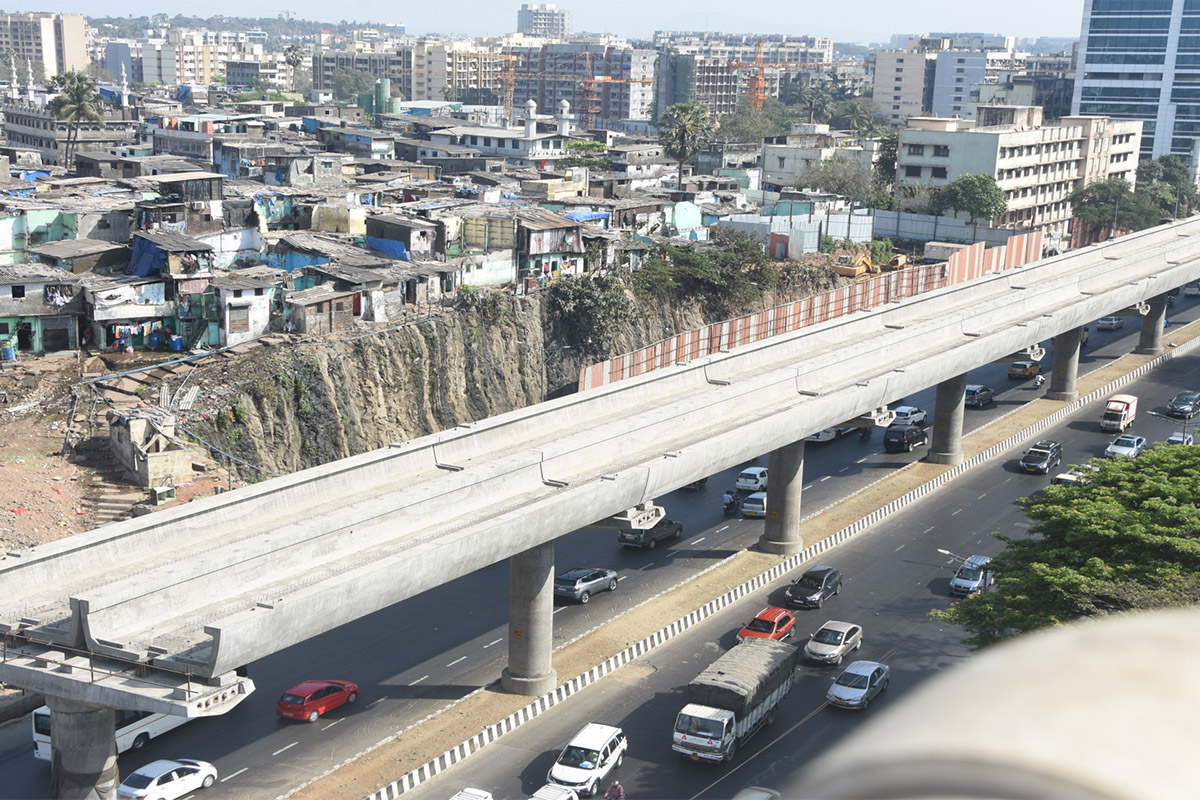
Maharashtra has officially crossed a defining threshold in its demographic transformation. According to Chief Minister Devendra Fadnavis, 50 percent of the state’s population — roughly 60 million people — now reside in 500 urban centres.
The shift, which reflects India’s broader transition toward an urban-majority society, was highlighted at the inaugural ‘Pune Urban Dialogue’ event held at Yashada, where the Chief Minister called for a radical rethink of how cities are built, expanded and managed.
Speaking to an audience comprising urban planners, administrators, academics, and civil society leaders, Fadnavis underscored the growing pressure on Maharashtra’s urban systems. “We are at a tipping point. With half the population now in cities, our infrastructure must grow smarter, faster and greener — or risk collapsing under the weight of its own inefficiencies,” he said. The CM’s comments signal a clear policy shift as the state pivots towards sustainability-oriented and citizen-first urban development. The focus now, he said, must lie in strengthening physical infrastructure — particularly transportation and connectivity — before scaling up housing and commercial settlements. In a key announcement, Fadnavis disclosed that the previous development plan of the Pune Metropolitan Region Development Authority (PMRDA) had been discarded. He noted that the blueprint lacked implementation readiness and failed to prioritise foundational infrastructure such as arterial roads, transit corridors and stormwater networks. “The first layer of any urban ecosystem should be roads and mobility systems, not high-rises or gated communities,” he said. “We will now rebuild the PMRDA strategy with transport infrastructure at its core.”
This new approach aims to position cities not merely as economic clusters but as inclusive, accessible and climate-conscious zones, especially as climate disruptions and air quality concerns become more pressing. Fadnavis placed heavy emphasis on integrated public transport as a long-term solution to congestion, pollution and urban sprawl. Drawing attention to Mumbai’s unified ticketing system — where a single pass enables seamless travel across local trains, metro, monorail and water taxis — the CM said similar systems will be replicated across Maharashtra’s other metropolitan regions. “The ultimate vision is a 200-metre mobility radius,” he explained. “A citizen should be able to start their journey from home and complete it using multiple modes of transport — without needing more than one ticket or walking more than two minutes to switch modes.” He announced that the state government will soon establish an Integrated Metropolitan Transport Authority, which will function as a nodal body to coordinate various municipal and state agencies involved in transit planning, operations and infrastructure development.
The CM also sounded an alarm on unplanned urbanisation, which he described as a major threat to sustainability, public health, and economic resilience. “Without a vision, our cities become unsustainable. Slums mushroom, rivers are encroached, and waste systems collapse,” he warned. Fadnavis pointed out that while cities are hubs of opportunity, they are also vulnerable ecosystems. Improper planning has led to blocked natural waterways, increased flooding, air pollution, and overburdened utilities — all of which disproportionately affect the poor and marginalised. In this context, the CM lauded the preparation of 17 new regional development plans for cities like Mumbai, Pune, Nashik and Chhatrapati Sambhajinagar. These plans, he said, were created through consultative processes, with minimal political friction — a rare achievement in India’s often contested urban planning domain.
The ‘Pune Urban Dialogue’, jointly hosted by the Pune Municipal Corporation, Barve Charitable Trust, Yashada and the International Centre, served as a vibrant platform for interdisciplinary debate on how Indian cities must evolve. Pune, a city straddling heritage and high-tech, was showcased as an ideal testing ground for policies that combine ecological sensitivity with infrastructure innovation. Urbanists and policy experts at the event called for investments in non-motorised transit, inclusive zoning, and green building norms. Some even proposed giving statutory backing to ‘urban resilience assessments’ — mandating them as part of any new municipal project. Fadnavis expressed openness to such ideas, asserting that Maharashtra must now set the national standard in inclusive, gender-neutral, and climate-smart urbanisation. “If our cities are to remain engines of growth, they must first become homes of dignity and sustainability,” he stated. What emerges from this shift in tone and policy is a growing consensus that people — not just infrastructure — must be at the centre of urban planning. Last-mile connectivity, safe public transport, access to clean water, affordable housing, and green public spaces were identified as essential building blocks of liveable cities. With the state projected to become 65 percent urban by 2040, the decisions made today will determine whether Maharashtra can build equitable and future-ready cities.
Fadnavis made it clear that the state government intends to move from blueprint promises to measurable change — but called on civic authorities, planners and citizens to stay aligned in this mission. “The cost of inaction is too high,” he concluded. “We have the tools. We must now build with compassion, clarity and courage.”