Maharashtra MSRTC Smart Card Fees Draw Public Pushback
Maharashtra’s transport leadership has signalled a strategic pivot in urban infrastructure utilisation by urging the Confederation of Real Estate Developers’ Associations of India (CREDAI) to engage in the development of 1,360 hectares of Maharashtra State Road Transport Corporation (MSRTC) land, presenting a major push to monetise public assets while attempting to address fiscal pressures and infrastructure gaps. The proposal, advanced by the state transport minister and MSRTC chairperson at a housing industry forum in Mumbai, frames land redevelopment as a cornerstone for sustainable urban expansion and pragmatic asset‑leveraging.
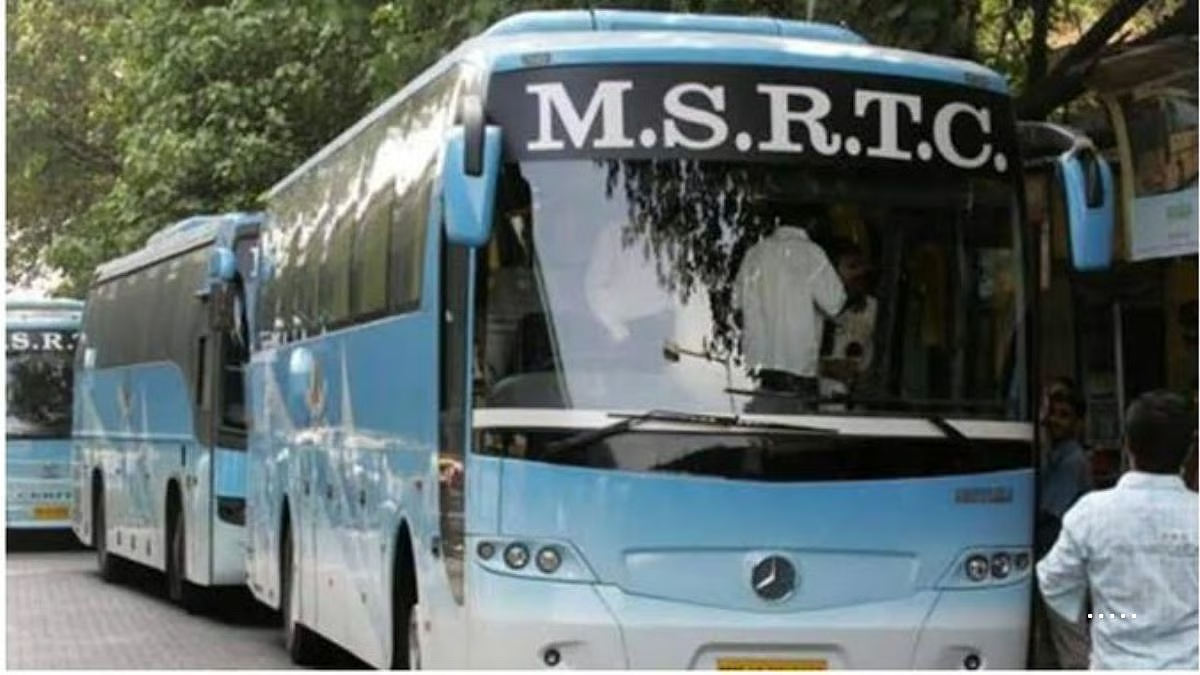
MSRTC — the state’s principal public bus operator, with a network spanning urban, peri‑urban and rural corridors — holds thousands of hectares across 842 sites in strategic locations. These parcels include depot yards, bus station land and peripheral real estate that, until now, have largely remained undeveloped amid fiscal losses and operational challenges. Inviting CREDAI into the planning process reflects a broader policy shift toward public‑private partnerships (PPPs)and build‑operate‑transfer (BOT) models intended to unlock latent land value and foster integrated infrastructure ecosystems. Urban planners and economic strategists view this approach as significant in a state where land is both scarce and expensive. Mumbai and other major nodes in the Maharashtra Metropolitan Region (MMR) have long grappled with housing shortages, congested transit corridors and limited greenfield sites for mixed‑use urban projects. Eradicating under‑utilised holdings through sustainable development could not only help MSRTC diversify revenue streams — vital given its documented financial losses — but also inject fresh impetus into local construction markets and affordable housing pipelines.
Under the minister’s outline, the envisaged development would blend transport infrastructure with commercial, residential and community amenities, potentially integrating electric bus charging hubs, renewable energy facilities, health services, and mixed‑use urban precincts. Developers partnering in these ventures could leverage remaining land for commercial purposes after provisioning necessary MSRTC operational facilities — positioning the initiative as both a revenue generator and a mechanism to modernise public transport infrastructure in line with evolving mobility patterns. Industry stakeholders see broader economic benefits in deploying land as a catalyst for urban revitalisation, particularly when aligned with robust regulatory frameworks that preserve public interest and environmental safeguards. Experts emphasise the need for a clear policy architecture that balances commercial viability with inclusive, people‑first planning — especially if developments intersect with existing communities or transit‑dependent populations. Thoughtful integration of affordable housing, pedestrian‑centric design, and local employment opportunities must be part of these land deals to maximise social impact.
However, sourcing private capital and expertise carries inherent risks. Critics caution that aggressive monetisation of public land can lead to undervaluation of strategic assets or prioritise short‑term gains over long‑term urban resilience. Mechanisms for transparent tendering, community consultation and phased project delivery will be essential to mitigate these concerns.
Looking forward, Maharashtra’s transport ministry plans to issue detailed policy guidelines and expressions of interest to developers, with an emphasis on environmentally sustainable and equitable urban development. If implemented effectively, this initiative could set a precedent for how transport agencies nationwide leverage real estate assets to support infrastructure modernisation, fiscal stability and climate‑aligned city growth.