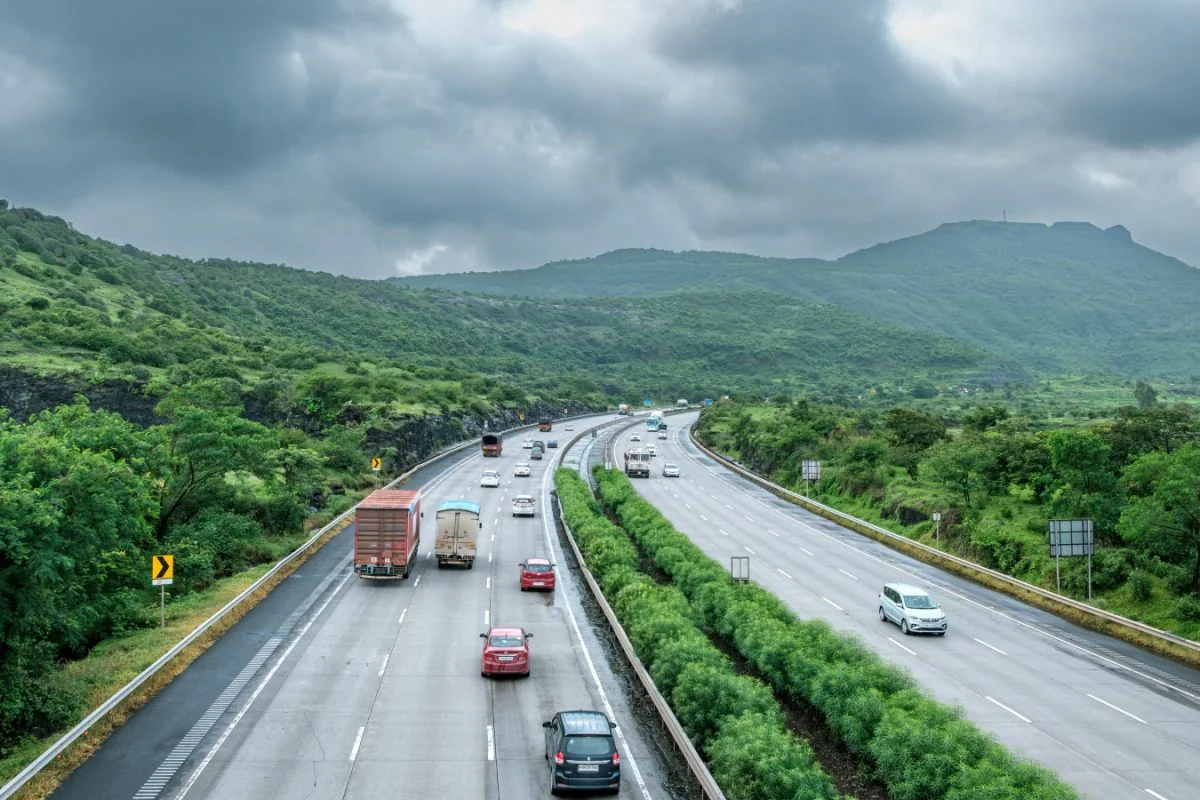
Maharashtra To Open Mumbai Pune Expressway Missing Link
Maharashtra’s transport authorities have signalled a major acceleration in one of the state’s most consequential road infrastructure projects, announcing plans to open the long-awaited “Missing Link” on the Mumbai–Pune Expressway by 1 May 2026, with a permanent ban on hazardous cargo vehicles, a decision that could shrink travel time and improve safety on this critical trade and commuter corridor. The development reflects broader efforts to modernise freight and passenger movement while integrating risk-aware planning into high-speed intercity travel.
The Missing Link — a 13.3-kilometre stretch comprising tunnels and bridges between Khopoli and Kusgaon — is about 98 per cent complete, according to officials, and aims to bypass the accident-prone Khandala-Lonavala ghat section that has historically been a bottleneck. Once operational, it is expected to reduce travel time between Mumbai and Pune by 25–30 minutes and relieve congestion on one of India’s busiest expressways.Safety has become a core pillar of the project’s finalisation strategy. Authorities have reiterated that vehicles carrying hazardous substances such as petrol, diesel, LPG and other combustible chemicals will be prohibited from using the Missing Link, especially through long tunnels, where emergency exits and ventilation are designed primarily for passenger vehicles and freight without high fire risk. Safety assessments cited international tunnel safety standards pointing to “high-risk” scenarios when dangerous goods traverse enclosed spaces.
Urban and transport planners suggest this restriction — while potentially affecting logistics flows — underscores a shift towards risk-managed infrastructure, where human safety and resilient mobility take precedence over unfettered vehicle access. By diverting hazardous cargo to the traditional ghat route, authorities hope to reduce the likelihood of prolonged closures caused by accidents involving flammable materials.The Missing Link is being developed by the Maharashtra State Road Development Corporation (MSRDC) at a reported cost near ₹6,695 crore, integrating two large road tunnels and cable-stayed bridges into the expressway’s alignment. This phase represents one of the most complex engineering challenges in the expressway’s expansion since its 2002 inauguration, particularly given the topography and seismic sensitivity of the Western Ghats.
For commuters, the project is more than engineering; it is a potential relief from chronic congestion and frequent travel disruptions. Recent incidents, including a 32-hour traffic jam triggered by a gas tanker overturn near Adoshi Tunnel, have spotlighted the vulnerability of the existing route and informed safety-centric planning for the new link.Yet, stakeholders in logistics and urban mobility caution that prohibiting hazardous cargo on the Missing Link requires complementary capacity upgrades on alternative routes to ensure freight flows aren’t displaced into already congested corridors. Thoughtful integration of multimodal options and emergency response infrastructure will be essential as the region balances increased traffic, safety, and economic throughput.
As Maharashtra moves towards an inaugural opening this May, the focus now turns to final quality checks, tunnel safety certification and phased operational trials, with authorities urging alignment between infrastructure performance and resilient urban travel needs.