Maharashtra Supreme Court Seeks Reply On Slum Rehabilitation Order
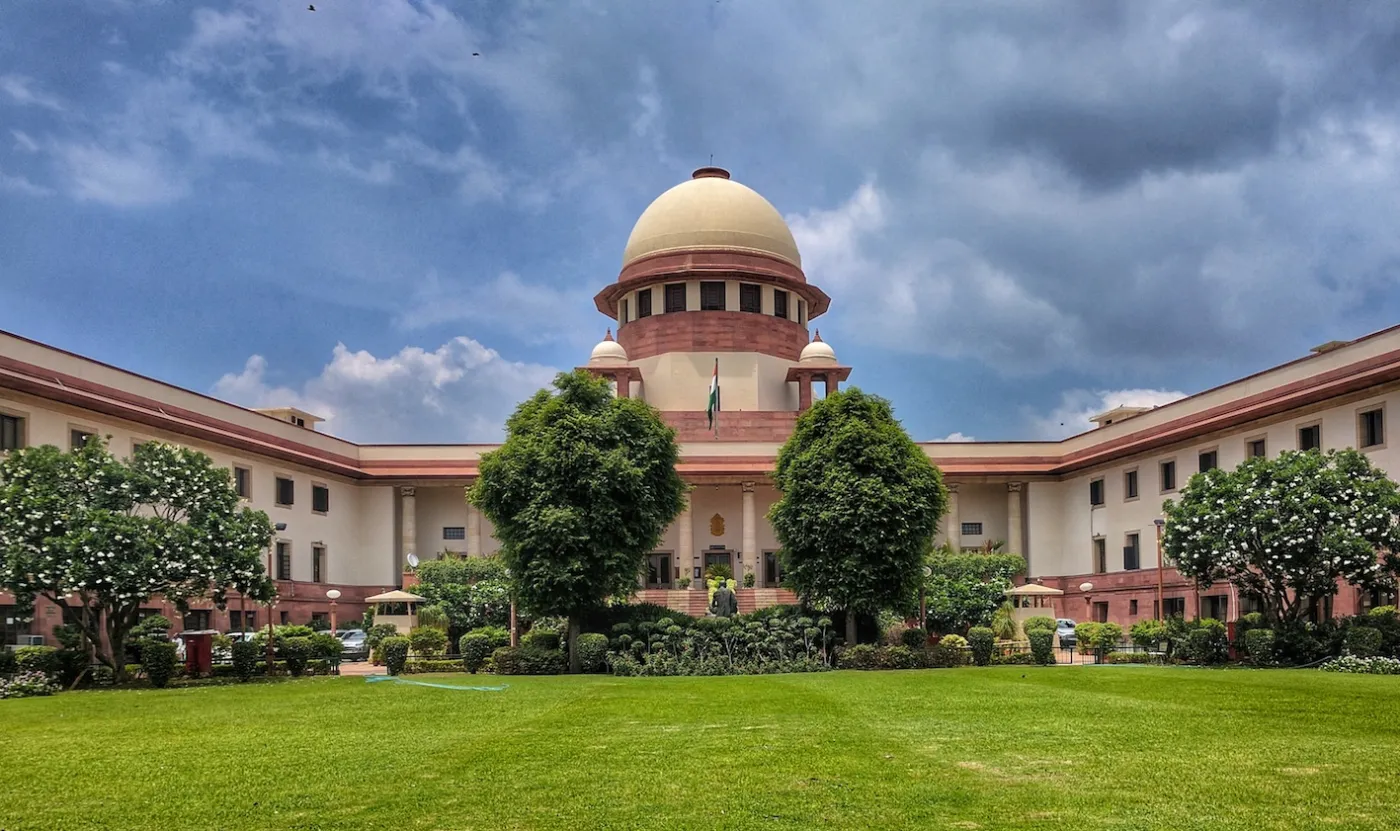
The Supreme Court of India has asked the Maharashtra government, the Municipal Corporation of Greater Mumbai (MCGM) and the state’s slum rehabilitation authority to respond to a legal challenge against a pivotal Bombay High Court order that permits slum redevelopment on land originally reserved for parks, gardens and playgrounds. The top court’s intervention underscores a deepening judicial examination of urban land use trade-offs in one of India’s densest metropolitan regions, where green space scarcity and housing rights often collide.
The dispute centres on Regulation 17(3)(D)(2) of the Mumbai Development Control and Promotion Regulations (DCPR) 2034, which allows up to 65 per cent of plots reserved as open public space to be used for slum rehabilitation schemes, provided the remaining 35 per cent is developed as functional, accessible parks or community space. The Bombay High Court upheld this regulation in June 2025, framing it as a “constitutional balance” between the city’s acute housing needs and environmental and recreational concerns.However, an NGO and public interest litigants have taken the matter back to the Supreme Court, contending that using land reserved for public amenities for housing — even with conditions — undermines the Public Trust Doctrine and erodes scarce open space available to city residents. Petitioners argue that Mumbai’s per capita open space is already alarmingly low, often falling well below global urban standards, and that allowing construction on these plots sets a precedent that could incrementally strip neighbourhoods of essential green lungs.
The High Court’s mandate included a detailed 17-point framework designed to prevent “paper parks” — open spaces that exist in regulation but lack real-world accessibility and utility. These guidelines call for public areas to be delivered in continuous, non-fragmented stretches; to remain unfenced and open to all; and to include amenities such as landscaping, jogging tracks and play equipment before handover to civic authorities.Urban planners and civic experts have long highlighted that functional open space is critical to sustainable city living, supporting everything from heat-island mitigation and stormwater absorption to community well-being and recreational access. Mumbai’s severe land constraints intensify these stakes, prompting debate about whether incremental gains in housing stock — especially for slum dwellers — justify reductions in open public land.
Critics of the High Court verdict argue that allowing built-up rehabilitation blocks on prime reserved land could create planning precedents that make it harder to defend public open space in future regulatory decisions. They contend that intangible conditions attached to redeveloped land are often poorly enforced, leading to pseudo-public spaces that offer limited real-world benefit to wider communities.Supporters of the regulation, including some housing advocates, counter that vast tracts of reserved land are currently occupied by informal settlements and, therefore, remain inaccessible to the public in their present state. From this perspective, integrating housing with upgraded public amenities could deliver net social value and formalise access to basic services for marginalised residents.
The Supreme Court’s order to seek responses marks a critical juncture in urban land jurisprudence for Maharashtra. Its upcoming deliberations could re-calibrate how cities balance environmental assets with urgent human settlement needs, potentially influencing municipal planning frameworks and development regulations beyond Mumbai. As the case unfolds, actors across government, civil society and urban management will be watching closely to see how judicial oversight shapes the future of open space protection, housing equity and sustainable city growth.