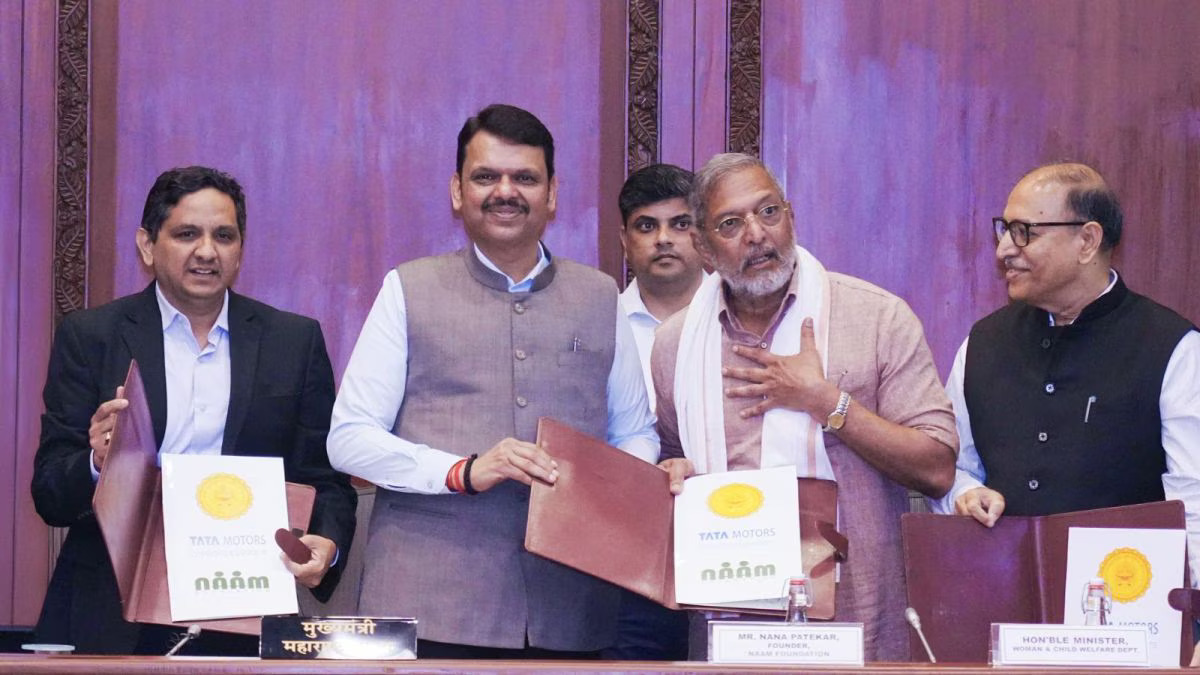
The Maharashtra government has formalised strategic collaborations with prominent philanthropic organisations to strengthen health, water, and rural development programmes across the state. A series of Memorandums of Understanding (MoUs) signed in Mumbai aims to improve service delivery in public health, nutrition, water security, and livelihoods, with particular focus on underserved and climate-vulnerable regions.
The agreements, executed with multiple divisions of Tata Trusts and Naam Foundation, are designed to integrate technical expertise, funding support, and monitoring mechanisms to accelerate the impact of state-run welfare initiatives. Officials noted that this approach strengthens convergence between government schemes and voluntary sector capabilities, increasing the efficiency of last-mile delivery. Under the partnership, health interventions will prioritise maternal and child care, adolescent health, and the reduction of malnutrition and stunting. Programmes will also include telemedicine expansion, enhancement of primary healthcare facilities in urban and remote areas, and the development of integrated emergency response systems. Hospitals in Nagpur have been included in the agreements to provide subsidised or free treatment for critical illnesses, supported by state relief funds.
In the water sector, the collaboration with Naam Foundation will target sustainable conservation measures such as desilting lakes and rivers, stream widening, groundwater recharge, and soil preservation, with priority given to drought-prone districts in Marathwada and Vidarbha. These interventions align with Maharashtra’s broader climate-resilient urban and rural planning strategies, ensuring water security for agriculture, domestic consumption, and ecosystem restoration. Rural development objectives focus on improving livelihoods through skill-building, nutritional support, and community-based resource management. By targeting integrated interventions across health, water, and economic development, the state aims to reduce inequities and foster inclusive growth. Senior officials highlighted that structured public-private collaboration can generate measurable social impact beyond traditional funding models.
Experts observing the initiative point out that Maharashtra’s approach reflects a trend in planned urban and rural development where partnerships with philanthropic and civil society organisations are leveraged to accelerate outcomes while managing fiscal and operational constraints. Coordinated monitoring, data-driven assessments, and alignment with state policies are expected to enhance the effectiveness of interventions. Looking ahead, the success of these MoUs will depend on systematic implementation, rigorous evaluation of outcomes, and adaptation to regional needs, particularly in climate-sensitive and underserved areas. For Maharashtra, these partnerships represent a model for scaling citizen-focused services while embedding resilience and sustainability into the state’s development trajectory.
Maharashtra Strengthens Health Water And Rural Partnerships