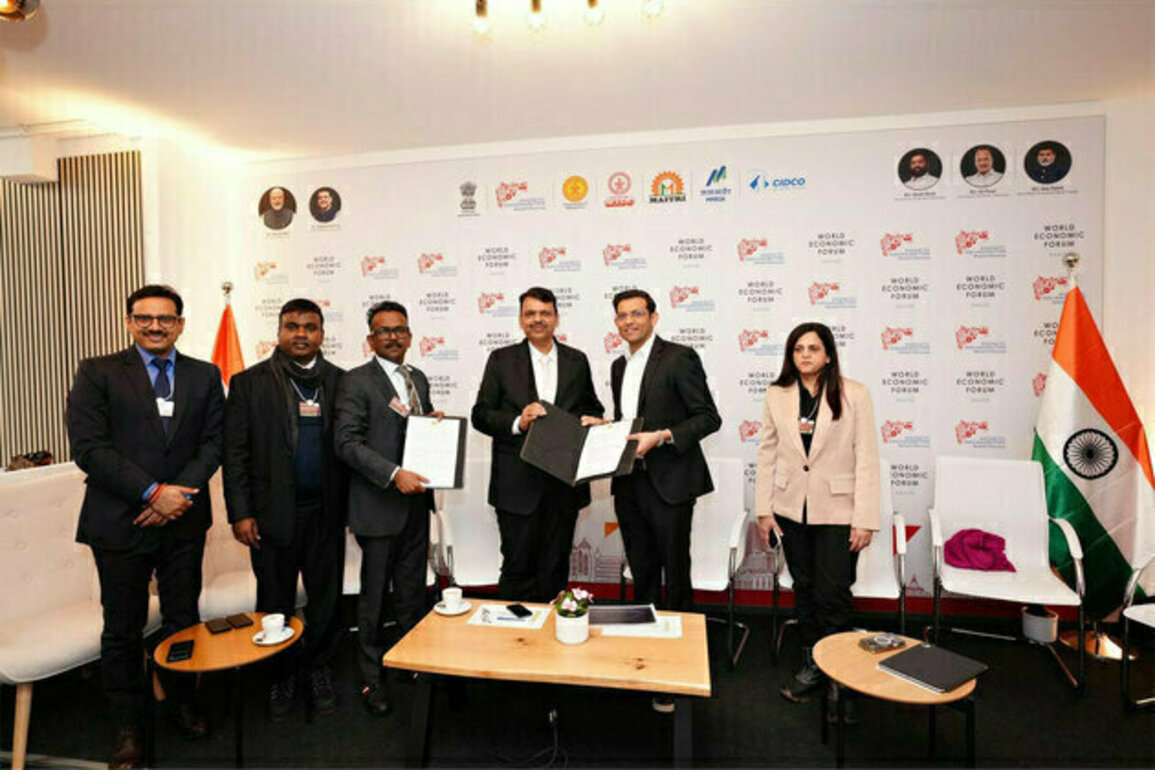
Maharashtra has taken a significant step towards technology-led urban transformation after signing a high-value investment understanding with a domestic infrastructure and technology firm to explore AI-driven smart city projects across the state. The agreement, announced on the sidelines of the World Economic Forum in Switzerland, outlines a proposed ₹2,500 crore investment aimed at modernising urban infrastructure while reducing fiscal pressure on public authorities.
The non-binding memorandum sets the framework for deploying advanced digital systems across major urban centres, with a strong focus on the Mumbai Metropolitan Region. Officials involved in the discussions indicated that the initiative aligns with the state’s broader ambition to position Mumbai and its surrounding cities as globally benchmarked metropolitan hubs capable of managing rapid urbanisation through data-led governance. At the core of the proposal is the deployment of artificial intelligence-based traffic management and urban monitoring systems. These include automated traffic signal optimisation, real-time violation detection, citywide surveillance networks, and integrated command and control platforms designed to support faster decision-making by civic agencies. Urban planners say such systems are increasingly critical for Indian cities facing congestion, road safety challenges, and fragmented institutional coordination.
Unlike traditional public infrastructure projects, the proposed investments are structured around public-private partnership and build-operate-transfer models. This approach is expected to limit upfront capital expenditure by municipal bodies, while allowing private operators to recover costs over time through long-term operations. Industry experts note that such models are gaining traction as state governments look to expand digital infrastructure without straining public finances. A notable feature of the proposed framework is the integration of renewable energy into urban technology deployments. Solar-powered systems are expected to support traffic infrastructure, surveillance equipment, and digital display networks, reducing dependence on conventional electricity sources. Sustainability specialists say this convergence of clean energy and digital infrastructure could help cities lower operational emissions while improving resilience during power disruptions.
Senior officials familiar with the discussions emphasised that the investment is backed by global institutional funding, allowing access to international-grade technology and governance standards. However, they also stressed that detailed project designs, city-wise rollouts, and financial commitments will only be finalised after statutory approvals and technical assessments. From an economic perspective, the initiative is expected to generate employment across technology, engineering, operations, and maintenance roles, particularly in urban regions undergoing rapid expansion. Real estate analysts add that improved traffic efficiency and digital governance can indirectly enhance liveability, property values, and investor confidence in metropolitan corridors.
While the agreement does not guarantee immediate execution, urban policy experts view it as an indicator of Maharashtra’s intent to experiment with scalable, climate-conscious infrastructure models. The next phase will test whether such technology-led partnerships can deliver measurable improvements for citizens while maintaining transparency, accountability, and equitable access across diverse urban communities.
Maharashtra Smart Infrastructure MoU Signals AI Shift