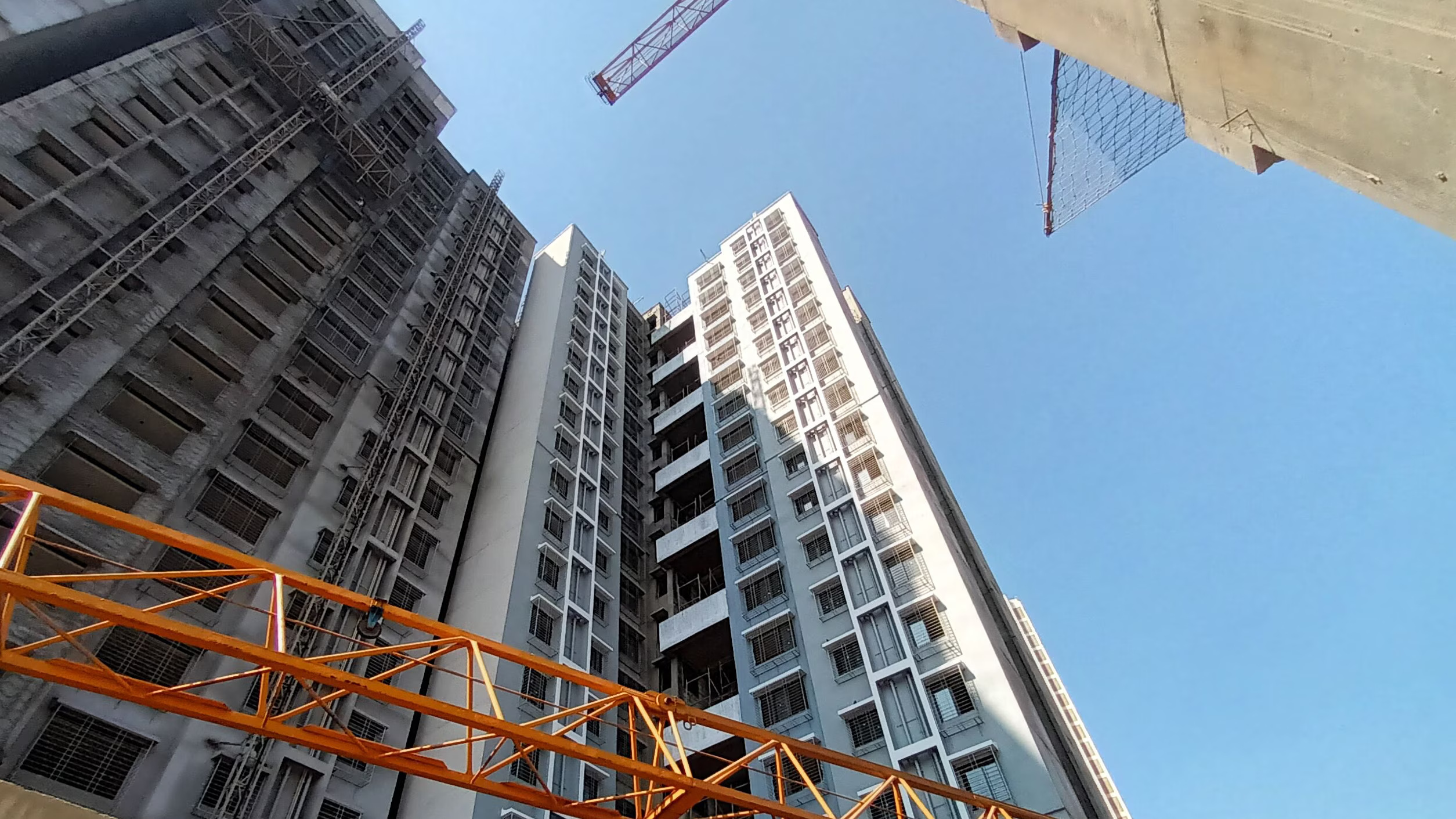
Mumbai’s housing landscape is set for a significant shift as the state government has approved a new policy enabling the integrated redevelopment of large Maharashtra Housing and Area Development Authority (MHADA) colonies without requiring individual consent from residents. The move applies to estates measuring 20 acres or more and is expected to unlock major urban renewal activity across 56 ageing MHADA colonies in the city and its suburbs.
According to officials, the policy aims to accelerate redevelopment in areas where thousands of Middle Income Group and Low Income Group households continue to live in deteriorating buildings that have surpassed their structural lifespan. Many of these estates comprise multiple cooperative societies with fragmented ownership patterns that have historically slowed redevelopment due to complex consent processes. By removing the requirement for individual consent and replacing it with a collective consent resolution from the society, the government hopes to streamline approvals and reduce procedural deadlocks. A senior housing official said the decision was shaped by the need to create modern, climate-resilient, and inclusive housing infrastructure in Mumbai’s older neighbourhoods. The colonies will now be eligible for the highest possible rehabilitation Floor Space Index, a step the state believes will make projects financially viable for developers while ensuring residents receive larger, improved homes. Appointed developers will be selected through a tender process and required to meet stringent service delivery and infrastructure norms.
Government representatives said the new policy will enable the development of integrated townships with green spaces, community facilities, healthcare centres, schools, commercial areas, and energy-efficient public utilities. The approach aligns with Mumbai’s broader urban planning agenda, which seeks to balance housing demand with sustainability goals, including better waste systems, renewable-ready infrastructure, and equitable public amenities. However, the policy’s consent waiver has prompted questions about ensuring residents’ rights during execution. Urban planners noted that while the measure can fast-track redevelopment, robust oversight will be essential to safeguard transparency and ensure that communities are not sidelined in the process. A housing expert explained that integrated redevelopment must be carried out with participatory frameworks to remain people-centric and socially sustainable.
The state has positioned the policy as a critical tool to increase affordable housing stock in the Mumbai Metropolitan Region, arguing that unlocking underutilised MHADA estates will ease pressure on supply in the formal housing market. The new rules also complement a recently notified approach to slum cluster redevelopment for areas exceeding 50 acres, indicating a broader shift towards large-scale, planned renewal over fragmented redevelopment. As several MHADA colonies have been assessed as structurally weak or dilapidated, the revised framework may allow residents to transition to safer, healthier living environments. If executed effectively, the policy could become a blueprint for high-density urban regeneration in other Indian cities striving to meet sustainability goals while addressing housing shortages.
Maharashtra Scraps Resident Consent Rule For Redeveloping Large MHADA Colonies Exceeding 20 Acres