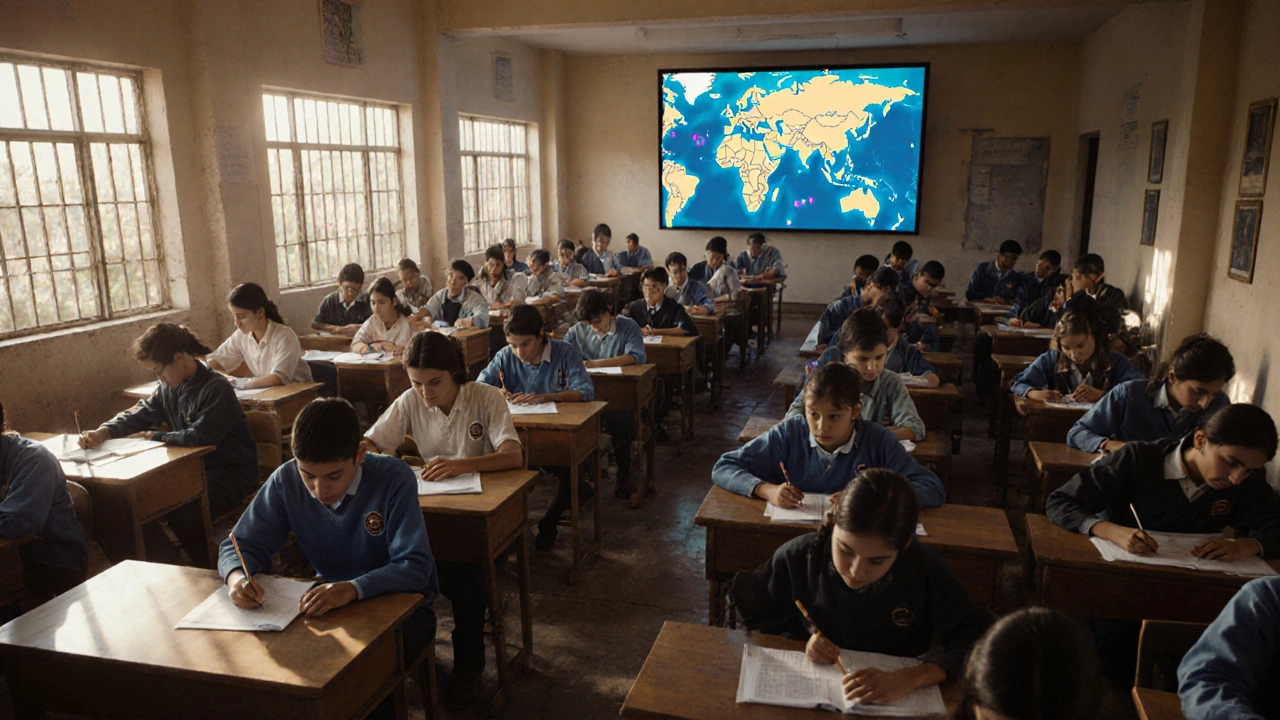
The Maharashtra school education department has introduced stricter rules governing how schools brand themselves, barring the use of terms such as “International” or “Global” unless institutions meet clearly defined eligibility criteria. The move is aimed at protecting parents from misleading claims and improving transparency in a sector that has seen rapid private expansion across urban and peri-urban areas.
Under the new directive, schools may use such titles only if they operate campuses outside India or offer a recognised international curriculum. Education officials said the decision follows repeated observations that several state board–affiliated schools were using international-sounding names despite offering conventional syllabi, creating confusion for families navigating an already complex schooling landscape. In a formal communication issued to district-level education officers, the department instructed authorities to review existing school names and ensure compliance. “Parents often associate words like ‘international’ with a certain standard of pedagogy, exposure, or curriculum,” an education department official said. “When these expectations are not met, it undermines trust in the education system.”
The issue has gained prominence in metropolitan regions such as Mumbai, Pune, and Nagpur, where competitive private schooling markets have driven aggressive branding. Education experts say the unchecked use of global labels has blurred distinctions between state board, national board, and international curriculum schools, particularly affecting first-generation urban families and migrants seeking quality education for their children. Industry observers note that the Maharashtra decision reflects a broader regulatory shift towards accountability in private education. “Branding cannot substitute for academic substance,” said an education policy analyst. “Clear naming norms help parents make informed choices and prevent commercialisation from overtaking educational outcomes.”
Schools found to be non-compliant may be asked to rename themselves or face further regulatory action. While the department has not specified a deadline publicly, officials indicated that enforcement will be phased to minimise disruption for students. Administrators will be required to submit documentation proving eligibility where international or global terminology is used. The move has also been welcomed by parent groups, who have long raised concerns about opaque fee structures and exaggerated claims by some institutions. Clearer classification, they argue, could support more equitable access to education by reducing information asymmetry between schools and families.
Urban planners and social researchers point out that education infrastructure plays a critical role in building inclusive and sustainable cities. Transparent regulation of school systems, they say, supports gender-neutral access, reduces socio-economic exclusion, and aligns with long-term urban resilience goals. As Maharashtra tightens oversight of school branding, the focus is shifting from marketing appeal to measurable educational quality. The policy signals a growing recognition that credibility, clarity, and fairness are essential to maintaining public confidence in the state’s rapidly evolving education ecosystem.
Maharashtra Schools Cannot Use International Or Global Names Without Eligibility Criteria