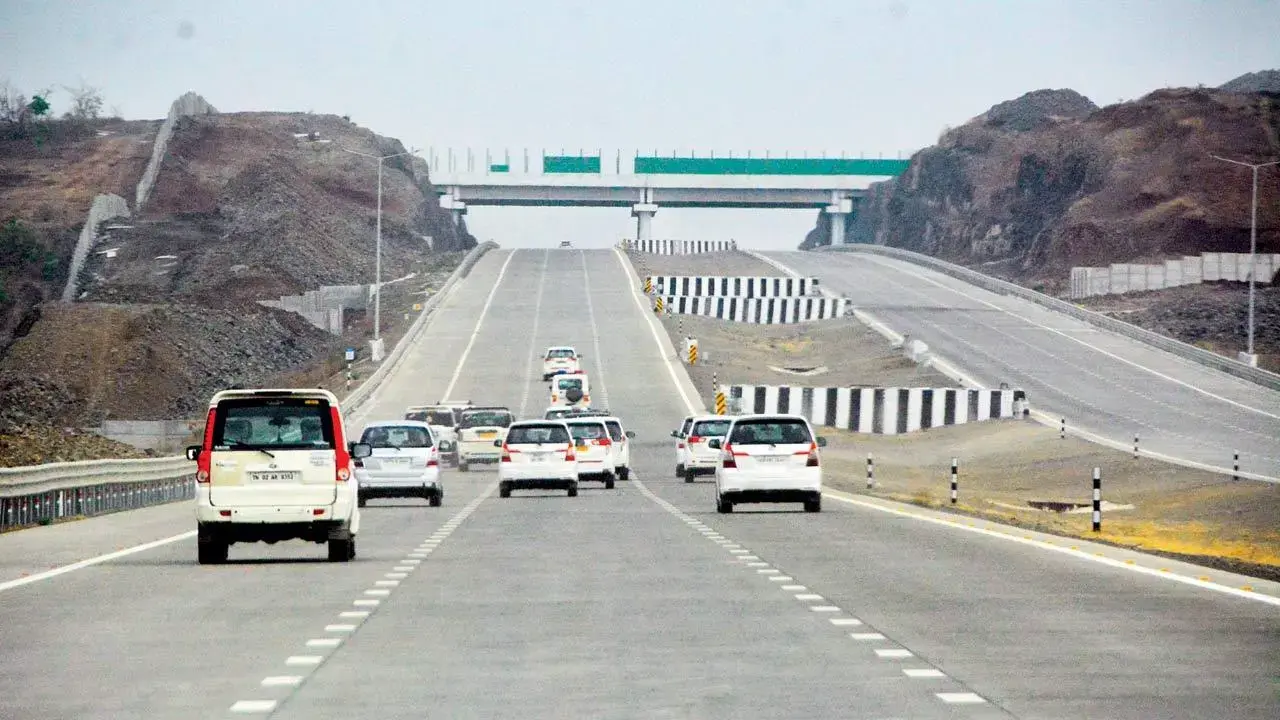
Traffic on Maharashtra’s flagship Mumbai–Nagpur Samruddhi Expressway will be subject to temporary control blocks spanning multiple days as highway authorities implement overhead gantry infrastructure under a broader Highway Traffic Management System (HTMS) aimed at bolstering safety and monitoring across the high-speed corridor. The phased interruptions, scheduled between 9 and 18 February along stretches of Buldhana and Jalna districts, illustrate the operational challenges of balancing infrastructure upgrades with uninterrupted mobility on India’s longest expressway.
The Maharashtra State Road Development Corporation (MSRDC) has outlined a nine-phase plan between roughly km 300.4 and km 365.8 on the expressway, where temporary full halts — typically 45–60 minutes per phase — will allow crews to erect and calibrate highway gantries that support traffic surveillance, speed enforcement and emergency response enhancements. Once work at each location is complete, normal movement will resume.The Samruddhi Expressway is a cornerstone of Maharashtra’s transport infrastructure, linking Mumbai’s economic heartland with the industrial and logistics hinterlands of central and eastern Maharashtra. While the corridor has already shortened travel times and fuelled regional economic integration, the introduction of traffic management gantries expands the highway’s capacity to respond to safety risks, enforce regulations and relay real-time information — capabilities that are increasingly crucial amid rising vehicle volumes and freight movements.
For commuters and freight operators, these planned blocks represent both a short-term inconvenience and a future benefit. Authorities have urged travellers to check schedules in advance and plan journeys to avoid peak disruption windows, as stoppages will occur alternately on Mumbai-bound and Nagpur-bound carriageways at midday and afternoon slots on different days. While the interruptions are temporary, even brief halts can ripple into extended delays on long-distance routes if contingency planning is limited.Transport planners emphasise that works of this nature are part of a larger trend in expressway management, where digital monitoring and automated systems supplement traditional patrols and ground signage. Enhanced gantry systems can facilitate rapid detection of incidents, improve compliance with speed limits and help dispatch emergency services more effectively — outcomes aligned with broader road safety and infrastructure resilience goals.
However, the recurrent need for traffic blocks also highlights the logistical complexity confronting Maharashtra’s road network governance. Scheduling upgrades without severely disrupting long-distance travel requires precise coordination among engineering teams, enforcement authorities and traffic management units. Failure to synchronise these elements can elevate congestion risks and increase fuel consumption during peak travel days.The Samruddhi Expressway, which is nearing completion of its final sections connecting to the Mumbai metropolitan area, has been periodically subject to maintenance and improvement works — reflecting ongoing efforts to sustain high service standards over time. As the expressway evolves to include advanced monitoring systems, integrating these upgrades with robust traveller communication will be vital, particularly for commercial logistics operators and daily commuters who depend on predictable travel windows.
Looking ahead, embedding HTMS gantry data into wider intelligent transport networks could support dynamic routing, weather-responsive alerts and volume management — key features of climate-resilient, people-centred mobility corridors in rapidly urbanising regions.