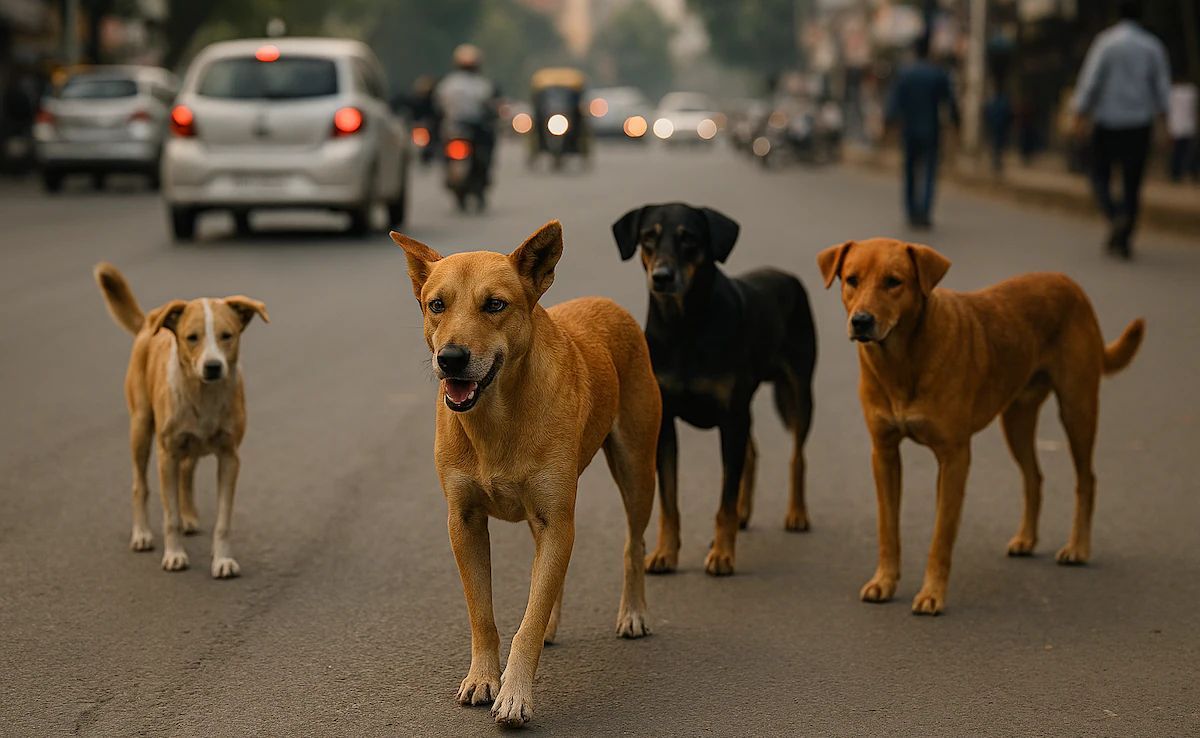
The Maharashtra government has widened its road safety framework by extending a stray animal control mandate to state and national highways maintained by the Public Works Department, signalling a sharper focus on accident prevention across critical transport corridors. The move follows earlier directions covering public sports facilities and reflects growing concern over highway safety risks linked to animal movement on high-speed roads.
Under the new directive, PWD units responsible for highway upkeep have been instructed to coordinate targeted enforcement through district-level road safety bodies. Officials familiar with the decision say the expansion aligns with recent judicial guidance on reducing avoidable road hazards, particularly in zones with high traffic volumes and accident histories. For commuters and logistics operators alike, the policy aims to reduce sudden braking incidents and collisions that often result in serious injuries and asset damage. Implementation will be driven by District Road Safety Committees, multi-agency platforms that bring together district administrations, traffic police, transport authorities, civic bodies and highway engineers. These committees have been tasked with mapping vulnerable stretches where stray dogs and other animals are frequently reported, especially near urban edges, transport hubs and poorly fenced corridors. Once identified, animals are to be relocated to designated shelters, while regular patrols will monitor recurrence.
A senior infrastructure official noted that Maharashtra highway safety cannot rely solely on enforcement after accidents occur. “Preventive monitoring and coordination between agencies is critical, particularly as vehicle speeds and freight movement increase,” the official said, emphasising that the policy is designed to be operational rather than symbolic. Public reporting will form a key pillar of the initiative. Emergency helplines operated by national and state agencies are to be prominently displayed along highways, enabling motorists to flag animal presence in real time. These alerts will be routed to local control rooms, police units and highway authorities to ensure faster response times. Transport economists point out that such systems can significantly lower accident-related delays, benefiting both daily commuters and commercial supply chains.
Within metropolitan regions, responsibility for execution will vary by corridor, reflecting the fragmented governance of major roads. In Mumbai, for instance, arterial highways and express corridors are maintained by a mix of municipal agencies, state corporations and metropolitan authorities. The directive seeks to streamline coordination among these bodies, an area that has long posed challenges for urban infrastructure management. From a broader urban policy perspective, the initiative highlights the intersection of road design, animal welfare and public safety. Experts argue that long-term solutions will require better fencing, improved lighting and planned urban edges that limit animal access to fast-moving traffic. As Maharashtra continues to expand its highway network, integrating such measures early could lower lifecycle costs and improve safety outcomes.
The success of the programme will depend on consistent enforcement and transparent reporting by district committees. If sustained, the expanded Maharashtra highway safety framework could become a template for balancing mobility, safety and humane urban management across India’s rapidly growing road networks.
Maharashtra Roads Target Stray Animal Risks