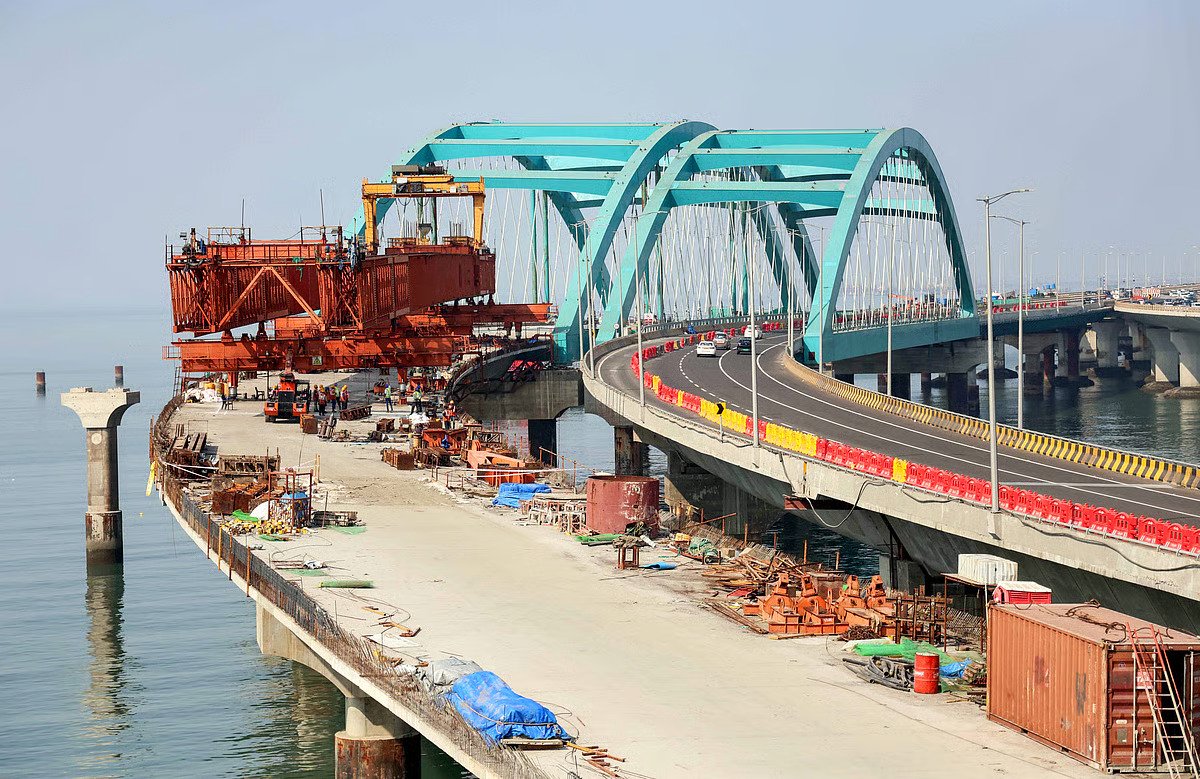
A recent audit by the Comptroller and Auditor General of India has raised significant concerns over financial efficiency and oversight in Maharashtra’s road development programme, identifying avoidable expenditure and systemic gaps in project execution. The findings point to deeper structural challenges in infrastructure planning under the Hybrid Annuity Model (HAM), widely used for public-private road projects across India.
The Maharashtra road audit, covering a multi-year period between 2018 and 2023, examined projects implemented through HAM—a financing model where the government shares upfront costs while private developers recover investments through fixed payments over time. While the approach aims to balance risk between the public and private sectors, the audit indicates that weak project preparation and monitoring have undermined its effectiveness in several instances. One of the key issues highlighted in the Maharashtra road audit relates to design specifications that exceeded actual traffic requirements. In several cases, pavement thickness was planned beyond what projected usage demanded, resulting in inflated construction costs without proportional benefits. Infrastructure experts note that such overdesign not only strains public finances but also raises questions about demand forecasting and technical validation processes.
The audit also points to deficiencies in Detailed Project Reports (DPRs), which serve as the foundation for project planning. Inadequate cost estimation practices, including bundled allocations for utility shifting and provisions for activities that were never undertaken, contributed to inefficiencies. Analysts argue that DPR quality remains a critical weak link in India’s infrastructure pipeline, often leading to cost overruns and implementation delays. Financial management issues further compounded these challenges. Delays in releasing government funds led to missed payment milestones, triggering additional interest liabilities payable to private concessionaires. In other cases, discrepancies in cost calculations and payment adjustments resulted in excess payouts, highlighting the need for stronger financial controls.
Operational inefficiencies were also evident during the maintenance phase. The Maharashtra road audit found that insurance and patrolling costs were often estimated using standardised formulas rather than actual requirements, leading to inflated operational expenses. Additionally, gaps in compliance—such as initiating work without mandatory environmental clearances and incomplete execution of bridge infrastructure—affected the usability of certain road stretches. Monitoring and oversight emerged as another area of concern. The audit noted inconsistencies in inspection practices and delays in appointing independent engineers and safety consultants, which are essential for ensuring quality and accountability. Experts suggest that such lapses can compromise both infrastructure durability and user safety over the long term.
Despite these shortcomings, the audit acknowledged improvements in connectivity on select routes, where upgraded road networks have significantly reduced travel times. This dual outcome underscores the importance of execution quality in determining the success of infrastructure investments. Looking ahead, the findings of the Maharashtra road audit reinforce the need for more rigorous planning, transparent financial management, and robust monitoring frameworks. As India scales up infrastructure spending to support economic growth, ensuring efficiency and accountability will be critical to building resilient and sustainable transport networks.
Maharashtra Road Audit Flags Cost Overruns In Projects