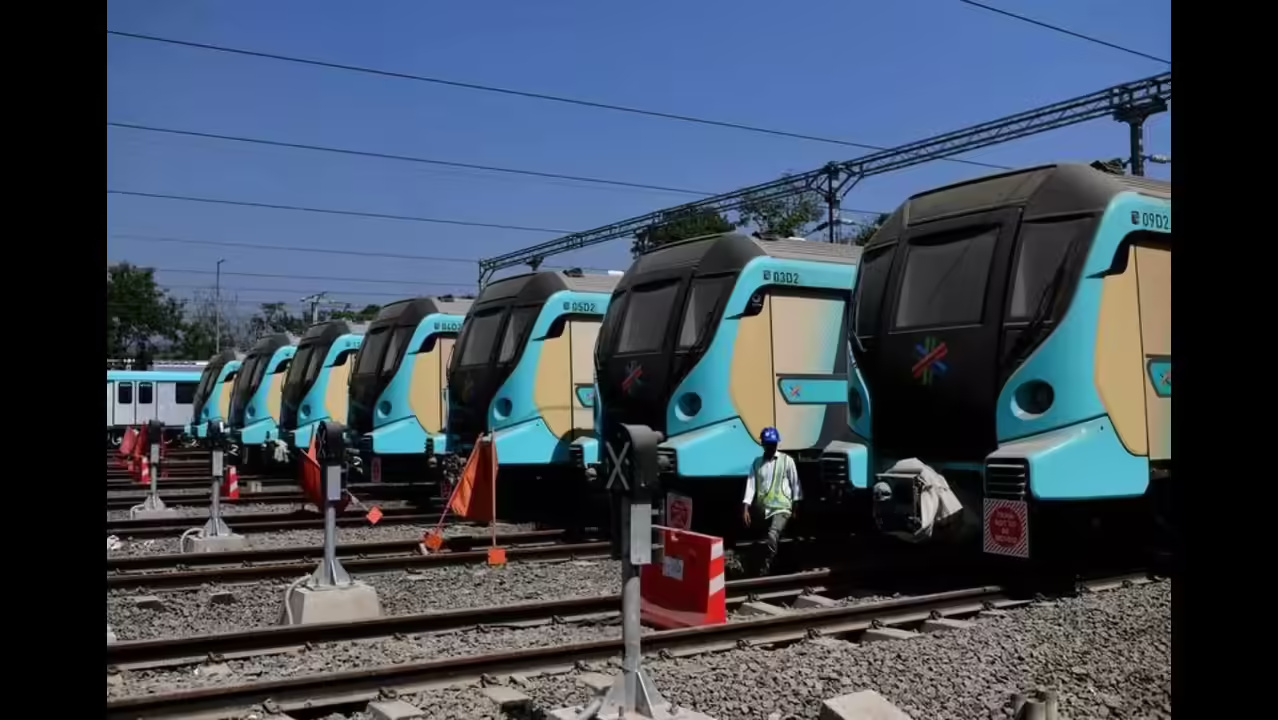
The Maharashtra government has revised the financial approval framework for several Mumbai Metro corridors, removing clauses that previously implied automatic sovereign guarantees on loan borrowings. The shift, formalised through two government resolutions issued this week, marks a significant tightening of the state’s fiscal exposure at a time when infrastructure debt is expanding rapidly across the metropolitan region.
The updated resolutions apply to Metro Lines 5, 6, 7A, 9, 10, 11 and 12, which are being implemented by metropolitan authorities. Earlier approvals had included wording that suggested blanket state responsibility for the repayment of external loans. The revised versions now clearly state that the government will assume liability only for the principal, interest and associated charges when necessary and will offer guarantees solely on a case-by-case basis. According to officials, the restructuring of these clauses was driven by concerns about the state’s contingent liabilities, which have grown substantially as multiple transport agencies borrowed heavily to keep large urban infrastructure projects on track. Automatic sovereign guarantees effectively bind the state to any repayment default by the implementing agency, inflating long-term fiscal commitments and tightening borrowing limits. A senior finance department representative said that removing blanket guarantees was essential to maintaining the state’s creditworthiness and fiscal discipline.
Multilateral lenders funding parts of Mumbai’s metro expansion have also been seeking sharper clarity on repayment structures. Earlier wording created ambiguity over whether the borrowing agency or the state government would carry the full repayment responsibility. Industry experts noted that such inconsistencies can complicate loan negotiations and lead to audit queries. Standardising financial language across project approvals issued since 2017, they said, reduces reputational and compliance risks. While the changes may appear administrative, they have broader implications for how mobility infrastructure is financed in fast-growing cities. Transport economists argue that predictable and transparent repayment structures strengthen long-term financial sustainability, especially for publicly funded assets like metro systems that are critical for reducing congestion, emissions and reliance on private vehicles. By avoiding blanket liabilities, the state aims to ensure that project-level agencies remain accountable for their borrowing while safeguarding public finances.
The updated framework does not eliminate the possibility of state guarantees altogether. Officials clarified that guarantees can still be extended if lenders require them, but they will no longer be assumed automatically. This conditional approach, they said, allows the state to manage exposure more strategically while ensuring that mass transit projects continue to progress without delay. For Mumbai and its surrounding region, which rely increasingly on high-capacity public transport to meet sustainability and accessibility goals, the recalibrated norms signal a move towards more responsible infrastructure financing. As metro networks expand to enable low-carbon mobility and improve urban equity, financial prudence will be key to ensuring these systems remain viable, inclusive and future-ready.
Also Read: New Connectivity For Mumbai: Navi Mumbai Airport Opens On December 25, With First Flight From Bengaluru
Maharashtra Removes Automatic Sovereign Guarantees Clause on Metro Loans.