


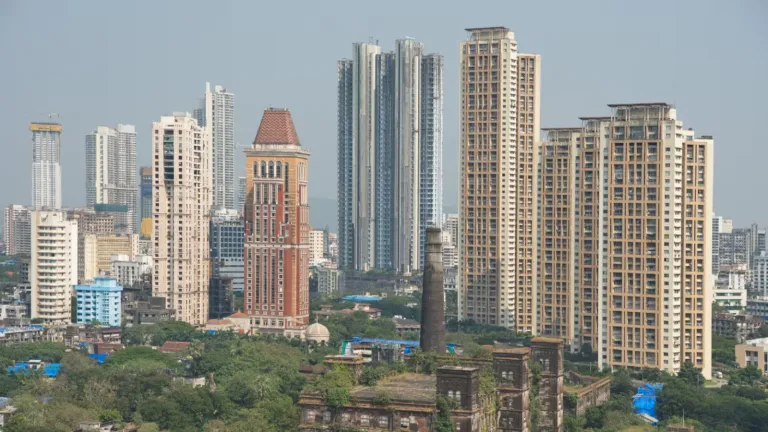
Maharashtra’s urban development trajectory is set to come under national focus later this month, as the state prepares to present its real estate and infrastructure roadmap at a major policy and industry forum in New Delhi. The participation comes at a time when India’s most urbanised state is navigating the next phase of city expansion one shaped less by rapid sprawl and more by infrastructure-led, delivery-focused growth.
Scheduled for mid-February at the Yashobhoomi convention complex, the National Urban and Real Estate Development Conclave will bring together policymakers, urban planners, developers, investors, and financial institutions to examine how Indian cities can scale sustainably. Maharashtra’s presence is expected to centre on lessons from its large metropolitan regions, alongside emerging urban centres that are absorbing population and economic activity at an accelerating pace. Over the past decade, Maharashtra’s cities have been reshaped by transport corridors, industrial clusters, redevelopment programmes, and technology-led planning systems. Regions such as the Mumbai Metropolitan Region, Pune, Nagpur, and Nashik have seen parallel growth in housing, commercial real estate, and employment hubs, creating both opportunities and pressure on urban infrastructure. Industry experts note that the next phase of growth will depend on how effectively cities integrate land use with transit, climate resilience, and affordable housing supply. At the conclave, the state is expected to highlight its emphasis on transit-oriented development, large-scale redevelopment of ageing housing stock, and rental housing models aimed at improving mobility and workforce access. These approaches are increasingly seen as essential to limiting carbon-intensive urban sprawl while making cities more liveable and inclusive. Policy alignment is also likely to be a key theme. Maharashtra’s urban markets have been among the earliest to feel the impact of regulatory reforms such as RERA, insolvency frameworks, and digital land records.
According to urban policy specialists, predictable regulation and clearer governance have helped stabilise investor sentiment, even as developers face tighter financing conditions and rising construction costs. The conclave agenda reflects a broader national shift in urban thinking moving away from volume-led expansion toward execution quality, institutional capital participation, and technology adoption. Topics such as proptech integration, digitisation of approvals, redevelopment financing, and structured public-private partnerships are expected to feature prominently in discussions. With India’s urban population projected to approach half the country’s total by the mid-century mark, Maharashtra’s experience offers both cautionary lessons and scalable models. Analysts point out that completing existing infrastructure, upgrading legacy neighbourhoods, and improving last-mile connectivity may prove more impactful than announcing new urban extensions.
As cities face mounting climate, mobility, and housing challenges, Maharashtra’s engagement at the national forum signals a growing recognition that future urban growth will be judged not by scale alone, but by how equitably and sustainably it delivers outcomes for residents.
Also Read: Delhi NCR TREVOC Canonicus Back Project Completions
Maharashtra Real Estate Plans Enter National Dialogue
