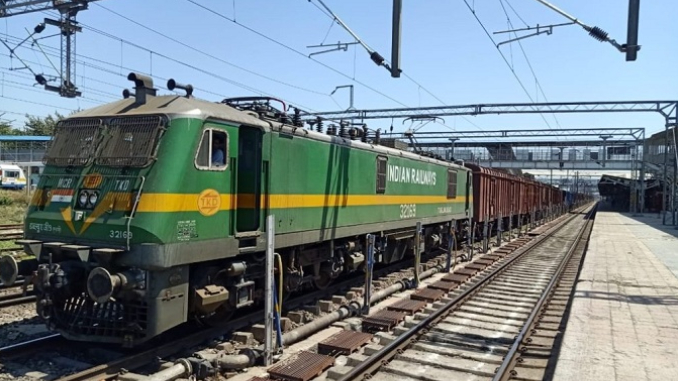
Maharashtra Rail Expansion Accelerates Under MahaRail Leader
In a period of unprecedented rail infrastructure expansion, Maharashtra’s rail network is undergoing accelerated transformation under the leadership of the Maharashtra Rail Infrastructure Development Corporation (MahaRail), a joint venture between the Government of Maharashtra and the Ministry of Railways. With a focus on enhancing connectivity, freight logistics and economic resilience, the corporation — steered by its Managing Director, Rajesh Kumar Jaiswal, IRSE — is advancing multiple track projects that aim to knit key industrial and rural regions into a unified transport grid.
Central to the current infrastructure push is the ongoing Nagpur–Nagbhid gauge conversion project, a ₹2,380-crore initiative converting a 116-km narrow-gauge rail line to broad gauge and laying the groundwork for faster, more efficient rail operations. The first phase — extending between Itwari and Umred — is expected to be completed by March 2026, significantly reducing coal logistics time from mines to thermal power plants and supporting regional energy supply chains.Under this expanded capacity model, freight movement is being reshaped: “Chord lines” such as the Salwa–Butibori corridor are being developed to divert heavy goods traffic away from congested junctions and optimise industrial freight routes, a critical factor for Maharashtra’s manufacturing and export sectors.MahaRail’s work also includes elimination of outdated level crossings through the construction of over 200 Road Over Bridges (ROBs) across the state, a move that enhances safety and intermodal flow by separating road and rail traffic — mitigating congestion and reducing emissions linked with idling vehicles at manual crossings.
Institutional reforms under Jaiswal’s tenure have emphasised in-house planning and mechanised construction techniques, enabling standardised quality control and faster on-ground execution while limiting disruption in densely populated urban zones. The corporation’s growing catalogue of in-house bridge designs has been recognised by national rail standards bodies, a sign of its evolving technical capacity.Such ambitions reflect a broader shift in India’s rail strategy, which increasingly integrates rail infrastructure with economic planning. Maharashtra has seen a near ten-fold increase in railway outlays over the past decade, within a pipeline of projects exceeding ₹1.7-lakh crore that includes multi-modal corridors and high-speed links across key urban and industrial belts. These investments aim to shorten travel times between metropolitan hubs, support freight competitiveness, and expand access for hinterland communities.
Yet, stakeholders note that rapid delivery alone is not sufficient. Urban planners and transport economists stress that network expansion must dovetail with sustainable land use, environmental assessment and equitable access to services. In the context of Maharashtra’s fast-growing cities and peri-urban zones, rail expansion presents an opportunity to reduce carbon emissions, spur transit-oriented development, and foster inclusive economic growth — but only if complemented by robust integration with public transport, last-mile access and community-centric planning.
As MahaRail transitions projects from blueprint to delivery, the emphasis is on maintaining this balance: forging transport links that not only move goods and passengers faster but also lay the groundwork for sustainable, resilient urban and regional development across Maharashtra.