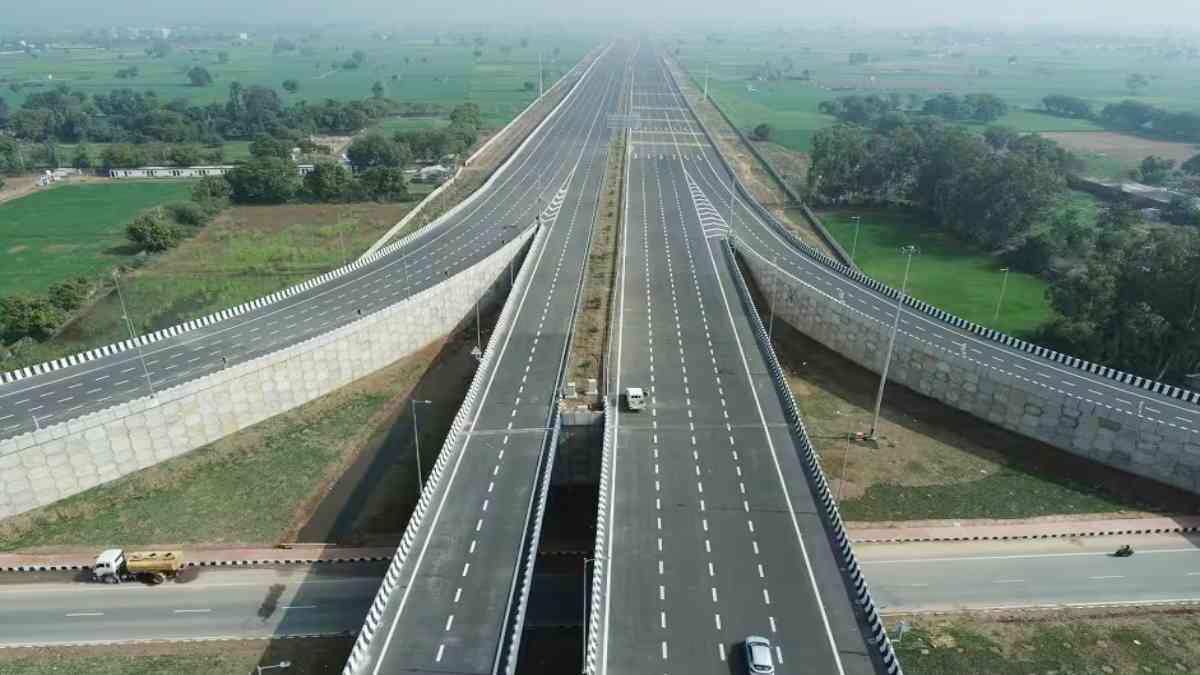
The final section of the Delhi–Mumbai Expressway in Maharashtra is approaching a critical milestone, with national highway authorities preparing to open the Talasari–Raite stretch even as a missing link continues to delay seamless connectivity to the Jawaharlal Nehru Port Authority (JNPA). The new connector, proposed between Morbe and Kalamboli, is expected to significantly reduce truck travel time to the port and strengthen the corridor’s role as an efficient, low-emission freight route.
Work on the Talasari–Morbe segment, a 156-kilometre stretch within Maharashtra, has progressed steadily, but the absence of a direct port access road has hindered the expressway’s full operationalisation. Officials from the road authority confirmed that although construction is nearing completion, only the Talasari–Raite portion—approximately 140 kilometres—will be opened initially. Without a dedicated connector, vehicles must continue using a circuitous route that adds nearly an hour to the journey between Raite and JNPA. To resolve this, national authorities have finalised the alignment for a new 15-kilometre link between Morbe and Kalamboli. Once built, this connector will offer a rapid route into the port precinct and help position the expressway as a more sustainable alternative to existing, congestion-prone freight corridors. Officials involved in the planning process said design approvals are in the final stages and construction will begin soon after. The project, estimated at around ₹9,000 crore, has been prioritised following delays in a separate state-led corridor.
The Maharashtra State Road Development Corporation had originally been tasked with establishing port connectivity through its Virar–Alibaug multi-purpose corridor. However, with that project remaining stalled and a new tender under consideration, the responsibility has effectively shifted back to national authorities. Industry observers note that the expanded role of the national highways agency may help accelerate timelines and reduce long-term economic losses linked to freight delays. Experts say the missing link’s importance extends beyond logistics efficiency. A senior transport planner noted that shorter, direct port routes have tangible environmental benefits, particularly when compared to long detours taken by heavy-duty vehicles. Reduced travel time and optimised freight movement can cut fuel consumption, emissions and congestion across Mumbai’s eastern belt—contributing to a more climate-resilient and efficient urban region.
According to senior officials, the Morbe–Kalamboli connector could bring travel time to the port down to 20–25 minutes once operational. The connector is expected to become a defining feature of the expressway’s final configuration and a catalyst for cleaner, more predictable freight flows between northern India and Mumbai’s coastline. As the new stretch nears completion, planners emphasise that integrated and sustainable freight corridors are essential for balancing economic growth with environmental responsibility. The development of the missing link, they add, is a critical step towards building a modern, future-ready logistics network that supports both urban resilience and national competitiveness.
Maharashtra Plans 15 Km Connector To Reduce Morbe JNPA Travel To 25 Minutes