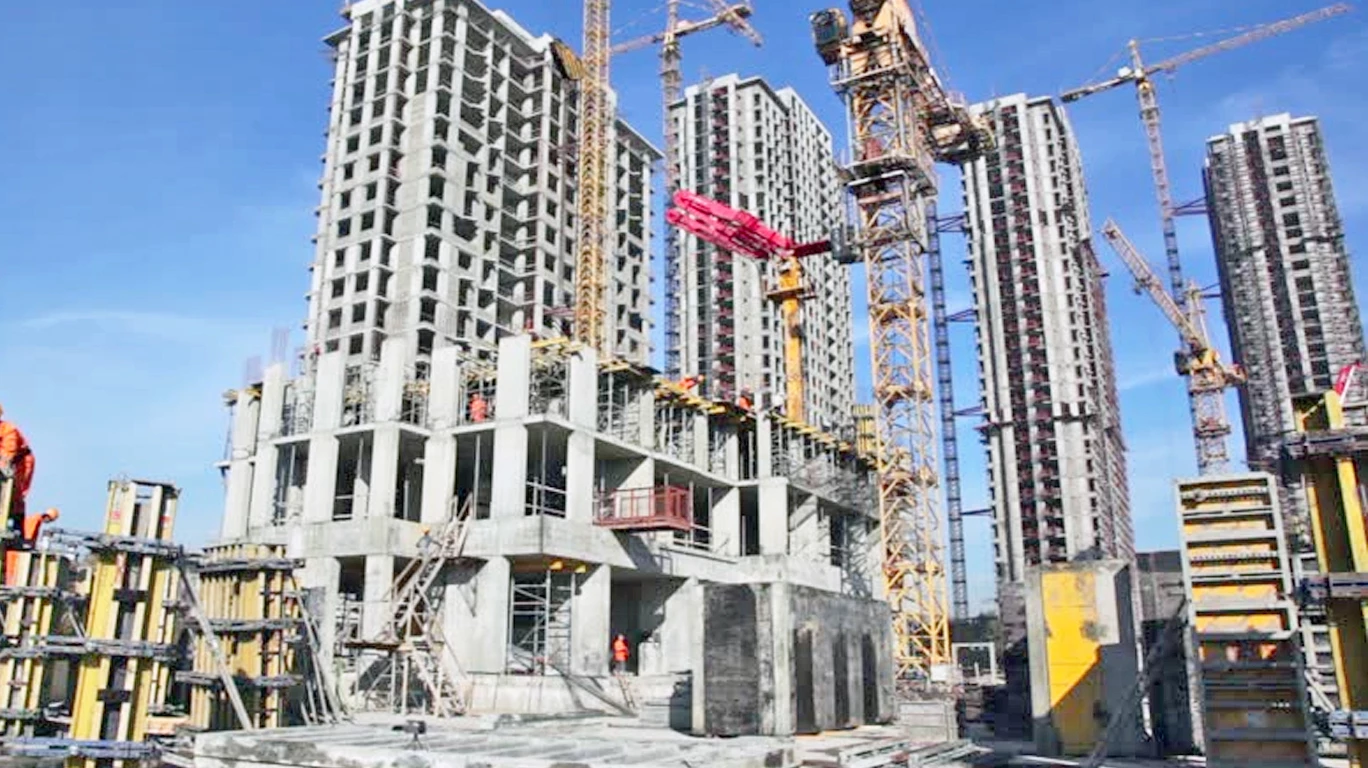
The Maharashtra government and civic authorities have stepped up enforcement against air pollution in Mumbai, issuing stop-work orders to more than 1,000 construction sites across the city for non-compliance with environmental norms. The directive is part of a broader “Clean Air” initiative aimed at curbing dust and particulate emissions from construction activities, a senior government official told the legislative assembly on Tuesday.
As of January 2026, nearly 88 per cent of the city’s active construction sites—1,952 out of 2,224—have installed low-cost air quality sensors to monitor particulate matter in real time. The official highlighted that adherence to the monitoring requirement is crucial, noting that 678 projects were ordered to halt operations on January 16 due to a failure to comply with sensor installation and reporting guidelines. Between October 2025 and January 2026, authorities issued 1,981 show-cause notices and 1,047 stop-work notices to construction firms. The escalation mechanism starts with formal intimation for minor violations, followed by a show-cause notice and finally a stop-work order if non-compliance persists. Experts say this structured enforcement model is designed to balance urban development needs with environmental safeguards.
The city’s 25 ward-level flying squads have also actively penalised the illegal transport of construction debris, collecting over Rs 1.21 lakh in fines. Additionally, a combination of 126 water tankers and 25 misting machines has been deployed to wash more than 14,400 kilometres of city roads, reducing the dust burden in densely populated areas. Urban planners note that dust suppression at the source and along transport routes is key to improving air quality without halting overall construction activity. Despite concerns about pollution, officials emphasised that the Air Quality Index (AQI) in Mumbai has remained largely in the ‘satisfactory’ (51–100) to ‘moderate’ (101–200) range, with no significant adverse health impacts reported among children, senior citizens, or other vulnerable groups, according to civic health records. Environmental experts suggest that technology-driven monitoring, combined with regulatory action, allows authorities to maintain urban development momentum while safeguarding public health.
As Mumbai continues to expand residential and commercial infrastructure, enforcing dust mitigation and air quality standards remains critical. Authorities indicate that regular audits, technology integration, and immediate action on violations will continue to be central to city planning, ensuring that urban growth occurs within a framework of sustainable and climate-resilient practices.
Maharashtra Orders Stop Over 1000 Work On Construction Sites