


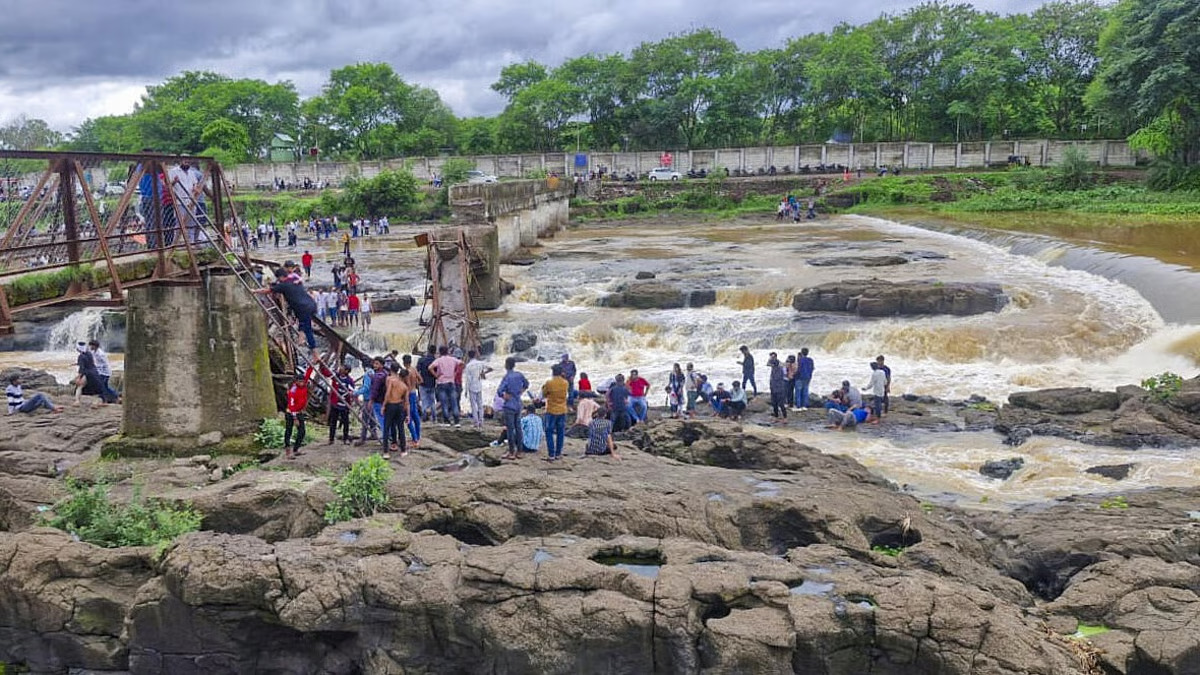
After a fatal bridge collapse killed four picnickers in Pune, Maharashtra’s Chief Secretary has mandated the closure of all risk-prone tourist locations during monsoon, ordered comprehensive bridge audits, and instructed rail and metro authorities to strengthen safety protocols and communications for Mumbai region.
Senior officials convened to address the collapse of a 32-year-old pedestrian bridge over the Indrayani River at Kundmala, which had been flagged as unsafe before giving way under tourist footfall. The tragedy claimed four lives and injured several others, prompting a decisive shift in policy prioritising citizen safety over access, especially during the seasonal surge in visitors. In the wake of the incident, the Chief Secretary emphasised that signage alone is inadequate. She directed district administrations to enforce temporary bans at vulnerable sites until safety assessments, repairs, or replacements are completed. Deployment of Home Guards, NCC cadets, and police was ordered to ensure compliance, with legal action against visitors who ignore closures .
This bridge was among 500 monsoon-vulnerable spots identified across Pune district, including endangered river crossings, waterfalls, and ghat roads. A top state official indicated that temporary bans had previously been placed at locations such as Lonavla, Bhaje and Bhushi Dam. The insistence on enforcement follows similar mishaps, including a drowning incident near Lonavla in June 2024. Further caution stems from the Mumbra rail fatality on June 9, where overcrowded trains led to four commuter deaths when individuals standing on footboards lost balance. In response, the Chief Secretary convened a joint meeting with rail and metro authorities, municipal bodies, and law enforcement to enhance platform safety and crowd alerts amid monsoon and festive pressures.
New measures include issuing formal passenger advisories, installing baggage scanners at key stations, and deploying audible alerts or sirens during crowd-intense operations or high tide exposures. She also advocated leveraging AI and CCTV surveillance with police coordination for rapid detection of safety breaches. Under this enhanced monsoon safety regime, the Public Works Department has been tasked with conducting structural surveys across all older bridges in Pune division. Those deemed fragile are to be either rebuilt or closed. Financial aid of ₹5 lakh per victim’s family has been approved by state authorities, alongside medical support for the injured.
Urban planning experts have welcomed the shift toward proactive risk mitigation, noting that temporary barricades and one-off site audits must evolve into dynamic, data-driven safety frameworks. A prominent civil expert emphasised that monsoon tourism combined with inadequate infrastructure is a recipe for repeated tragedies. Integration of real-time hazard mapping, pedestrian flow analysis, and community liaison—inspired by city-design principles supporting gender-neutral, inclusive, and eco-friendly public spaces—was proposed. Effective enforcement presents its own challenges. Reports from the Kundmala incident reveal that, despite presence of local police, tourists flouted multiple closure orders and barricades posted over the bridge—prompting sharper regulatory oversight. Critics argue that without continuous on-ground vigilance, temporary restrictions become symbolic rather than protective.
Historic undeclared tourist hits like Bhushi Dam and Khadakwasla underscore similar gaps in oversight. Over 35 drowning fatalities have occurred since 2017 around Bhushi Dam alone. As monsoon feet traversed such routes despite warnings, the district’s disaster-prevention framework has come under scrutiny. Even Mumbai’s suburban system is being swept into this policy mindset. With high-density weekend ridership and surge traffic near coastal stations, the state’s transport apparatus is integrating monsoon safety into crowd management. The Chief Secretary has requested metro bodies and rail authorities to appoint nodal officers, mandate safety briefs, deploy crowd-control barricades, and alert travellers via digital display systems, FM bulletins, and social media platforms .
In addition, passenger input mechanisms are being streamlined with suggestions to introduce rapid-response helplines, official spokesperson updates, and verified information networks to combat misinformation during crises . Several civic leaders advocate that this blend of infrastructure enforcement, crowd intelligence, and public communication reflects a systems-level safety paradigm long needed for monsoon-prone Maharashtra. Whether this integration extends beyond emergency directives to climate-responsive resilience remains the question. Through establishing structural inspections, cross-department coordination, and risk-reducing visitor protocols, Maharashtra’s administration may be setting a precedent for monsoon preparedness in urban-and-rural interface zones. Key to success will be consistent enforcement, community engagement, and sustained focus on vulnerable zones no longer hidden behind ‘seasonal operation only’ signs.
In a state where monsoon tourism underpins local economies, balancing safety closures with sustainable access is essential for preserving both public life and livelihoods. The coming weeks will reveal whether closures and crowd curbs mature into a culturally ingrained safety ethos, or fade with the rains.
Also Read : Indian Railways to Install Hand Wash Dispensers in Sleeper Coaches
