Maharashtra New Tax Policy Targets Ageing Vehicles
Maharashtra has sharpened its clean mobility strategy by doubling environmental levies on ageing private vehicles, signalling a decisive shift towards reducing urban air pollution and modernising the state’s vehicle ecosystem. The move, introduced in the 2026–27 state budget, is expected to influence mobility patterns across major cities and emerging urban centres.
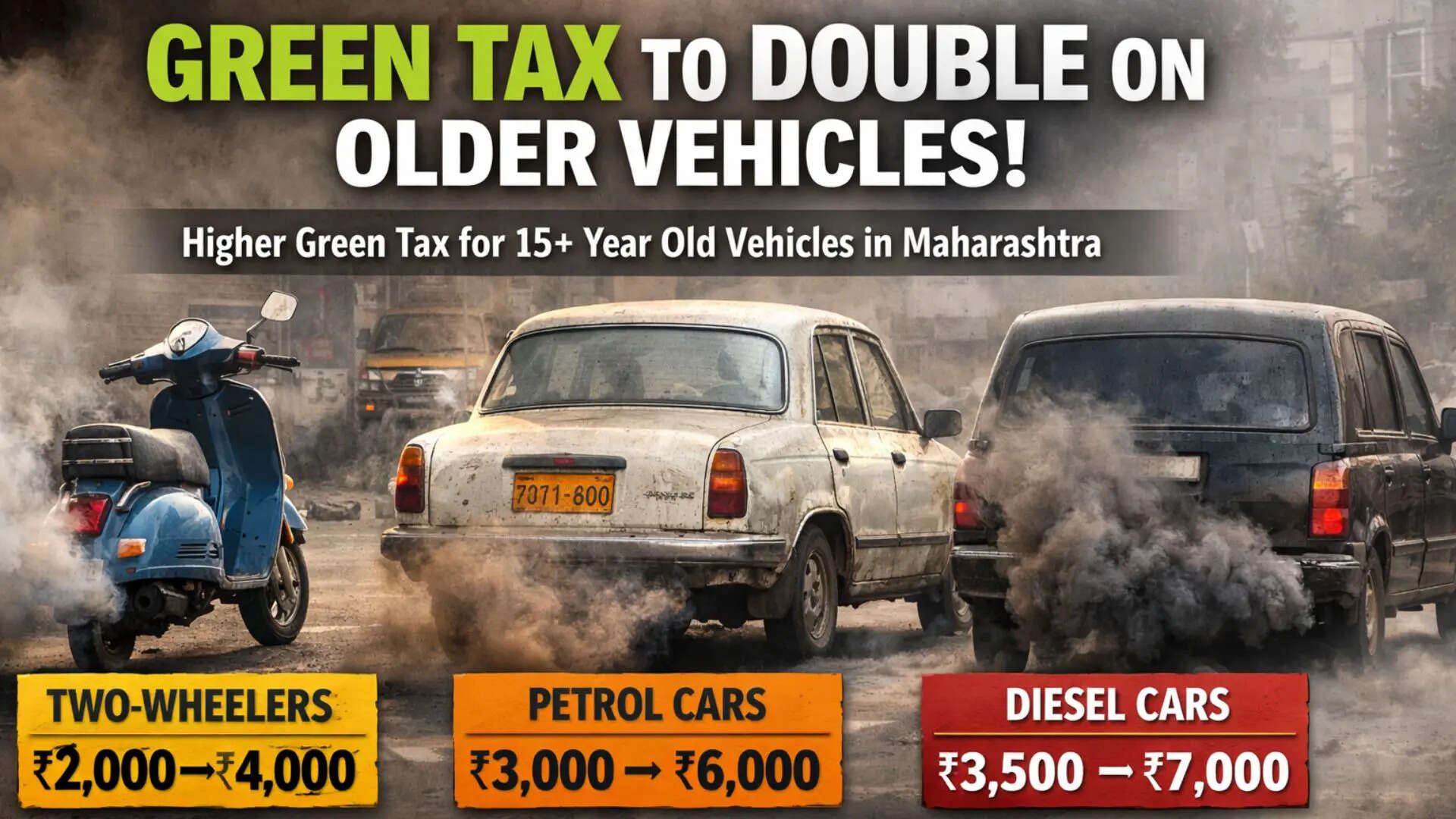
Under the revised framework, the Maharashtra green tax on older vehicles—particularly those compliant with BS4 and earlier emission standards—will increase significantly. Two-wheelers may now attract ₹4,000, petrol-powered light vehicles ₹6,000, and diesel variants ₹7,000, effectively doubling earlier rates. The policy is designed to discourage continued use of older, fuel-inefficient vehicles that contribute disproportionately to air pollution. By increasing the cost of retaining such vehicles, the state aims to nudge households towards cleaner alternatives, including newer internal combustion vehicles and low-emission mobility options.This tightening of the Maharashtra green tax comes at a time when cities such as Mumbai, Pune, and Nashik are grappling with deteriorating air quality and rising vehicular density. Transport emissions remain a major contributor to urban pollution, making regulatory and fiscal interventions a key tool for environmental management.
Alongside higher taxes, the state has introduced incentives to encourage voluntary scrappage. Vehicle owners who retire older vehicles and purchase new ones may receive motor vehicle tax concessions ranging from 16% to 30%, depending on the emission category of the scrapped vehicle. Urban mobility experts view this dual approach—penalising older vehicles while rewarding cleaner replacements—as a calibrated transition strategy. Rather than imposing immediate bans, the framework uses financial signals to gradually shift behaviour, allowing time for infrastructure and market adaptation.The implications extend into the broader urban development ecosystem. Rising costs of maintaining older vehicles could accelerate fleet renewal, potentially improving air quality and public health outcomes. However, the policy also raises concerns around affordability, particularly for lower-income households that rely on older vehicles for daily mobility.
From an infrastructure perspective, the policy aligns with long-term goals of reducing environmental stress on cities. Cleaner vehicle fleets can contribute to lower emissions, reduced congestion-related pollution, and improved urban liveability—critical factors as Maharashtra continues to urbanise at scale.At the same time, experts emphasise that taxation alone cannot drive a complete transition. Investments in public transport, electric mobility infrastructure, and last-mile connectivity will be essential to ensure that citizens have viable alternatives to private vehicle use.The Maharashtra green tax reform also reflects a broader national trend of integrating environmental considerations into transport policy. As states increasingly adopt similar measures, the focus is shifting towards creating mobility systems that are not only efficient but also climate-responsive.
Looking ahead, the effectiveness of the policy will depend on implementation, enforcement, and public adoption. If supported by complementary infrastructure and policy measures, the initiative could play a significant role in shaping cleaner, more resilient urban transport systems across Maharashtra.