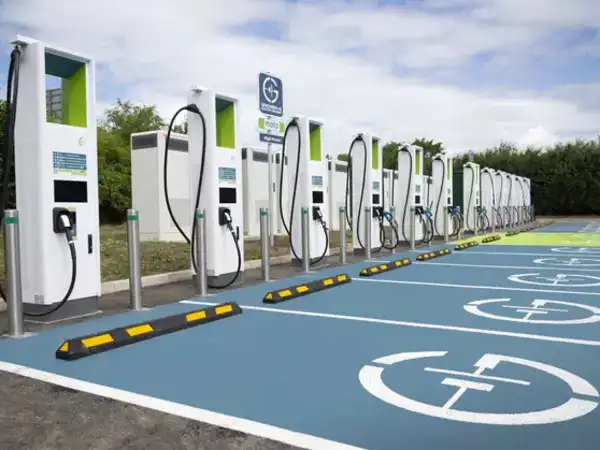
Maharashtra Mandates EV Charging At MSRTC Fuel Stations
Maharashtra’s transport authority has taken a consequential step in urban mobility policy by requiring electric vehicle (EV) charging stations at all new fuel outlets developed on Maharashtra State Road Transport Corporation (MSRTC) land. The directive, endorsed at a senior-level meeting with government and industry officials, ties future fuelling infrastructure to the state’s broader climate targets and mobility transition, with implications for energy providers, commuters and urban planners across the state.
The requirement means that any retail fuel pump built on MSRTC-controlled land — under public‑private partnerships — must integrate EV chargers alongside conventional diesel and CNG facilities. Transport planners describe this as a strategic alignment of legacy energy assets with clean mobility goals to accelerate the deployment of charging infrastructure in both urban and peri‑urban corridors. Maharashtra has been progressively shaping its clean mobility ecosystem under its Electric Vehicle Policy 2025, which envisages widespread charging coverage and a shift toward net‑zero transport emissions. The new mandate complements provisions aimed at locating fast chargers at state and national highway intervals, residential and commercial complexes, and government facilities — measures aimed at addressing “range anxiety” and the practical barriers to EV adoption.
Industry analysts say the move could reshape investment decisions by fuel marketing companies and energy infrastructure firms. By formalising charging as part of future fuelling stations, Maharashtra is signalling a dual‑energy model that leverages existing roadside assets while planning for a low‑carbon future. Such integrated multi‑energy outlets could improve operational viability by pooling footfall, reducing the risk for investors concerned about stand‑alone charging station economics. Urban planners note the human dimension: as cities densify and personal transport shifts, accessible charging points at typical commuter touchpoints — like fuel pumps — will be vital to ensure equitable access across income groups and geographies. This requirement along MSRTC land, which often intersects with suburban and rural mobility nodes, addresses a persistent equity gap in EV infrastructure deployment.
However, MSRTC’s own transition to electric buses has been gradual. Diesel‑powered vehicles still dominate the fleet, highlighting operational and infrastructure bottlenecks in large‑scale electrification. Transport officials acknowledge that expanded charging infrastructure — including at commercial fuel sites — is a necessary precursor to broader fleet electrification and cleaner passenger transport. For private EV owners and commercial fleets, this policy could significantly expand charging access, especially along arterial routes where dedicated chargers remain sparse. But experts caution that implementation will require streamlined permitting, grid upgrades and coordination with local utilities to ensure that chargers are functional, reliable and capable of handling peak demand.
Looking ahead, the success of this integration will hinge on timely rollout and sustained collaboration between government bodies, distribution companies and private capital. For Maharashtra’s cities and economic centres, achieving robust, climate‑aligned mobility infrastructure remains both a challenge and an opportunity as India accelerates toward its 2047 development and decarbonisation goals.