


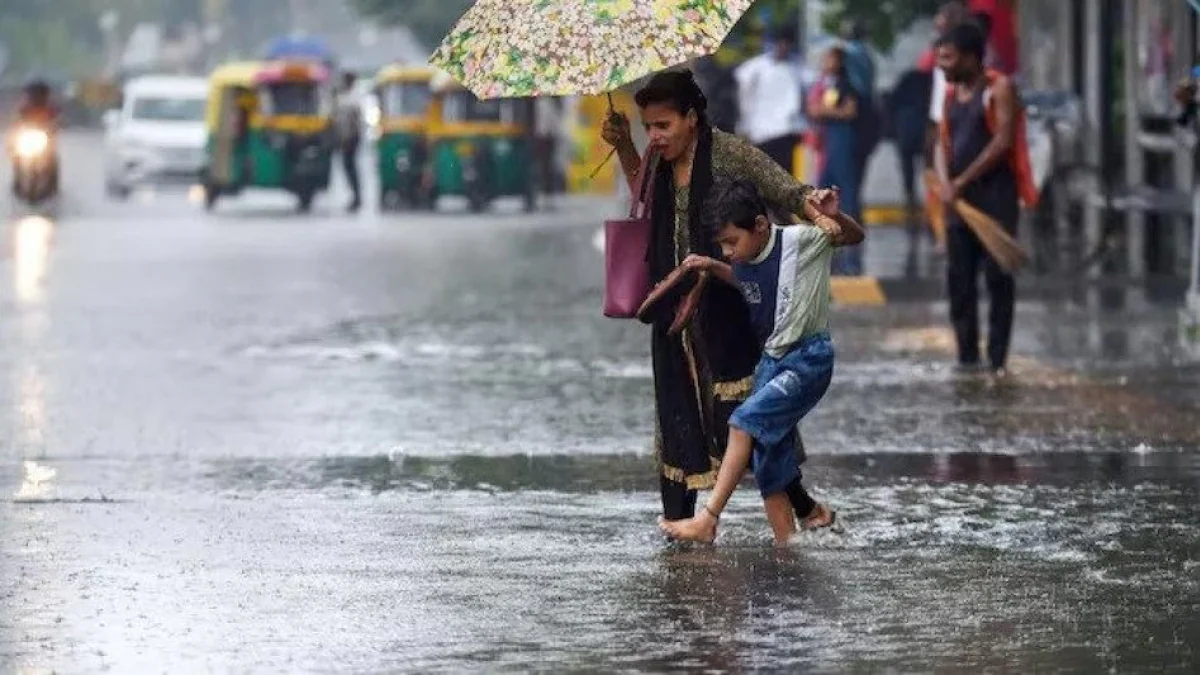
Maharashtra is expected to witness above-normal rainfall this July, according to the latest monthly outlook issued by the India Meteorological Department (IMD). The forecast suggests a significant uptick in precipitation across central and peninsular India, particularly in key states like Maharashtra, Gujarat, and Chhattisgarh, prompting advisories for increased vigilance over river systems and urban catchments.
The IMD’s projections are based on advanced modelling, which shows deep blue patterns across many regions on the forecast map—a colour coding that denotes excessive rainfall. These forecasts arrive on the heels of a wetter-than-expected June in many regions, reaffirming the likelihood of continued active monsoon conditions in the country. The July rainfall for the entire country is projected at 106% of the long-period average (LPA) of 280.4 mm. For Maharashtra, which has already seen vigorous monsoon activity over the past few weeks, this forecast signals a potentially volatile month with implications for agriculture, urban infrastructure, and flood preparedness.
Experts from the IMD have flagged major river basins—notably the Godavari and Krishna—as areas of concern. These river systems, flowing through Maharashtra, Karnataka, Telangana and Andhra Pradesh, are likely to receive high inflows due to the cumulative rainfall. In particular, the upper catchments of the Mahanadi basin in Chhattisgarh, which also extends into Maharashtra, are projected to experience heavy rainfall. Monitoring river levels, reservoir status and real-time water gauges is being prioritised as a preventive measure. Officials have stressed that while above-normal rainfall can benefit crop sowing and groundwater recharge, it also raises the spectre of flash floods and urban inundation. Many cities across Maharashtra—including Mumbai, Pune, Nagpur and Nashik—have seen severe flooding in recent monsoons due to overwhelmed drainage systems. With the IMD’s July forecast anticipating the likelihood of multiple low-pressure systems forming over the Bay of Bengal and moving westward, urban areas need to brace for abrupt and intense downpours.
According to the IMD’s director general, precautionary monitoring must become a state-level priority. When such low-pressure systems are active, they not only enhance rainfall intensity but also extend rainfall duration across large swathes. Historical data suggests that five or more low-pressure formations are common in July, and this year could mirror or exceed those patterns. Authorities have therefore been urged to keep emergency protocols ready, particularly in flood-prone and low-lying urban regions. The forecast also draws attention to parts of northwest India, including Uttarakhand, Haryana and Delhi, where heavy rainfall may further burden river systems originating in the Himalayas. This expands the national focus on both mountain and peninsula river catchments, indicating that inter-state coordination will be vital in the event of rising water levels or reservoir overflow.
In Maharashtra, the Water Resources Department and Disaster Management Authorities have already been placed on alert. Senior officials from these agencies confirmed that they are reviewing real-time data dashboards and emergency communication plans. Municipal corporations across major cities have been asked to clear water-logging hotspots, unclog stormwater drains and inspect pumping stations to ensure operational readiness. Environmentalists and hydrologists have noted that the increasing frequency of extreme rainfall events is consistent with the broader trends associated with climate change. The monsoon, once considered relatively predictable, is now demonstrating erratic spatial and temporal distribution, posing serious challenges to planners and citizens alike. According to climatologists, the infrastructure and resilience measures of most Indian cities have not kept pace with these evolving weather patterns.
Sustainable urban planners have reiterated the need for climate-adaptive designs in city planning, especially in vulnerable districts of Maharashtra. Integrating green stormwater infrastructure such as bioswales, rain gardens, permeable pavements and rooftop harvesting systems could substantially mitigate urban flood risks in the long term. While the July forecast offers a hopeful outlook for agriculture—as kharif sowing activity is highly dependent on July rains—experts caution that excessive precipitation could lead to crop damage and waterlogging in low-lying farmlands. The Agriculture Department has been advised to work in close coordination with meteorological centres and issue dynamic advisories to farmers on irrigation, fertiliser application, and pest control.
This rainfall forecast marks a critical phase in the monsoon season. Maharashtra, with its mix of urban and rural vulnerability, must act swiftly to manage both the opportunities and threats posed by the impending wet spell. As the IMD advances its forecast capability and local agencies strengthen their data-driven response mechanisms, the month of July could emerge as a crucial benchmark for India’s climate-resilient planning.
Also Read : Delhi Metro officials issue warning against Social Media Reel-making inside coaches
