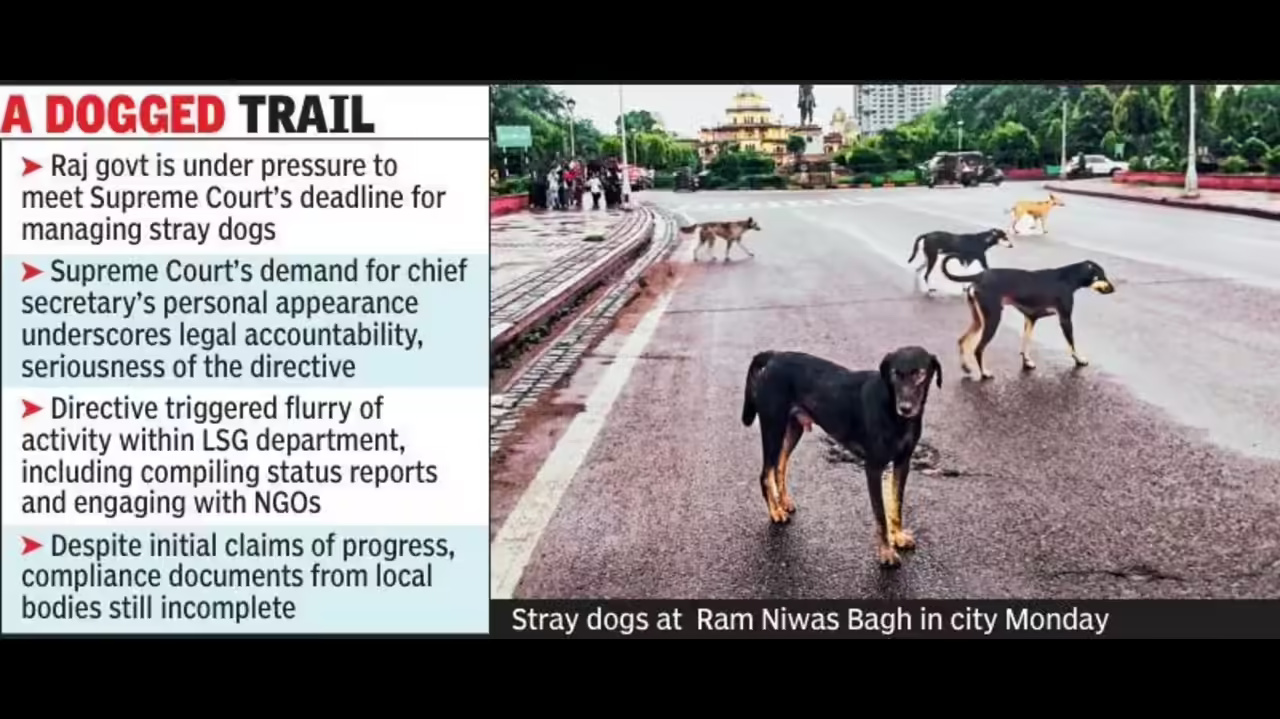
The Maharashtra government has issued a statewide directive instructing civic authorities to remove stray dogs from public areas, including schools, hospitals, bus depots, railway stations, and sports complexes. The resolution, issued following a Supreme Court ruling, mandates the sterilisation, vaccination, and relocation of captured animals to shelters, while introducing designated feeding zones to manage human-animal interaction safely. Officials say the move aims to protect citizens and streamline urban animal welfare practices.
According to the government resolution, municipal corporations, councils, and nagar panchayats are responsible for capturing stray dogs, ensuring they receive anti-rabies vaccinations and sterilisation before relocation. Feeding outside the specified zones will attract penalties, while a helpline system has been introduced to report stray-dog issues. A state-level coordinator, based in Navi Mumbai, will oversee implementation and monitor compliance across local bodies. Animal-welfare officials acknowledge the challenges in executing the order. Mumbai alone houses over 90,000 stray dogs but operates just eight shelters, highlighting the logistical and infrastructural pressures on municipalities. “Implementing sterilisation and relocation at this scale will require careful planning, additional resources, and citizen cooperation,” an animal-welfare expert said.
The directive also emphasises public health preparedness. Hospitals and clinics are instructed to maintain sufficient stocks of anti-rabies vaccines and immunoglobulins to address potential dog-bite incidents promptly. Non-compliance by municipal authorities or institutions could result in personal accountability measures for officials. This initiative follows the Supreme Court’s suo motu order on November 7, which called for immediate action to remove stray dogs from public premises while adhering to the Animal Birth Control Rules, 2023. By enforcing these rules, the state aims to reduce conflicts between humans and animals, prevent disease transmission, and ensure safer, cleaner public spaces.
Experts note that designated feeding zones, combined with sterilisation drives, can mitigate public-safety concerns while supporting humane treatment. “Providing structured feeding areas encourages community participation and ensures animals are cared for without disrupting public life,” a senior municipal official commented. While infrastructure and resource constraints pose immediate challenges, authorities stress the long-term benefits of a well-managed urban animal welfare system. The programme aligns with broader sustainable urban planning goals, prioritising safety, public health, and coexistence in densely populated cities.
Officials say the scheme will be monitored closely, with adjustments made as needed to ensure compliance, effectiveness, and equitable treatment of animals. Citizens are encouraged to participate responsibly and report violations to the dedicated helplines, promoting both humane practices and civic accountability.
Maharashtra Launches Stray Dog Management Programme Across Public Spaces