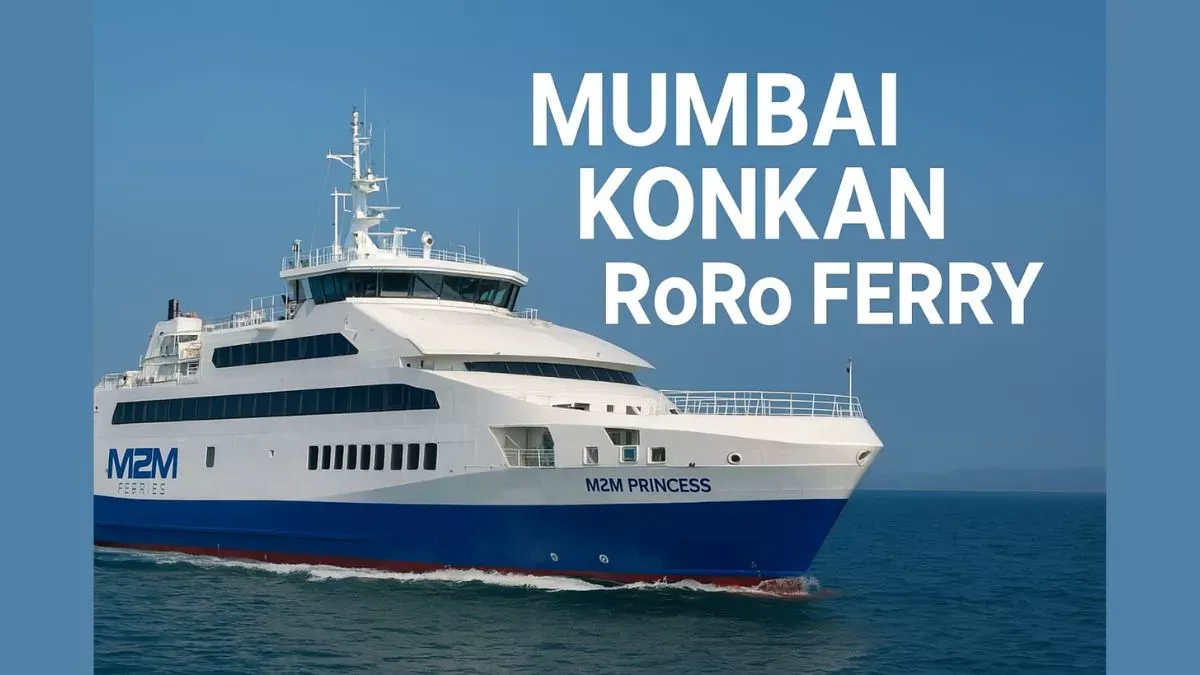
Maharashtra Launches Mumbai Vijaydurg Ro-Ro Ferry Service
A long-anticipated maritime transport service between Mumbai and Vijaydurg in Sindhudurg district was inaugurated on 1 March 2026, marking a significant expansion in coastal connectivity along the Konkan coastline. The Mumbai–Vijaydurg roll-on/roll-off (Ro-Ro) ferry service, designed to carry both passengers and vehicles, is expected to cut transit times to approximately six to seven hours, offering a viable alternative to the often congested road route and supporting regional tourism and trade.
The service was flagged off from Bhaucha Dhakka (Mumbai Port) with formal support from Maharashtra’s Chief Minister and the Minister for Fisheries and Ports, who underlined the project’s potential to ease transport bottlenecks, strengthen economic linkages along the coast and expand sustainable travel options.Operated by M2M Ferries under the aegis of the Maharashtra Maritime Board, the high-speed Ro-Ro vessel accommodates up to 626 passengers along with cars, two-wheelers and other light vehicles. The operator is positioning the service as one of Asia’s fastest M2M Ro-Ro water transport routes, reflecting broader ambitions to integrate coastal freight and passenger movement.Unlike traditional ferry services limited to foot passengers, this Ro-Ro model — combining “roll-on/roll-off” vehicle transport with passenger berths — addresses a practical gap in regional mobility. Urban planners and transport economists note that offering vehicle continuity across sea segments reduces reliance on lengthy highway travel and in turn alleviates stress on land transport infrastructure. Such multi-modal connectivity is increasingly valued in fast-growing urban corridors as cities and regions seek to optimise both capacity and resilience.
Initial bookings suggest strong demand across socio-economic segments. Tickets span categories from economy to premium, reflecting effort to balance affordability with comfort, and early reservations — especially in economy and business classes — approached capacity within hours of launch. Vehicle bookings also drew high interest, signalling uptake from private travellers and suggesting latent demand for alternatives to congested road travel.For local economies along the Konkan belt, the Ro-Ro link could act as a catalyst. Faster maritime travel between Mumbai’s financial hub and coastal destinations may enhance tourism flows to attractions such as Vijaydurg Fort and allied heritage sites, while enabling smoother logistics for small businesses and service industries dependent on intra-state connectivity. Analysts suggest that by lowering travel friction, the service could complement ongoing infrastructure projects aimed at bolstering regional development.However, sustainability and operational resilience will be critical as the service scales. Maritime transport, although often lower in carbon emissions per passenger-kilometre than road transport, must contend with seasonal weather patterns in the Arabian Sea and ensure safety and reliability year-round. Experts argue that systematic monitoring and scalable scheduling will be essential to making the corridor a dependable choice for commuters and goods movement alike.
As the project transitions from its pilot phase to routine operations, its success could inform further expansion of coastal waterway networks — not just within Maharashtra but as part of a national reevaluation of sea-based transport as a viable component of integrated mobility frameworks in India.