


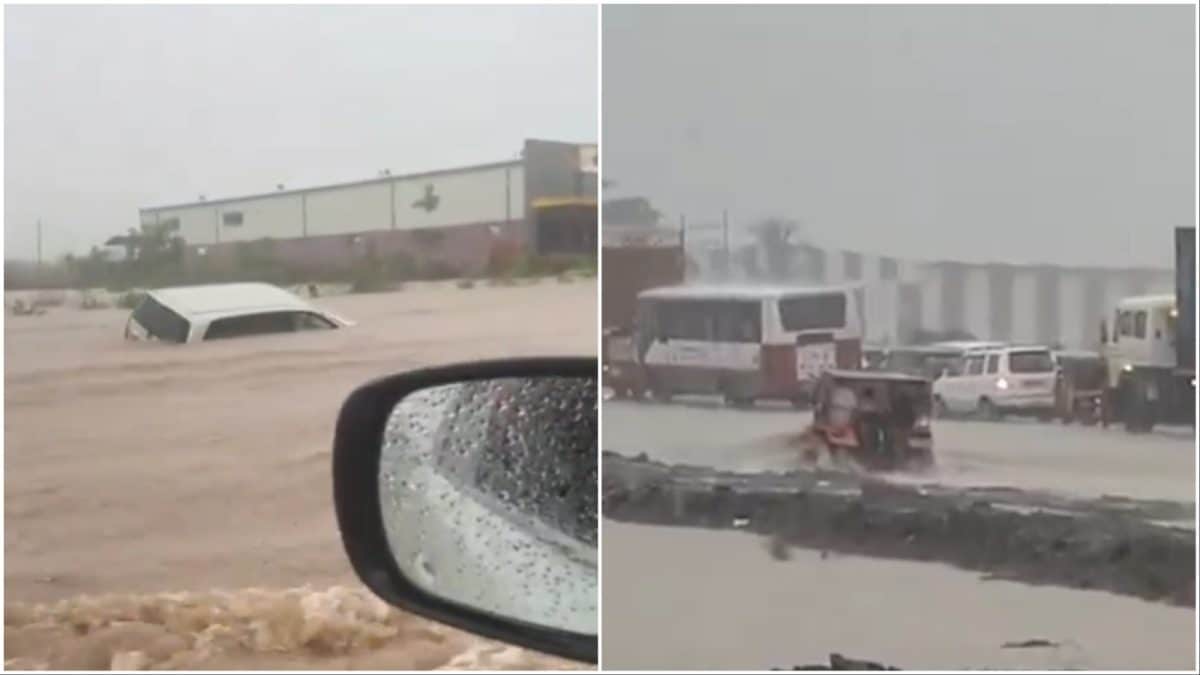
Heavy monsoon rains have battered Maharashtra, causing severe flooding on highways and railway lines, with cars swept away by rising waters on key routes such as the Pune-Solapur Highway.
The relentless downpour has submerged streets and critical transport infrastructure in major cities including Mumbai and Pune, severely disrupting travel and daily life. The India Meteorological Department (IMD) officially declared the onset of the southwest monsoon in Maharashtra on May 25, marking the earliest start in 35 years. Since then, the state has experienced continuous heavy rainfall, leading to widespread waterlogging and flooding. The monsoon has also advanced into surrounding regions including parts of the Arabian Sea, Goa, Karnataka, and northeast India, indicating a broad impact across the country.
Social media videos vividly depict the gravity of the situation. One clip from the Pune-Solapur Highway shows a car being swept away by floodwaters while other vehicles cautiously navigate the submerged roads. Nearby, a tractor struggles through a flooded street nearly 100 kilometres from Pune, illustrating how even rural areas are grappling with the effects of intense rainfall. In Mumbai, significant waterlogging has been reported at several locations including King’s Circle, Five Gardens in Dadar, and Wadala, creating traffic snarls and inconveniencing residents. The Badlapur Railway Station also faced flooding, disrupting rail services and affecting commuter movement in the region.
Further afield, the Yerla River in Maharashtra’s Sangli district has overflowed, flooding a major roadway and forcing residents to keep a close watch on rising water levels. Local authorities have responded by shutting down multiple roads under the Pune Public Works Subdivision to ensure public safety and facilitate emergency response efforts. Officials from the Pune Divisional Information Office confirmed that persistent rainfall has led to road closures and widespread disruption in traffic flow. Emergency teams remain on standby, prepared to assist in rescue operations and provide relief to affected communities.
Experts stress that these recurring floods highlight the pressing need for sustainable urban planning and resilient infrastructure in Maharashtra’s rapidly expanding cities. Incorporating green drainage systems, rainwater harvesting, and improved stormwater management can help mitigate the impact of future monsoon floods while promoting eco-friendly development. The India Meteorological Department has issued ongoing warnings of heavy rainfall, thunderstorms, and strong winds across Maharashtra in the coming days. Residents are advised to stay indoors during peak weather events and avoid flood-affected areas to ensure their safety.
While the monsoon season is crucial for replenishing water resources and supporting agriculture, the recent deluge underscores the vulnerability of Maharashtra’s urban and rural areas to increasingly volatile climate patterns. It is imperative for policymakers, planners, and citizens to collaborate on building more sustainable and equitable infrastructure that can withstand such environmental challenges.
Also Read: Mumbai Rains Faces Slow Trains With 25 Minute Delays Today
