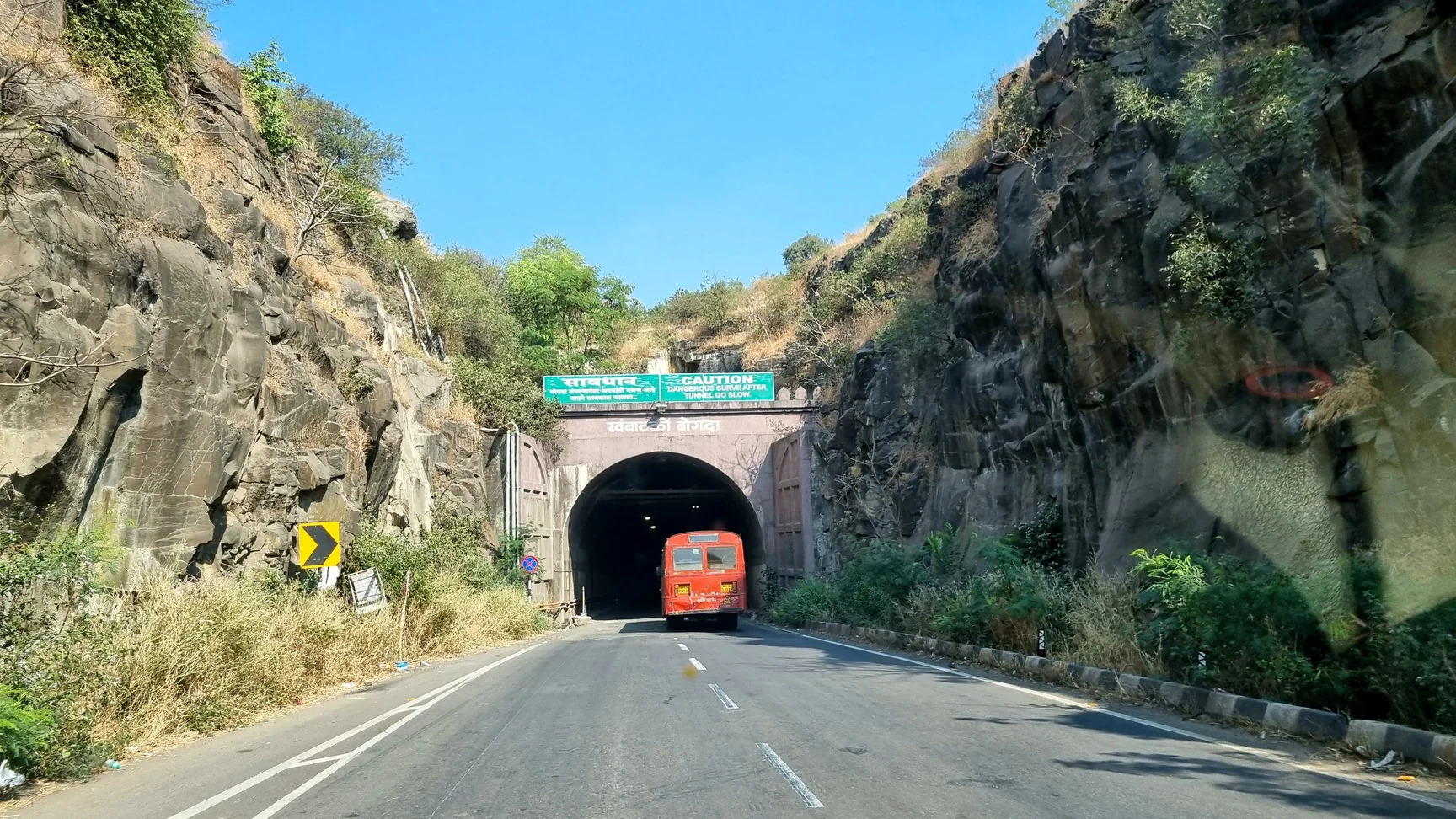
A long-standing bottleneck on Maharashtra’s critical Pune–Bengaluru highway is entering its final phase of transformation, with the first tube of the Khambataki Ghat Tunnel now operational on a trial basis. The development marks a decisive shift in how one of western India’s most accident-prone mountain crossings will function, carrying implications for regional mobility, logistics efficiency, and road safety outcomes. The Khambataki Ghat section, located on the Pune–Satara National Highway, has historically constrained movement between Maharashtra and southern India. Its narrow carriageway, steep gradients, and sharp reverse curves have made the stretch notorious among commuters and freight operators alike.
Urban planners and traffic safety experts have long identified the ghat as a high-risk zone, where delays, vehicle breakdowns, and fatal crashes were not exceptions but structural outcomes of outdated road geometry. The new tunnel-viaduct system is designed to bypass these constraints entirely. The project combines a straight, modern tunnel with an elevated approach bridge, allowing vehicles to avoid the hazardous descent and ascent that defined the older alignment. With the left tube now under controlled trial operations, authorities are assessing traffic behaviour, ventilation systems, and emergency response readiness before full commissioning. According to officials overseeing the corridor upgrade, the most immediate gain is time efficiency. What earlier took nearly three-quarters of an hour to cross is expected to be reduced to a single-digit journey time once both tubes are active.
For logistics operators, this translates into improved fuel efficiency, more predictable delivery schedules, and reduced stress on vehicle engines. For daily commuters and intercity travellers, it offers a safer and more humane driving experience through difficult terrain. Beyond mobility, the Khambataki Ghat Tunnel also reflects a broader recalibration of highway infrastructure towards resilience and safety rather than mere capacity expansion. By reducing congestion at steep gradients and eliminating sharp curves, the project is expected to lower emissions from idling and braking-heavy traffic a modest but meaningful contribution to cleaner transport corridors. The second tunnel tube, which will allow seamless two-way traffic, is targeted for completion by mid-2026. Until then, traffic management plans are being used to balance construction activity with live highway movement.
Once fully opened, the Khambataki Ghat Tunnel is set to change how a key national artery functions — turning a historic danger zone into a predictable, safer passage that better supports economic connectivity across western and southern India. The focus now shifts to ensuring that the final rollout maintains safety standards and integrates smoothly with the wider highway network.